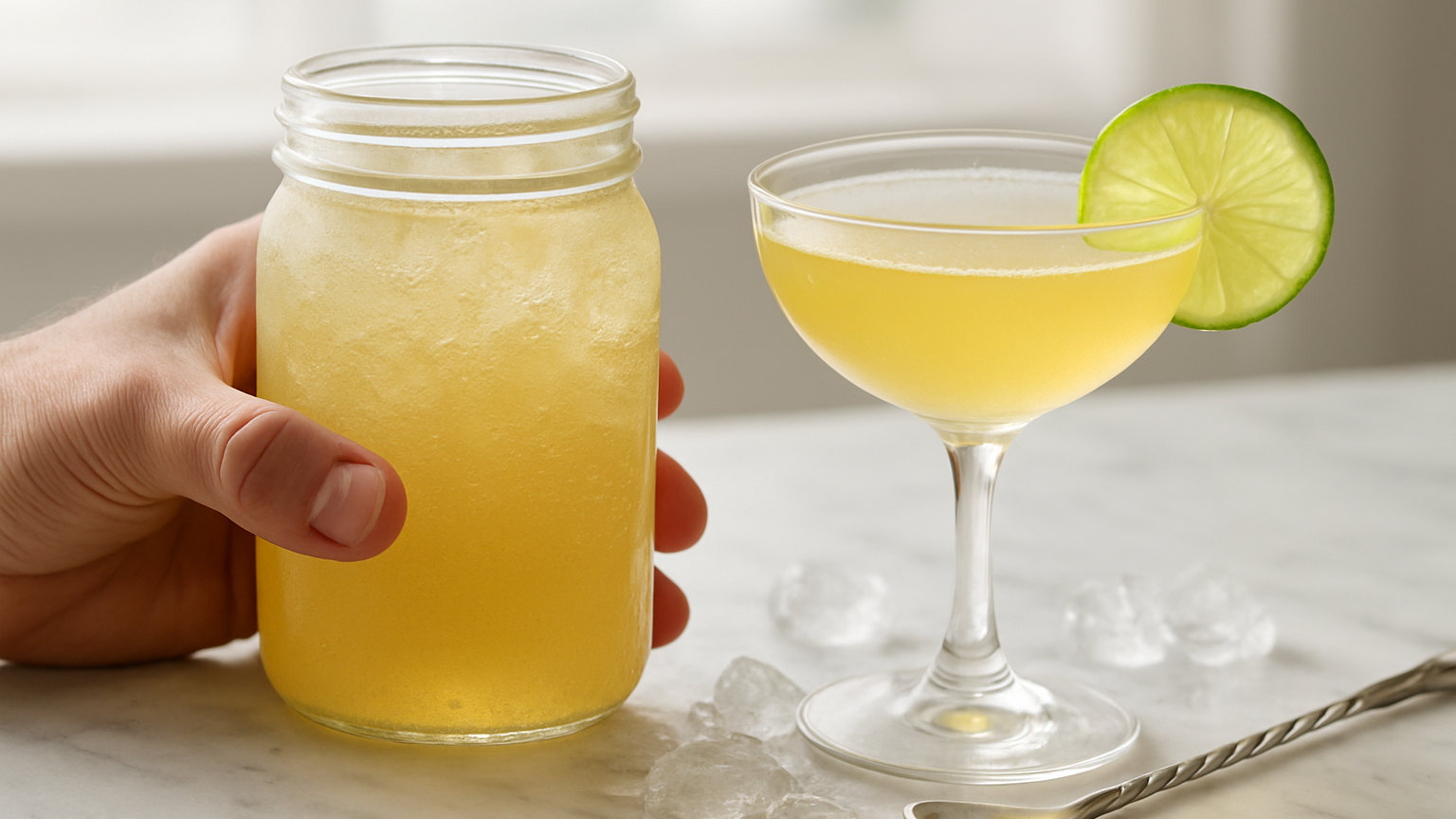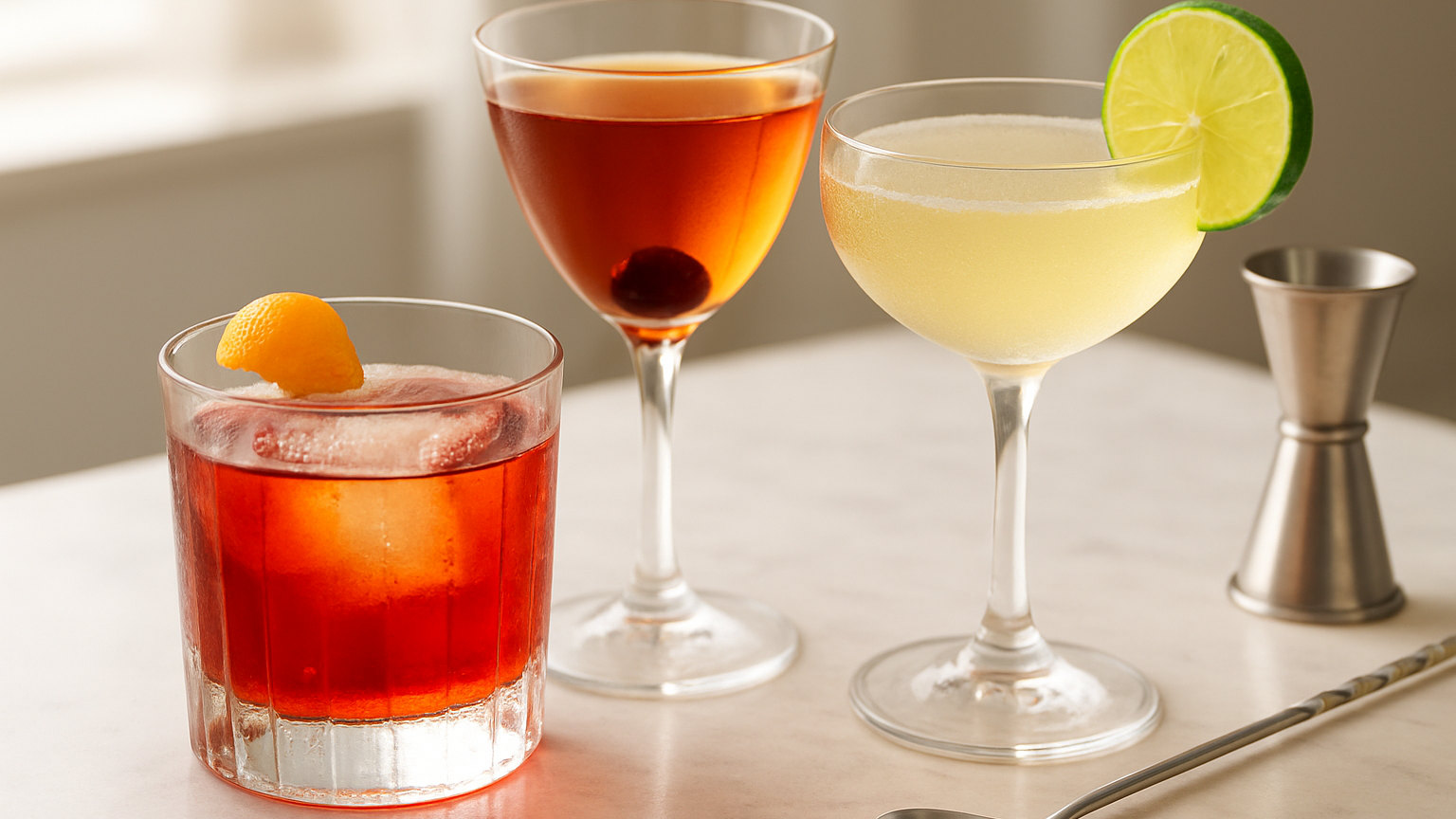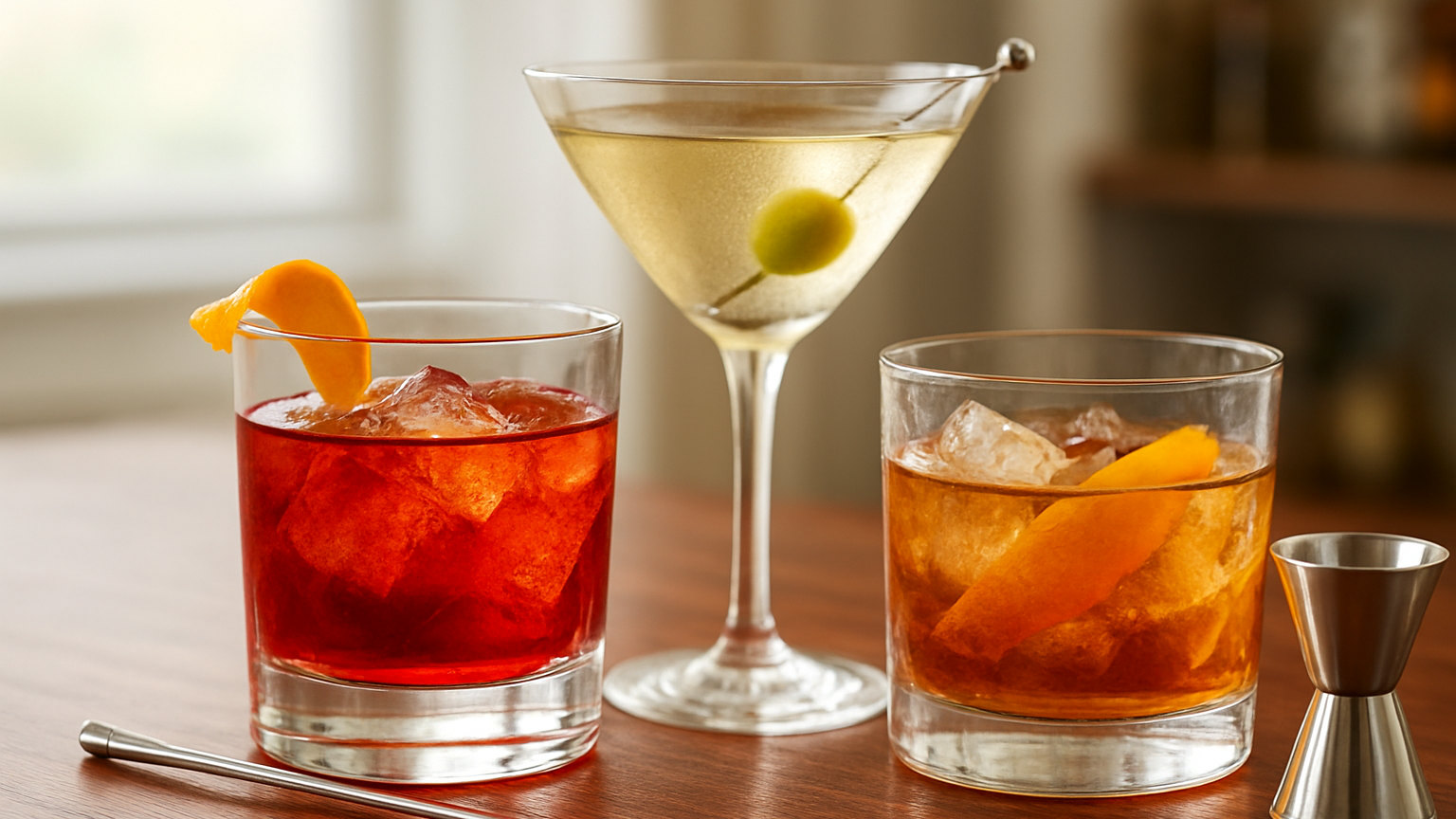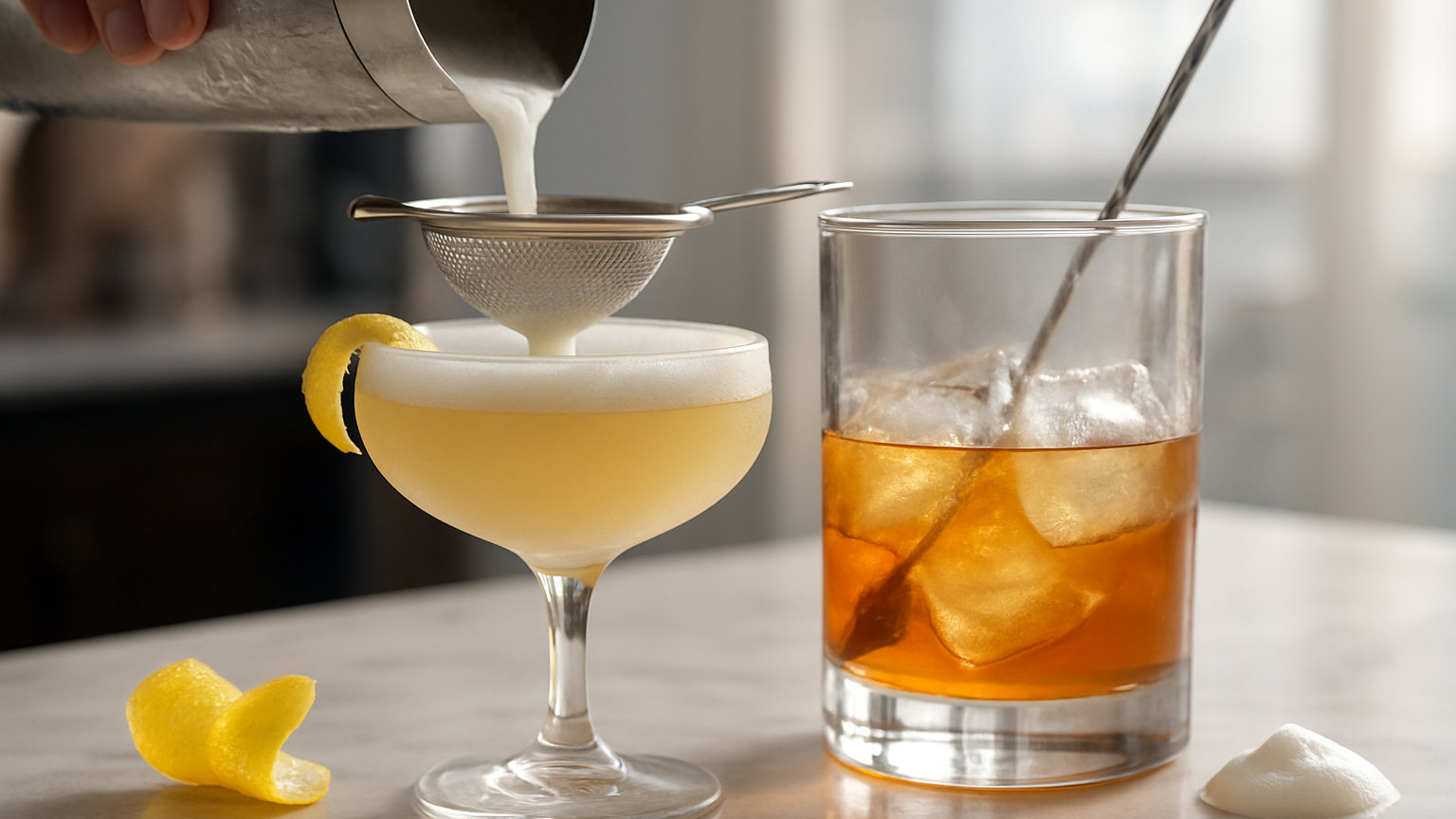
The rule is straightforward and is obscured by a great deal of film-derived mythology. Shake anything containing citrus, dairy, egg or fruit. Stir anything made entirely of spirits, fortified wines and liqueurs.
That covers almost every situation.
What shaking does
Shaking chills rapidly, dilutes, aerates and emulsifies.
The aeration matters. Citrus juice, egg white and dairy all need to be forced into suspension with the alcohol, and shaking does that violently enough to produce a homogeneous drink with a light texture.
It also introduces tiny ice fragments and air bubbles, which is why a shaken drink is cloudy. In a sour that is desirable; in a martini it is not.
Ten to fifteen seconds of genuine effort is enough. Longer adds dilution without further benefit, and shorter leaves the drink warm and under-diluted.
What stirring does
Stirring chills and dilutes with minimal aeration, producing a clear, silky, dense drink.
A spirit-forward cocktail such as a manhattan, a negroni or an old fashioned is meant to be smooth and weighty, and aeration would make it lighter and cloudier without improving anything.
Thirty seconds is the usual figure, or until the outside of the mixing glass is properly frosted.
The technique matters less than people suggest. A steady rotation with a bar spoon, keeping the spoon against the side of the glass, is sufficient; elaborate wrist technique is showmanship.
The martini question
The famous instruction to shake rather than stir is a character trait in fiction rather than a technical recommendation.
Shaking a martini produces a colder, more diluted, cloudier drink with a lighter texture. Some people genuinely prefer that, and there is nothing wrong with asking for it.
The claim that shaking bruises the gin is not chemistry. Nothing in gin is damaged by agitation. What changes is clarity, texture and dilution, all of which are real and none of which involves bruising.
A shaken vodka martini is a legitimate preference. A shaken gin martini loses the silky texture that is much of the point of the drink, which is why bars stir by default.
Dry shaking
A specific technique for drinks containing egg white or aquafaba.
Shake all the ingredients without ice first, for around fifteen seconds, which allows the proteins to form a stable foam. Then add ice and shake again to chill and dilute.
Reversing the order, shaking with ice first and then straining the ice out and shaking again, also works and some bartenders prefer it.
Without a dry shake, the foam is thin and collapses quickly.
The other options
Rolling means pouring the mixture back and forth between two vessels, which combines and chills without aerating. It is the correct technique for a bloody mary, since shaking whips tomato juice into an unpleasant froth.
Building means assembling in the serving glass with no separate mixing at all, which is how most highballs are made.
Throwing is a theatrical technique of pouring from height between two tins, which aerates gently and looks impressive.
The practical summary
If it is cloudy in the glass, shake it. If it should be clear, stir it.
Use plenty of ice either way, since a half-filled shaker or mixing glass dilutes more rather than less, for the same reason a half-filled highball does.
And chill the serving glass first. A perfectly executed shake is undone within two minutes by a warm coupe.
The shaker itself
Two types are in common use. A Boston shaker is two tins, or a tin and a glass, and is what most bars use: it seals by friction, holds more and is faster.
A cobbler shaker is the three-piece design with a built-in strainer and a cap, and it is easier for a beginner though the strainer clogs and the cap can seize when cold.
Either works. What matters more is filling it properly with ice, since a half-empty shaker dilutes more rather than less.
Straining
A Hawthorne strainer, the one with the spring, fits over a shaker tin and holds back the ice.
For a drink served up, a second fine mesh strainer held over the glass catches the ice shards and any fruit or herb fragments, which is what double straining means. It takes a second and produces a noticeably cleaner drink.