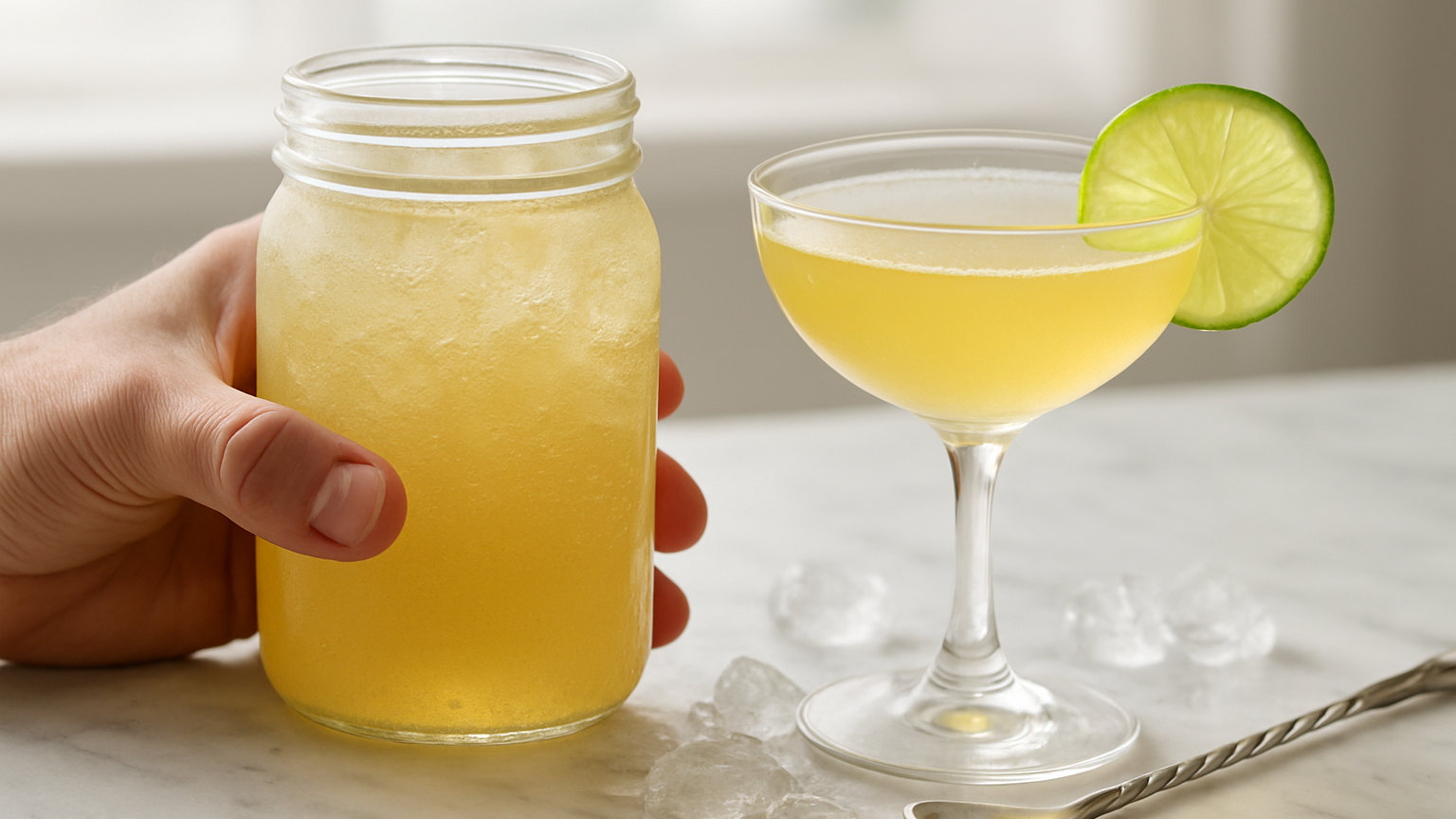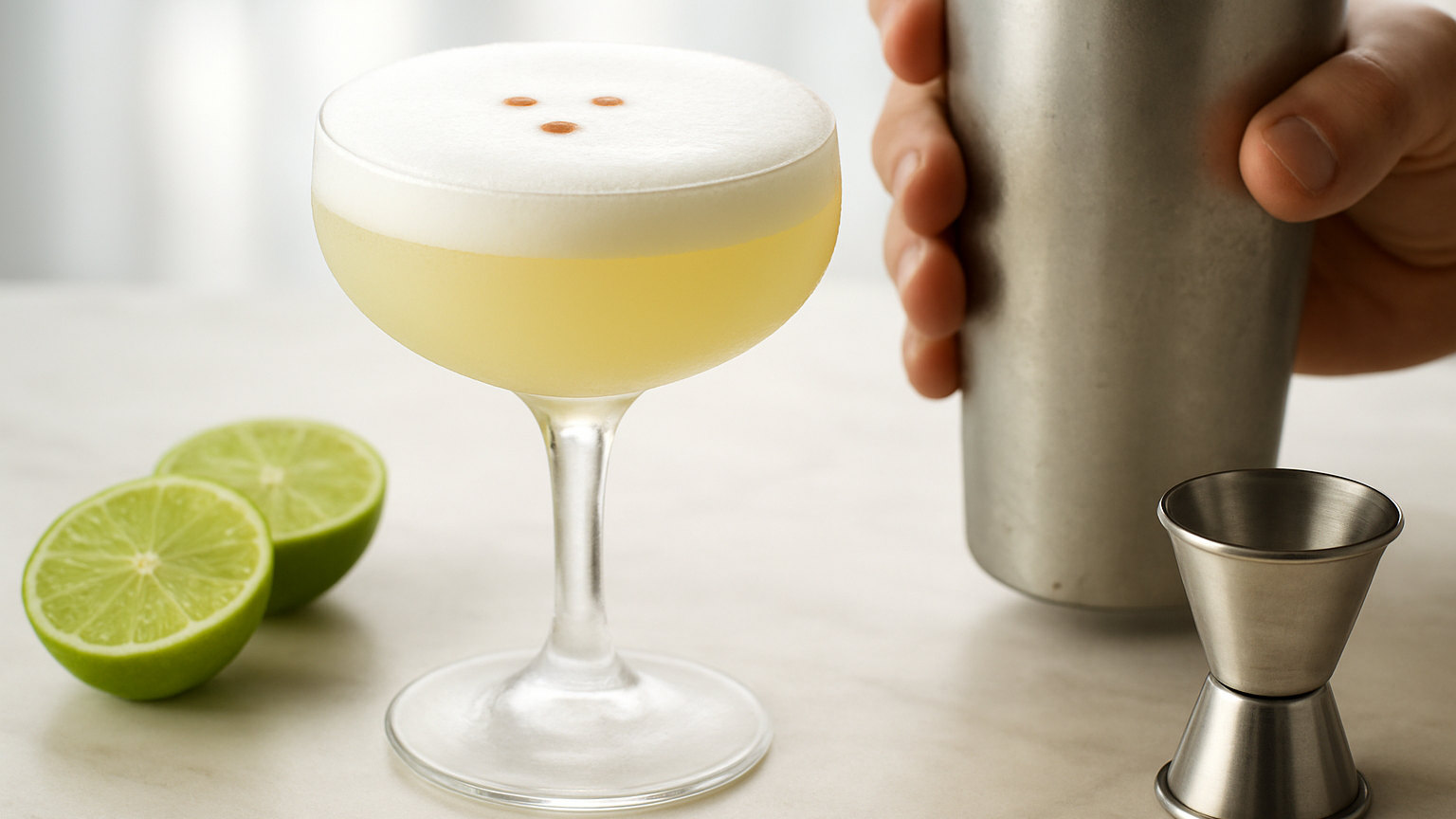
The pisco sour is pisco, lime, sugar and egg white, shaken to a thick foam and finished with a few drops of aromatic bitters. It is the national drink of both Peru and Chile, which is a source of long-standing and entirely sincere dispute.
What pisco is
A grape brandy, distilled from wine and bottled without ageing in wood.
Peruvian pisco is made from specified grape varieties, distilled to proof with no water added afterwards, and rested in vessels that impart no flavour. It is aromatic, floral and grapey.
Chilean pisco may be diluted to bottling strength and may spend time in wood, and it is generally lighter and softer.
Both countries have protected designations and both claim the drink. Peru's claim to the cocktail specifically is the stronger one historically, since the drink is usually traced to a bar in Lima in the 1920s, and Chileans make a version with their own pisco and their own conventions.
Anyone visiting either country will find the question is not treated lightly.
The recipe
Combine 60 millilitres of pisco, 25 millilitres of fresh lime juice, 20 millilitres of sugar syrup and one egg white.
Dry shake without ice for fifteen seconds, then add ice and shake again for a further twelve.
Double strain into a chilled coupe or a small tumbler.
Let the foam settle for a moment, then add three or four drops of aromatic bitters on the surface.
Getting the foam right
The foam is the point and it depends entirely on technique.
The dry shake comes first because agitating egg white without ice allows the proteins to unfold and form a stable structure. Adding ice immediately chills the mixture and prevents that happening properly.
Shake genuinely hard rather than politely. Fifteen seconds of real effort produces a dense foam; a gentle rattle produces bubbles that collapse.
The second shake with ice chills and dilutes. Some bartenders reverse the order, shaking with ice first and then straining and shaking again, which also works.
Double strain through a fine mesh so no ice fragments break the foam.
Let the drink settle for twenty seconds before adding the bitters, so they sit on the surface rather than sinking.
Egg safety and alternatives
Raw egg carries a small risk, reduced by using fresh eggs from a source with recognised salmonella controls.
Pasteurised egg white, sold in cartons, removes the concern entirely and performs identically, which makes it the sensible choice for anyone serving guests.
Anyone pregnant, elderly, very young or with a compromised immune system is generally advised to avoid raw egg, and current guidance is worth checking rather than assuming.
Aquafaba, the liquid from a tin of chickpeas, produces a comparable foam with no egg and is the standard vegan substitute. Use roughly the same volume and treat it identically.
The bitters
Not decoration. The drops sit on the foam directly under the nose, so their aroma reaches you with every sip while contributing almost nothing to the liquid.
It is the same principle as the Islay float in a penicillin: where an ingredient is too assertive to measure into the drink, deliver it aromatically instead.
Some bartenders draw a pattern through the drops with a cocktail stick, which is presentation rather than function.
Variations
Peruvian versions frequently use key limes, which are smaller and more aromatic than the standard Persian limes sold in Britain.
A maracuyá sour, made with passionfruit, is common in Peru and excellent.
Replacing the pisco with gin gives something close to a silver gin fizz; with whisky, a New York sour without the wine float.
The template is simply a sour with egg white, which means almost any spirit works.
Buying pisco
Availability in Britain has improved considerably, and both Peruvian and Chilean bottles are now stocked by specialist retailers and larger supermarkets.
For the cocktail, a Peruvian pisco puro made from a single aromatic grape variety is the usual recommendation, since its floral character comes through the lime and sugar.
A bottle is worth having if you enjoy the drink, and it also makes an excellent substitute in any recipe calling for a light unaged brandy.