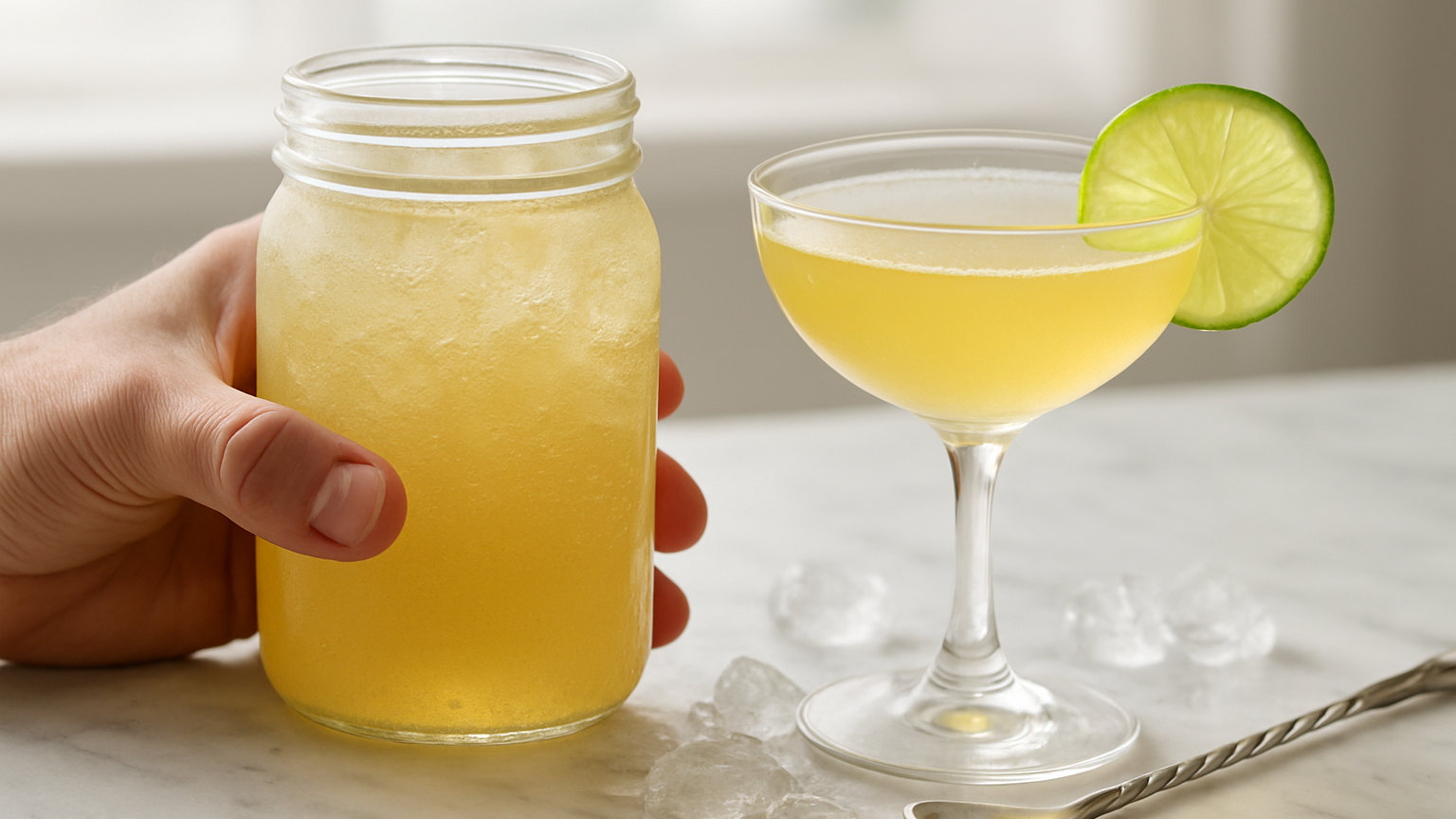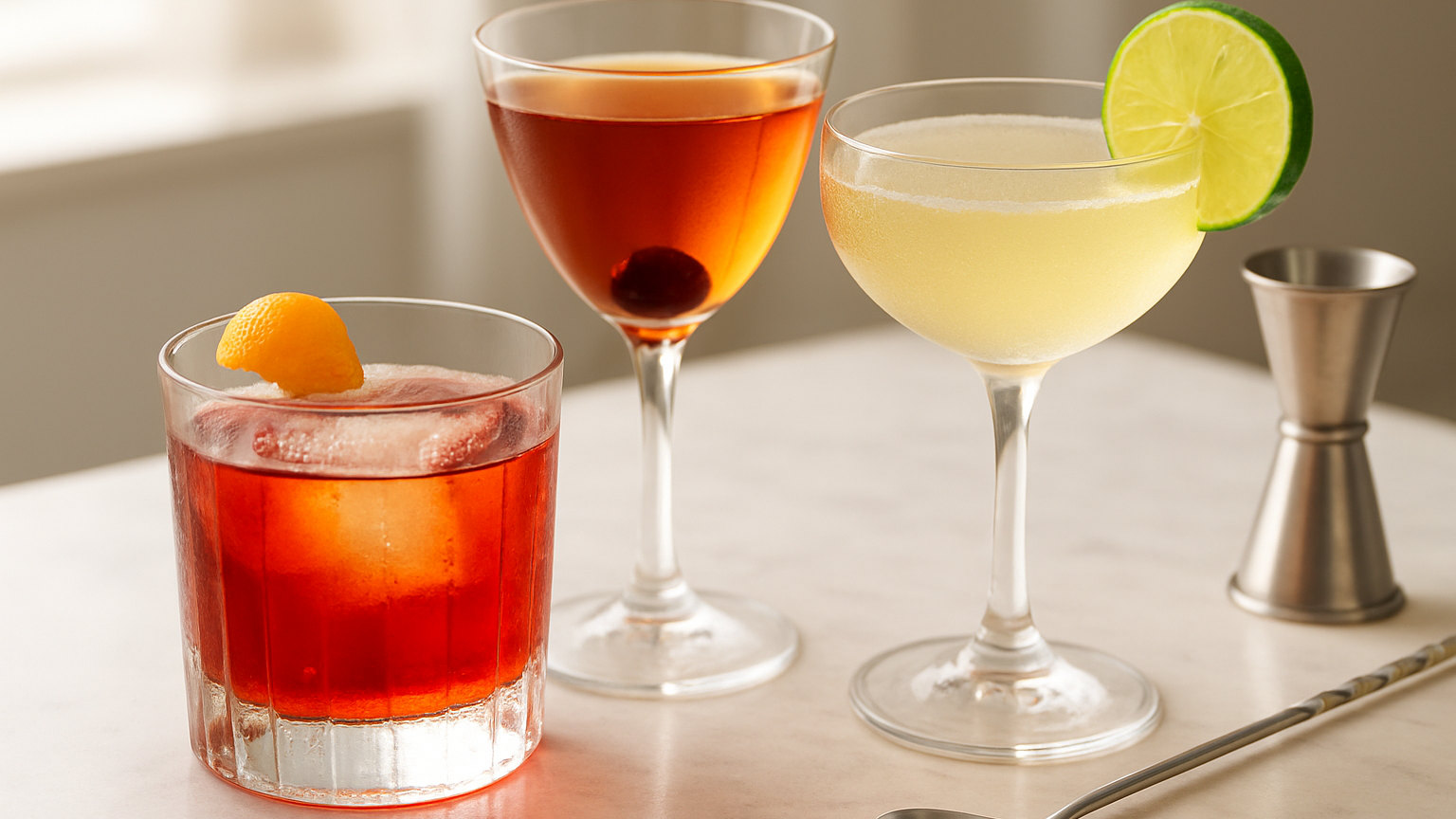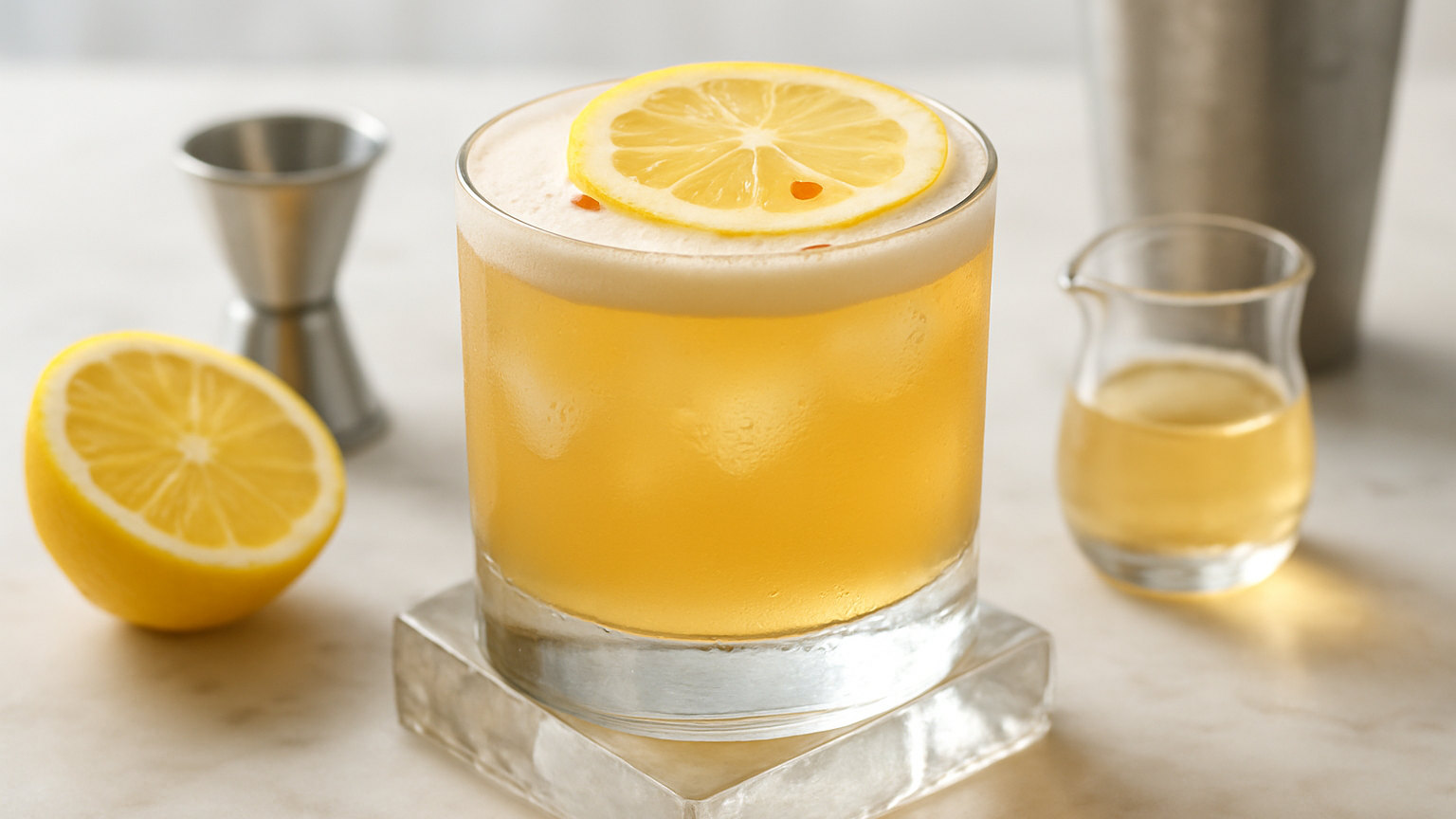
The sour is the most productive structure in cocktails. A spirit, a citrus juice and a sweetener, shaken hard with ice, produces the daiquiri, the margarita, the whiskey sour, the sidecar, the gimlet and a great many others.
They are the same drink with different components, which is why learning the ratio is worth more than learning the recipes.
The ratio
Two parts spirit, one part citrus, three quarters of a part sweetener. Written as numbers, two to one to three quarters.
In millilitres that means 60 of spirit, 30 of citrus and 22 of syrup, which is close to two ounces, one ounce and three quarters of an ounce.
Older recipes use two, one, one, which is noticeably sweeter and suits a drier or more aggressive spirit. Modern bartending frequently goes drier still, at two, one, half.
None of these is correct in the abstract. The ratio is a starting point that assumes an average lemon and a standard syrup, and both vary.
Why acid and sugar balance
Sourness and sweetness suppress each other's perception. A drink with a great deal of both can taste balanced, while the same acid with no sugar is punishing and the same sugar with no acid is cloying.
This is why the sour works across such a range. You can push both up for an intense drink or both down for a gentle one, provided they move together.
The spirit sits underneath, providing the flavour and the strength that the acid and sugar frame. If a sour tastes only of lemon and sugar, the spirit is either too weak or too neutral.
What the family covers
Rum with lime gives a daiquiri.
Tequila with lime and orange liqueur as the sweetener gives a margarita.
Bourbon with lemon gives a whiskey sour.
Cognac with lemon and orange liqueur gives a sidecar.
Gin with lime cordial gives a gimlet; gin with lemon and sugar gives the base of a Tom Collins before the soda goes in.
Pisco with lime and egg white gives a pisco sour.
Once the structure is familiar, a new recipe stops being something to memorise and becomes a set of substitutions you can predict.
Substituting the sweetener
This is where the template becomes genuinely productive.
Replacing sugar syrup with honey syrup, maple syrup, agave, a fruit liqueur, an amaro or a herbal liqueur changes the drink entirely while keeping the balance.
Sweeteners vary in intensity, so the quantity needs adjusting. Honey and maple are sweeter than sugar syrup by volume; a liqueur is generally less sweet and brings alcohol of its own, so it needs a larger measure and slightly less spirit.
A great many modern classics are simply a sour with an interesting sweetener, which is the easiest route to inventing something worth drinking.
Taste before serving
This is not optional and it is what separates people who make good sours from people who follow recipes.
Citrus varies enormously through the year. A lemon in January and a lemon in July have different acidity, and a lime that has been in a fruit bowl for a week is not the same ingredient as a fresh one.
Taste the drink with a straw before straining it out, and adjust by a few millilitres of syrup or juice. Every competent bartender does this, and it takes three seconds.
Lemon or lime
The two are not interchangeable and the convention is worth knowing. Lime suits rum, tequila and gin; lemon suits whiskey, brandy and most European spirits.
The reasoning is partly historical and partly that lime is sharper and more aromatic while lemon is rounder and slightly less acidic. Swapping them changes a drink noticeably, and a daiquiri made with lemon is recognisably not a daiquiri.
Where a recipe specifies one, follow it first and experiment afterwards.
Shaken, not stirred
Sours are always shaken. Citrus juice needs to be properly incorporated with the spirit rather than merely combined, and shaking emulsifies it into a homogeneous drink with a light texture.
Stirring a sour produces something that looks and tastes separated, with the juice sitting oddly against the alcohol.