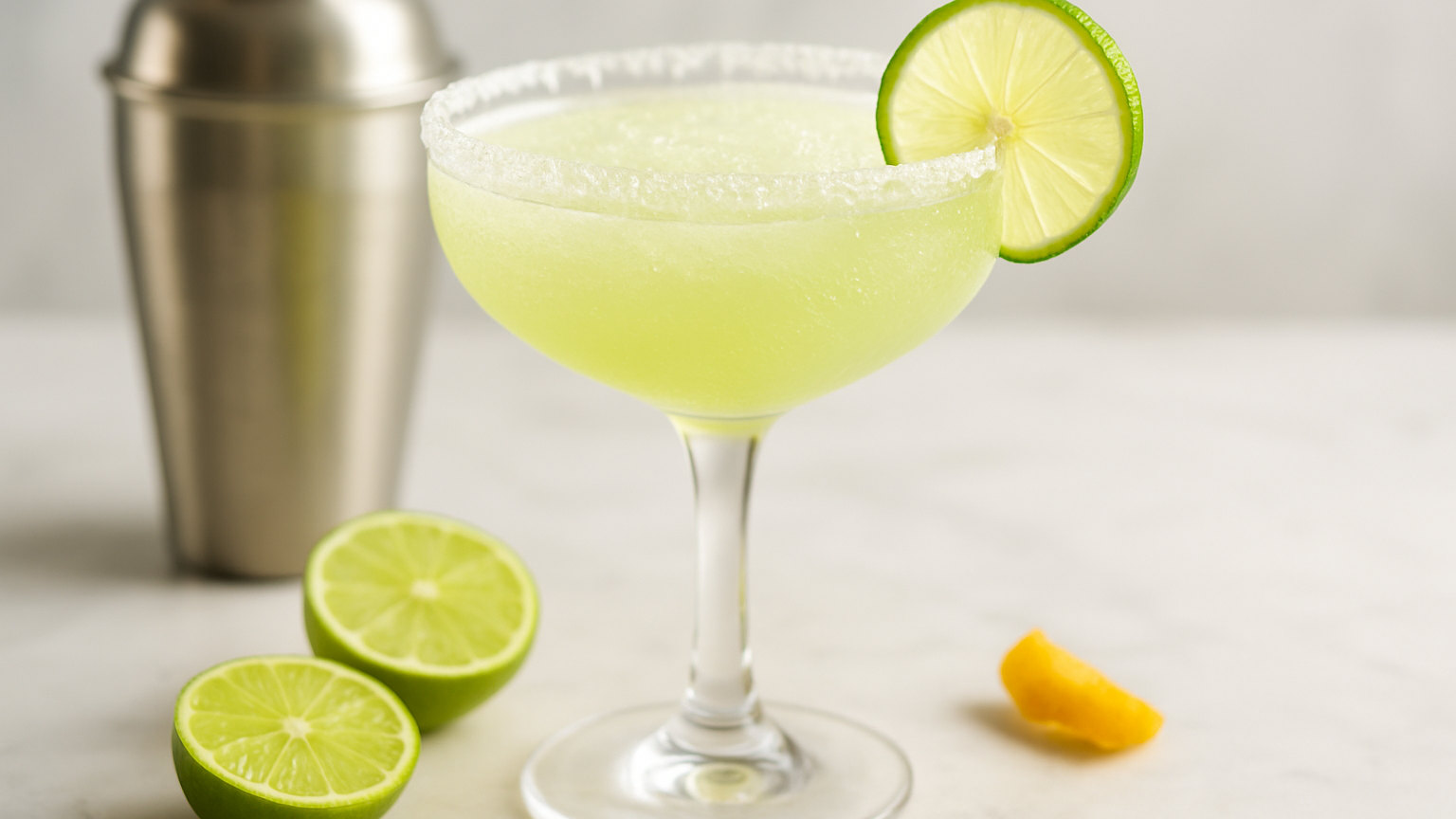
The margarita is tequila, lime and orange liqueur, shaken and served with a salted rim. It is among the most ordered cocktails in the world and among the most frequently made from a bottled mix, which is why so many people think they dislike it.
The recipe
Combine 50 millilitres of blanco tequila, 25 millilitres of fresh lime juice and 20 millilitres of orange liqueur.
Shake hard with ice and strain into a chilled glass, either up in a coupe or over fresh ice in a rocks glass.
Salt half the rim if you want it, using a lime wedge on the outside of the glass only.
Taste before serving. Limes vary and a few millilitres of agave syrup often improves it.
The tequila
Blanco, unaged, made from one hundred per cent agave. That last point is the one that matters most.
Tequila labelled mixto contains a proportion of other sugars and is noticeably harsher, and it is responsible for a good deal of the drink's reputation for producing regret. The label will say one hundred per cent agave if it is.
Blanco has the vegetal, peppery, citrus-forward character the drink is built around. Reposado gives a rounder, softer margarita with a little oak, which some people prefer. Añejo is generally wasted here.
Mezcal in place of some or all of the tequila makes an excellent smoky version.
The orange liqueur
This is where the money makes a difference.
Cheap triple sec is essentially sweetened orange flavouring and produces a sugary drink. A decent curaçao or a cognac-based orange liqueur brings genuine bitter orange character and body.
Since the liqueur is both the sweetener and a flavour component, a poor one is doing two jobs badly.
The Tommy's margarita
A variation from a San Francisco restaurant that has become a standard in its own right.
It replaces the orange liqueur with agave syrup: 50 millilitres of blanco tequila, 25 of fresh lime and 15 of agave syrup, shaken.
The result is drier, cleaner and lets the tequila show more clearly, since nothing is competing with it. A great many bartenders prefer it, and it is the better version for anyone who finds the standard margarita too sweet.
It is also easier to make well, since agave syrup is a more reliable ingredient than a cheap liqueur.
What went wrong
Sour mix, which replaced fresh lime in most bars during the second half of the twentieth century.
Bottled sweet and sour is sugar, acid and flavouring, and a margarita made with it tastes of sweetened lime cordial. Frozen machine versions compounded the problem.
The drink's revival has been almost entirely a matter of returning to fresh citrus and better tequila, which is a familiar pattern across the classic canon.
The salt
Rub a lime wedge around the outside of the rim only, then roll the outside in flaked salt. Salting the inside means salt falls into the drink and it becomes progressively saltier as you go.
Salting half the rim lets the drinker choose, which is a courtesy worth extending.
Anyone advised to limit salt can simply leave it off. The drink works perfectly well without it, and asking for it unsalted is entirely normal.
Up or on the rocks
Served up in a chilled coupe, the drink is more concentrated and must be drunk reasonably promptly.
Served over fresh ice in a rocks glass, it stays cold longer and dilutes gradually, which suits a warm afternoon.
Both are correct. The frozen blended version is a separate drink and, made with fresh ingredients rather than a mix, a perfectly good one.
Making it for a group
The margarita batches reasonably well provided the lime is added late. Combine the tequila and the liqueur in advance with around thirty per cent added water for dilution, and add the fresh lime within a couple of hours of serving.
Taste the batch cold rather than at room temperature, since chilling flattens sweetness and a batch that seemed right warm will usually need a little agave syrup once refrigerated.