Serve the same daiquiri to four people and one will say it is perfect, one will find it too sharp, one will find it too sweet, and one will ask for more rum. All four are reporting accurately.
Perception genuinely varies
Sensitivity to sour and bitter tastes differs measurably between individuals, and the differences have both genetic and habitual components.
Sensitivity to bitterness in particular is known to vary considerably across the population, and people at different ends of that range experience the same drink quite differently.
Acid perception also shifts with what you have eaten, how hydrated you are, the temperature of the drink and what you drank before it.
The practical consequence is that a published ratio is an average rather than a target, and anyone who consistently finds standard sours too sharp is not doing it wrong.
What balance actually means
A balanced drink is one where no single element dominates and the base spirit remains identifiable. It is not a fixed point on a scale.
The two, one, three quarters ratio is balanced for most people with most citrus. Two, one, one is balanced for people who prefer sweetness. Two, one, half is balanced for people who prefer dryness.
All three are correct for the person they suit.
Where the disagreements come from
Habituation is the largest factor. Someone who drinks a great deal of sweet soft drinks finds most cocktails sharp; someone who drinks dry wine finds most cocktails sweet.
Both adjust over time, which is why people's preferences drift drier as they drink more cocktails.
Temperature matters too. Cold suppresses sweetness perception, so a drink that seemed balanced when tasted at room temperature will read as sharper once properly chilled.
And dilution shifts the whole thing, which is why an under-shaken sour tastes harsh and an over-shaken one tastes thin.
Making sours for other people
Err slightly sweeter than your own preference when serving guests, particularly anyone new to cocktails. It is easier to enjoy a drink that is slightly sweet than one that is punishing.
Better still, ask. A brief question about whether someone prefers sharp or sweet takes a second and improves the result substantially.
Have syrup and a cut lemon available so a drink can be adjusted after pouring, which is a small courtesy that solves the problem entirely.
And avoid the temptation to serve your own preference and defend it, which is a common failing among people who have recently learned to make cocktails.
Finding your own ratio
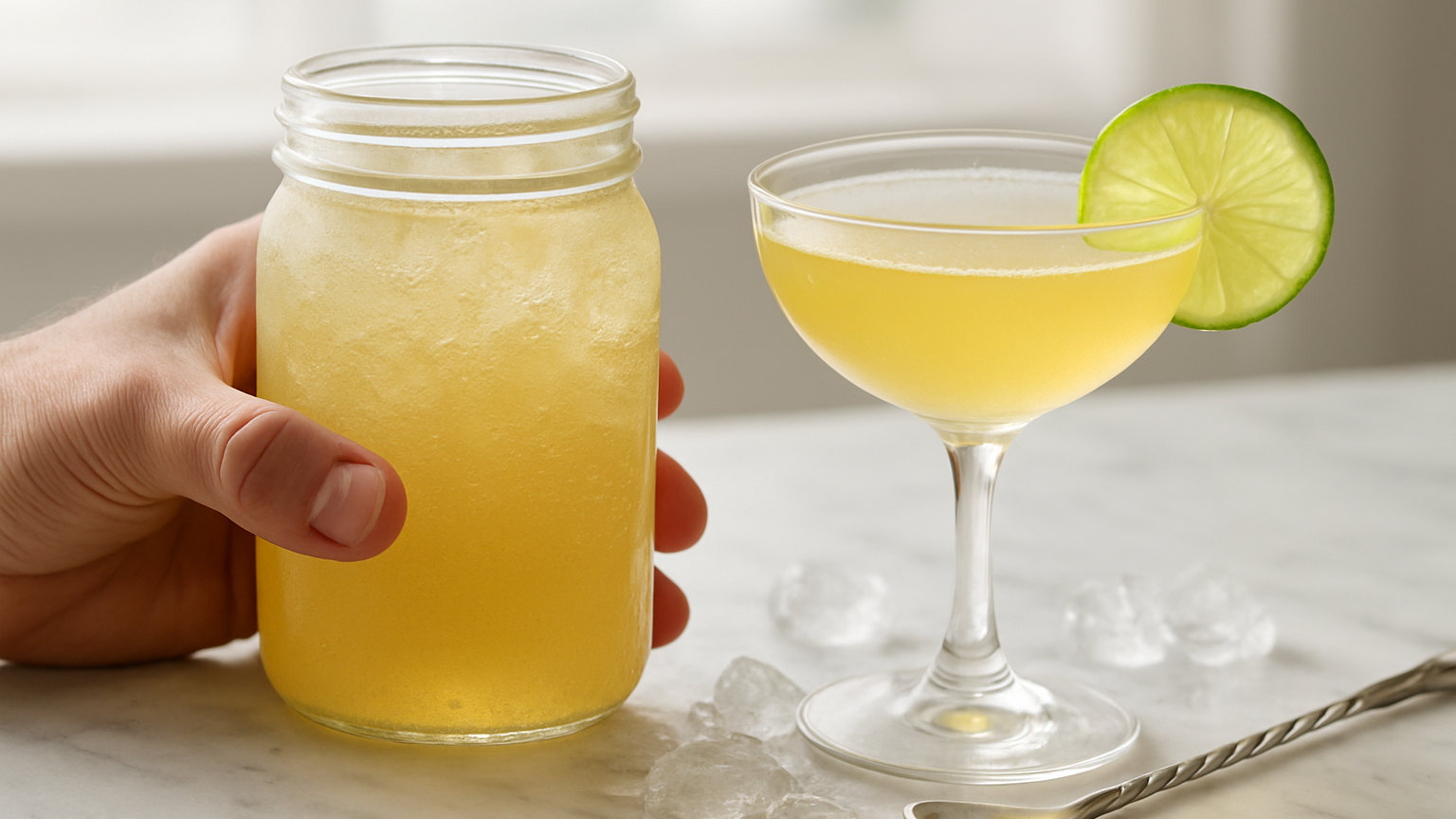
Make three daiquiris at two, one, one; two, one, three quarters; and two, one, half, and taste them together.
Most people find one obviously preferable, and that is your ratio for every sour thereafter regardless of what any recipe says.
It is also worth repeating the exercise a year later, since preferences shift.
The wider point
A great deal of drinks writing presents ratios as though they were settled facts, and they are conventions arrived at by people whose palates are not necessarily yours.
The published recipe is a well informed starting point from someone who made the drink many times. Your adjustment of it is what you are actually after, and treating the printed numbers as fixed is the main thing that stops people making drinks they genuinely enjoy.
Ordering in a bar
The same applies when you are not the one making it. Asking for a daiquiri on the drier side, or a margarita with a little more agave, is an entirely normal request and most bartenders welcome it.
It is considerably better than drinking something you do not enjoy and concluding that you dislike the drink.
A good bar will also make a small adjustment after you have tasted it, and offering to do so is a mark of one worth returning to.
Disagreeing well
The final point is one of manners. Someone who prefers a sweeter drink than you do is not making a mistake, and cocktail enthusiasm has a tendency towards correcting other people's preferences.
Make what people enjoy, and keep your own ratio for your own glass.