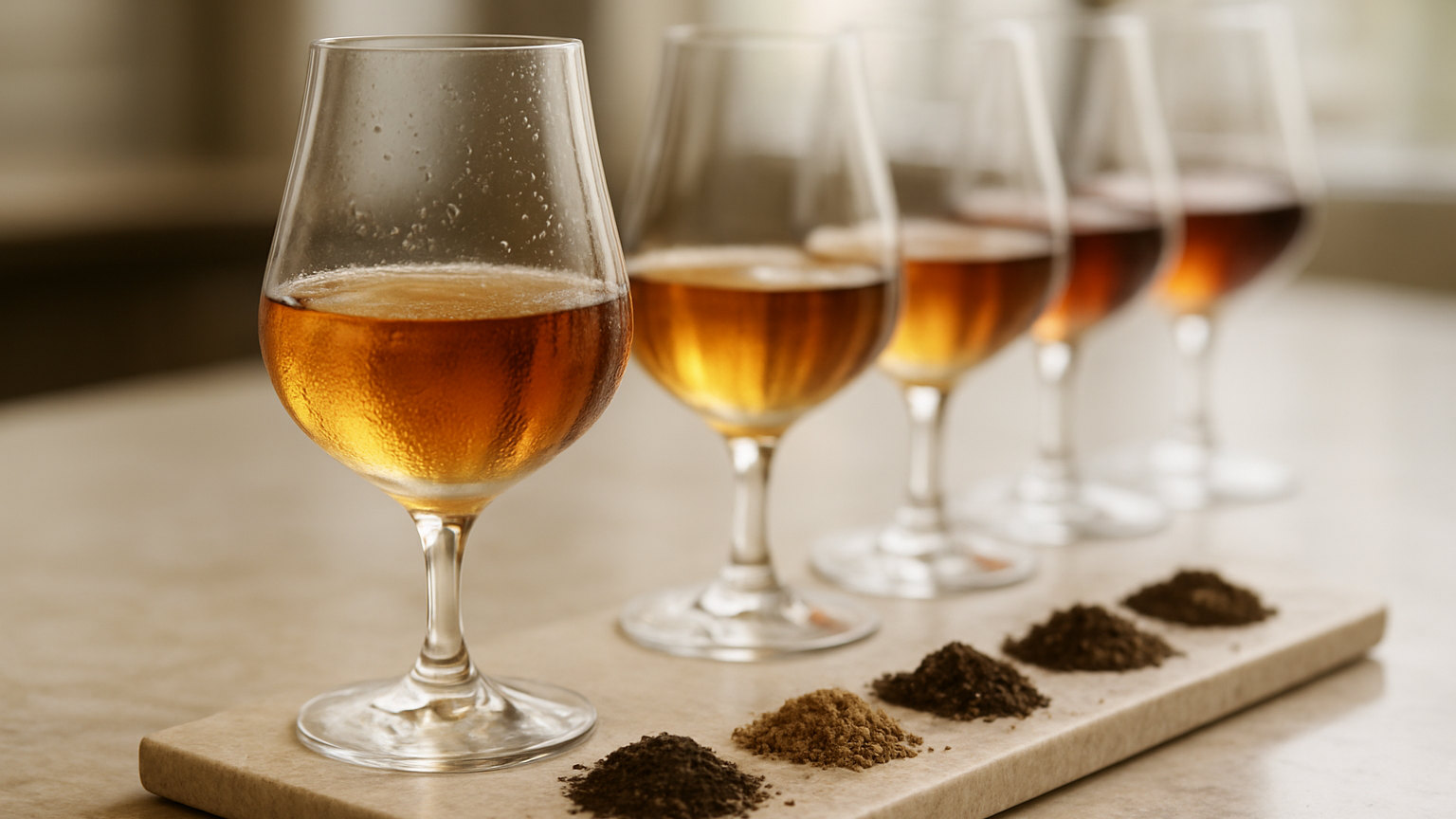
The cognac region is divided into six crus, drawn according to soil type. They are the closest thing brandy has to a wine style classification, and unlike much spirits labelling they describe something physical.
What are the six?
- Grande Champagne. The most prized, on deep chalky soil. Produces floral, delicate eaux de vie that age slowly and reward long maturation.
- Petite Champagne. Surrounds Grande Champagne, similar chalk with slightly less depth. Comparable style, marginally quicker to mature.
- Borderies. The smallest cru, with clay and flint soils. Distinctive violet and nutty character, and matures faster.
- Fins Bois. The largest by area, giving rounder, fruitier spirit that matures relatively quickly. Widely used in blends.
- Bons Bois. Further out, with sandier soils and maritime influence. Faster maturing and generally used for younger blends.
- Bois Ordinaires. Coastal and island vineyards, with a salty maritime character and the shortest ageing potential.
The word champagne here has nothing to do with sparkling wine. It comes from the same root as the English word campaign, meaning open country, and refers to the chalk plains.
Why does chalk matter?
Chalk holds water and releases it slowly, so vines are neither drought stressed nor waterlogged, and it encourages deep root growth. The grapes retain acidity, which is exactly what a distiller wants.
The practical result is that eaux de vie from the chalkier crus are more delicate and slower to mature. They need longer in wood to show their best, and they hold up over decades where a Bois Ordinaires spirit would be tired.
What does fine champagne mean?
A blend of Grande Champagne and Petite Champagne only, with at least half from Grande Champagne. It is a regulated term and a genuine indication of source.
Single cru bottlings also exist, most often Grande Champagne, and a bottle stating one cru contains only spirit from that area.
Is most cognac from a single cru?
No. The large houses blend across crus deliberately, taking structure from the chalk areas and fruit and roundness from the outer ones. Blending is the traditional craft of the region, and a cru-specific bottling is a stylistic choice rather than the default.
This means the absence of a cru on the label is not a bad sign. It usually means the blender used several, which is what most cognac has always been.
Does the cru tell you more than the age?
They tell you different things. Age indicates how much oak influence and oxidative development to expect. Cru indicates the underlying character of the spirit and how well it will carry that age.
A Grande Champagne VSOP and a Fins Bois VSOP are recognisably different, with the former tighter and more floral and the latter rounder and more immediately generous. Neither is better, and the Fins Bois may well be the more enjoyable at that age.
Does it justify the price difference?
Sometimes. Grande Champagne commands a premium that reflects both genuine quality potential and considerable prestige. At long ages the premium is easier to justify, since that is where the cru's slow maturing character pays off.
At VS and VSOP level, the argument is weaker, and a well made blend from a good producer will often give more pleasure than a single cru bottling bought for the name on the label.
How should you use this when buying?
Treat the cru as a hint about style rather than a quality ranking. If you like delicate, floral, slow developing spirits, look for Grande Champagne or fine champagne. If you prefer immediate fruit and roundness, a blend including Fins Bois will suit you better and cost less.
Small producers who farm their own vines almost always state their cru, and those bottles are among the best value in the region precisely because they are not competing on brand recognition.
Do the crus affect price at the grape stage?
Considerably. Eaux de vie from Grande Champagne trade at a premium to those from the outer crus, and that difference is established long before any bottle is filled.
This is why cru statements are more common at the small producer end than among the large houses. A grower with Grande Champagne vines has every reason to say so, while a house blending across six crus has nothing specific to claim.