Cognac age designations look like marketing shorthand and are in fact a regulated accounting system. Each term corresponds to a minimum age for the youngest eau de vie in the blend, verified by the appellation authority.
How is the age counted?
By the compte system. Distillation must finish by 31 March following the harvest, and the clock starts on 1 April. Spirit reaches compte 0 at that point, compte 1 a year later, and so on.
Every producer keeps detailed stock records that are audited, so an age claim on a cognac label rests on paperwork rather than on trust. This is an unusual degree of rigour for a spirits category.
What does each designation mean?
- VS, very special, also sold as three star. Youngest component at least two years old.
- VSOP, very superior old pale. At least four years.
- Napoleon. At least six years.
- XO, extra old. At least ten years. This was raised from six years, with the change taking full effect in 2018.
- XXO, extra extra old. At least fourteen years, a designation formalised relatively recently.
- Hors d'age. Beyond age. Not a defined minimum, and used for blends older than the official tiers.
As with Scotch, the number refers to the youngest component. A VSOP may contain eau de vie considerably older than four years, and houses with deep stocks often blend well above the minimum.
Why is the English abbreviation used in France?
Because the export trade was built on the British market. Cognac houses shipped enormous volumes to Britain from the eighteenth century onwards, and the classifications were written for those buyers. Several of the major houses were founded by English, Irish and Scandinavian merchants, which is why their names do not sound French.
What do they taste like?
The progression is fairly consistent within a single house.
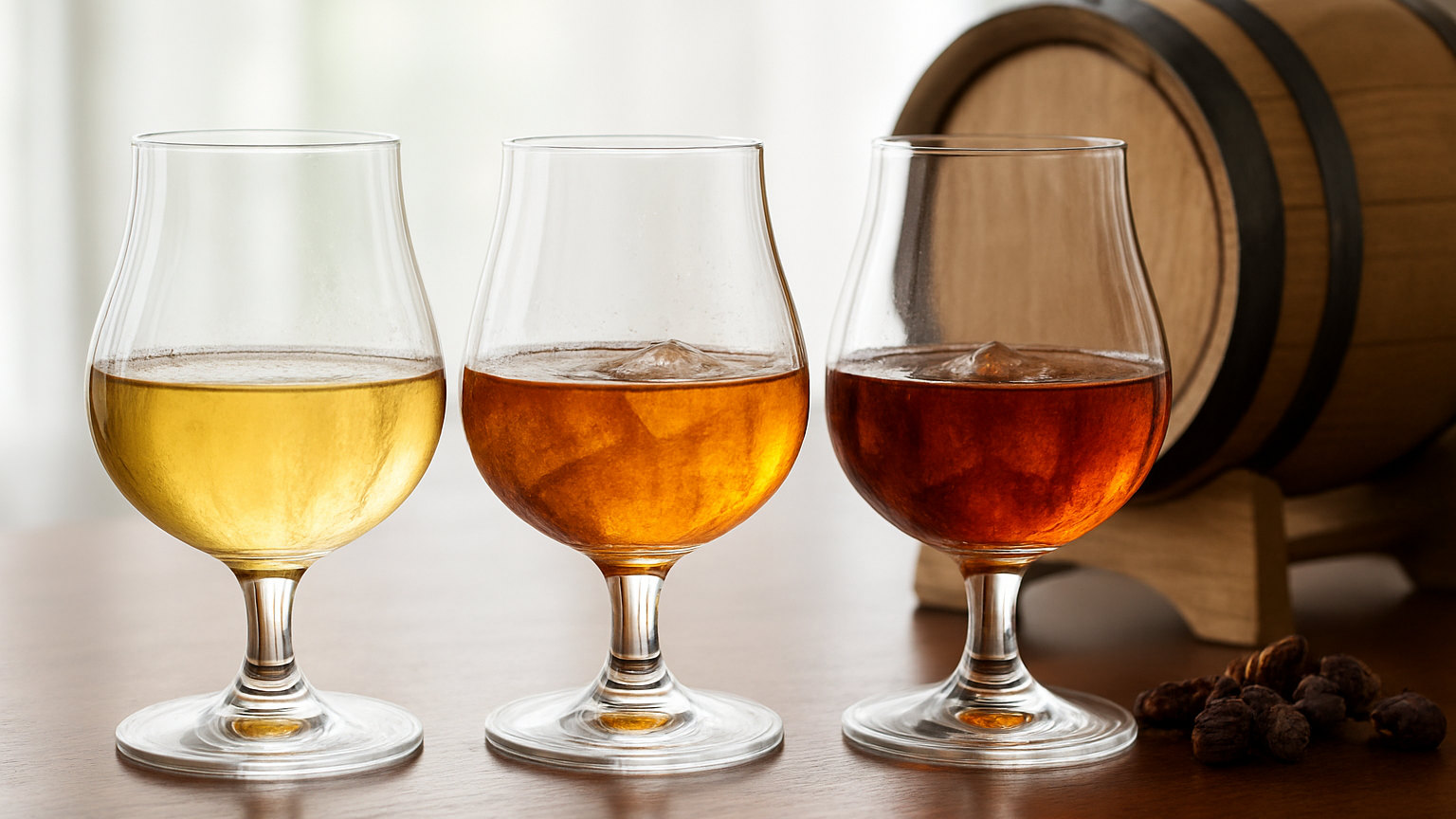
VS is bright and fruity, with grape, pear and light vanilla, and is generally intended for mixing. VSOP gains weight, dried fruit and oak spice, and is the usual starting point for drinking neat. XO moves into figs, walnut, leather and a long finish, and is where the nutty rancio character starts appearing.
Comparing tiers across different houses is less reliable, because house style varies enormously and a well made VSOP from one producer can outclass an XO from another.
Do the same terms apply to armagnac?
Yes, with different minimums. Armagnac VS requires at least one year, VSOP at least four, and XO at least ten. Armagnac also uses vintages far more commonly than cognac, and a vintage armagnac states the harvest year, with every drop from that year.
Other brandy categories borrow the letters without any equivalent regulation. Outside the French appellations, VSOP on a bottle may mean nothing at all, so check what governs the product before reading the letters as an age claim.
Does older always mean better?
Not automatically. Long ageing brings complexity and softness, and it also brings tannin and oak dominance if a cask is too active or the spirit too delicate. A young cognac from an excellent cru can be more enjoyable than an old one from an ordinary source.
The tiers also carry a steep price ladder, and much of the jump from VSOP to XO buys scarcity and prestige as well as flavour.
Which should you buy?
VS for cocktails, where the fruit works well and the oak would be lost. VSOP as a first bottle for drinking neat, since it shows the house style at a sensible price. XO only when you know you enjoy the category and want to see what long ageing does.
If a bottle carries the letters but no appellation, treat them as decoration rather than information.
What about the star system?
Three stars is an older marking equivalent to VS, and it still appears on some labels. The origin story usually told involves a house marking casks with stars to indicate quality, though like most such accounts it is more anecdote than documented history.
Where you see it, read it as VS and check the appellation, which is doing the real work.