Brandy is a spirit distilled from fermented fruit. Where whisky starts with grain and rum with cane, brandy starts with something that was already alcoholic before it reached the still, which is why the fruit and the wine it produced matter so much.
What fruit is used?
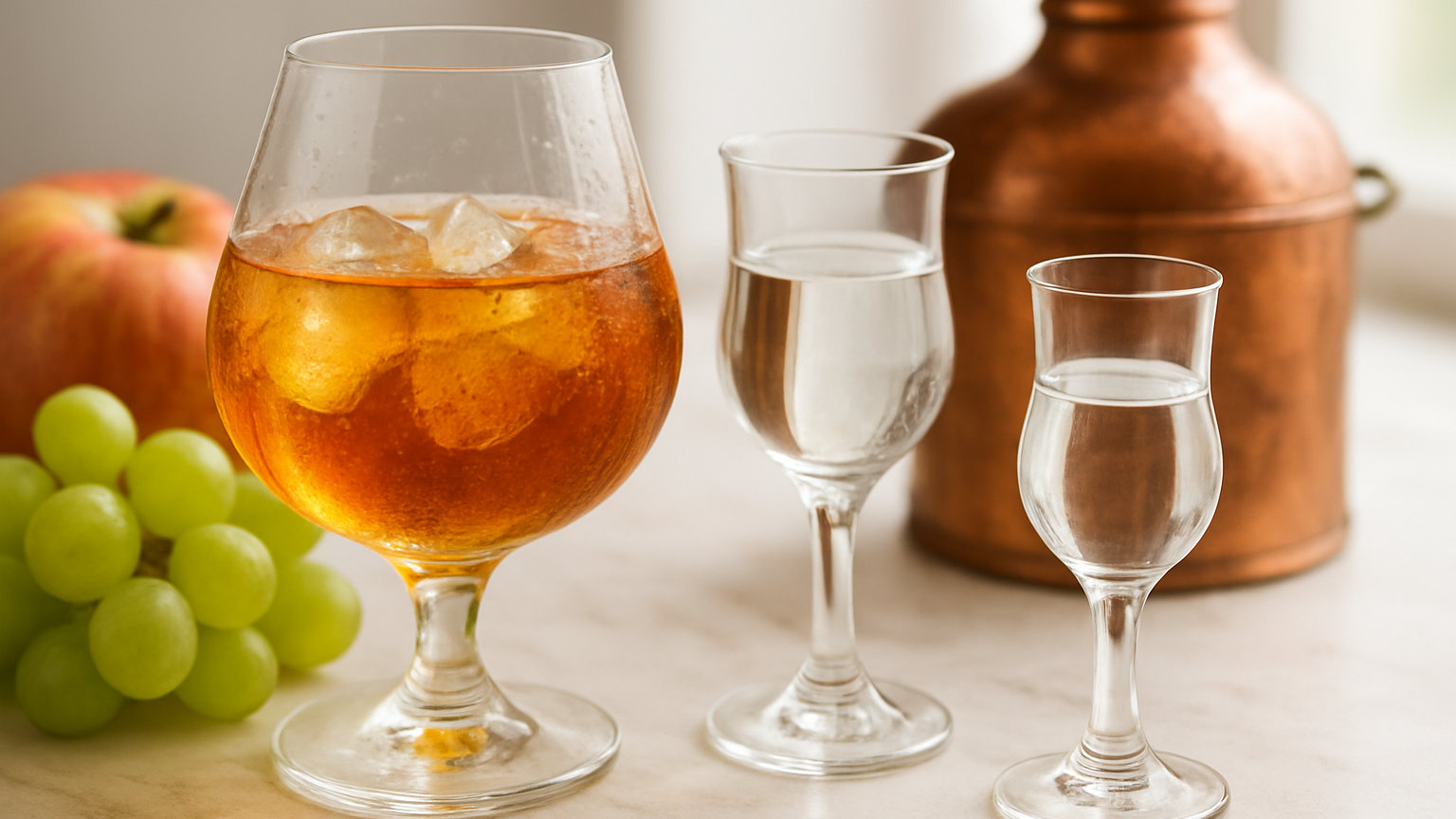
Grapes, in the overwhelming majority of cases. When a label says brandy without qualification, it almost always means grape brandy, and cognac, armagnac, brandy de Jerez and pisco all belong to that family.
Other fruits produce their own categories. Apples give calvados, cherries give kirsch, plums give slivovitz, pears give poire williams. These are usually sold as fruit brandy or eau de vie and are made in a noticeably different style.
A third group is made from pomace, the skins, pips and stalks left after pressing grapes for wine. Grappa in Italy and marc in France are made this way, and the raw material gives them a distinctly sharper, more rustic character.
Why does the base wine matter?
Because distillation concentrates whatever is already there. Brandy producers want a base wine that would be unpleasant to drink: high in acid, low in alcohol, usually around eight or nine per cent, and made without sulphur dioxide.
High acidity protects the wine from spoiling before distillation and carries through as freshness in the finished spirit. Low alcohol means more volume must be distilled per litre of brandy, which concentrates the aromatics. This is why the main cognac grape, ugni blanc, produces wine nobody would order in a restaurant and excellent brandy.
How is it distilled?
Two approaches dominate, and they define the two great French categories.
- Double distillation in copper pot stills. Used for cognac and for calvados from the Pays d'Auge. The wine is distilled once to produce a low strength liquid, then again, with the distiller selecting a heart cut. It gives a refined, elegant spirit.
- Single continuous distillation in a column still. Used for armagnac, in a small purpose built still. The spirit comes off at a lower strength than cognac, retaining more flavour compounds, and the result is fuller and more rustic.
Strength off the still matters enormously. Cognac typically arrives around 70 per cent, armagnac closer to 52 to 60 per cent, and lower strength means more of the base wine's character survives.
How is it aged?
In oak, almost always, and for brandy this is where a great deal of the character develops. French oak from Limousin and Troncais forests is traditional for cognac and armagnac, giving vanilla, spice and tannin.
Spanish brandy is aged in casks that previously held sherry, using a solera system, which gives it an entirely different profile. Some brandies are aged briefly and some for decades.
Fruit eaux de vie are the exception. Most are bottled clear and unaged, because oak would bury the delicate fruit aromatics that justify the price.
What is added before bottling?
More than in most categories, and it is legal within limits. Cognac and armagnac regulations permit small additions of caramel colouring, sugar and boise, an infusion of oak chips used to accelerate the impression of ageing.
Producers at the quality end use little or none, and some state so. At the volume end these adjustments are routine, which is part of why an inexpensive brandy can taste sweet and woody without having spent long in a cask.
Why is the category so varied?
Because fruit grows everywhere and every wine producing region eventually distilled its surplus. Brandy developed independently in France, Spain, Italy, Germany, Greece, Peru, Chile, South Africa, Armenia and the United States, with local fruit, local stills and local rules.
The practical consequence is that brandy is less a single category than a family of unrelated spirits sharing a method. Knowing which one you are holding, and which rules govern it, tells you far more than the word on the front.
It also explains the enormous price range. A protected appellation brandy carries the cost of regulated grapes, prescribed stills and years of mandatory ageing. A bottle simply labelled brandy carries none of those obligations, which is why the two can sit on the same shelf at wildly different prices.