Calvados is apple brandy from Normandy, made by distilling cider. It is one of the oldest documented spirits in France, and it remains closely tied to the orchards and farms that produce it.
How is it made?
The process begins as cider making. Apples are harvested, pressed and fermented slowly, usually with wild yeast, over several weeks or months. The resulting cider is dry, low in alcohol at around five per cent, and would be perfectly drinkable on its own.
That cider is then distilled. The regulations require it to be aged in oak for at least two years, and most good calvados spends considerably longer.
What apples are used?
Cider apples rather than eating apples, and a great many varieties. Producers classify them into four groups: sweet, bittersweet, bitter and acidic, and blend across the groups to achieve balance.
Bittersweet apples supply tannin and structure, acidic ones supply freshness, and sweet ones supply fermentable sugar. A single calvados may be made from twenty or thirty varieties, many of them local and grown nowhere else.
Pears also appear, and in one appellation they are compulsory.
What are the three appellations?
- Calvados, the general appellation covering the widest area. Usually column distilled, minimum two years in oak.
- Calvados Pays d'Auge, the most prestigious. Requires double distillation in copper pot stills, a defined smaller area, and a minimum of two years. The pot still method gives a more refined, complex spirit.
- Calvados Domfrontais, which requires at least thirty per cent pears, column distillation and a minimum of three years. Pears give a lighter, more floral and distinctly fragrant result.
The appellation appears on the label, and it tells you more about what to expect than any other single marker.
What do the age terms mean?
Similar conventions to cognac, referring to the youngest spirit in the blend. Fine or trois etoiles indicates at least two years. Vieux or reserve indicates three. VSOP or vieille reserve indicates four. XO, hors d'age, extra or age statements indicate six years or more.
Vintage calvados exists and states a single harvest year, in the same way as vintage armagnac.
What does it taste like?
Young calvados is fresh and unmistakably appley, with orchard fruit, a little tannin and a dry finish. It can be sharp and is often best used in cooking or mixed drinks.
Aged calvados moves a long way from that starting point. Baked apple, dried fruit, vanilla, nuts, leather and a faint farmyard earthiness develop, and a well aged Pays d'Auge can stand comparison with good cognac while remaining recognisably made from apples.
What is the trou normand?
The Norman hole, a small glass of calvados taken partway through a long meal, traditionally between courses, on the theory that it settles the stomach and makes room for what follows.
Modern versions sometimes serve it as a sorbet with calvados poured over. Whether it aids digestion is debatable; as a tradition it is enjoyable and it explains why calvados is so firmly associated with the table in Normandy.
How should you drink it?
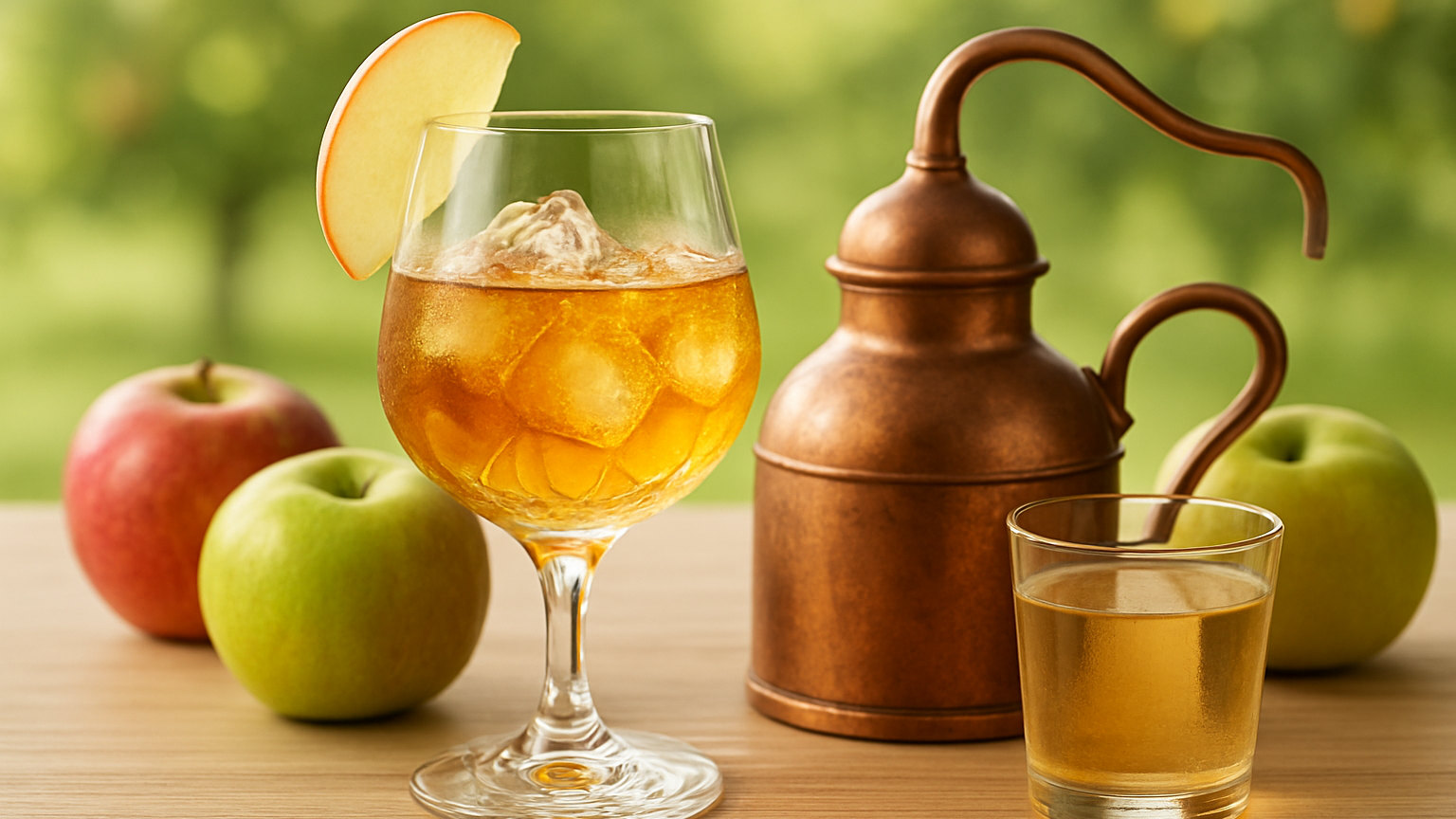
Aged calvados neat, at room temperature, in a tulip glass, as you would a cognac. Young calvados works better long, with tonic water and a slice of apple, or in cocktails.
It substitutes well for whisky or cognac in several classics. A calvados old fashioned is excellent, and it works in a sidecar or a sour where the apple character adds something the original lacks. It is also a natural partner for cheese, particularly the strong washed rind cheeses of the same region.
Is American apple brandy the same?
Related but distinct. Applejack and American apple brandy have their own long history, and some are made by distillation while others historically involved freeze concentration. They are usually made from different apple varieties and aged in different wood, giving a sweeter, more bourbon-adjacent profile.
Eating apples rather than cider apples are often used, which produces a fruitier and less tannic spirit. Neither approach is better; they are aiming at different things, and a Pays d'Auge and an American apple brandy tasted together make the difference obvious.