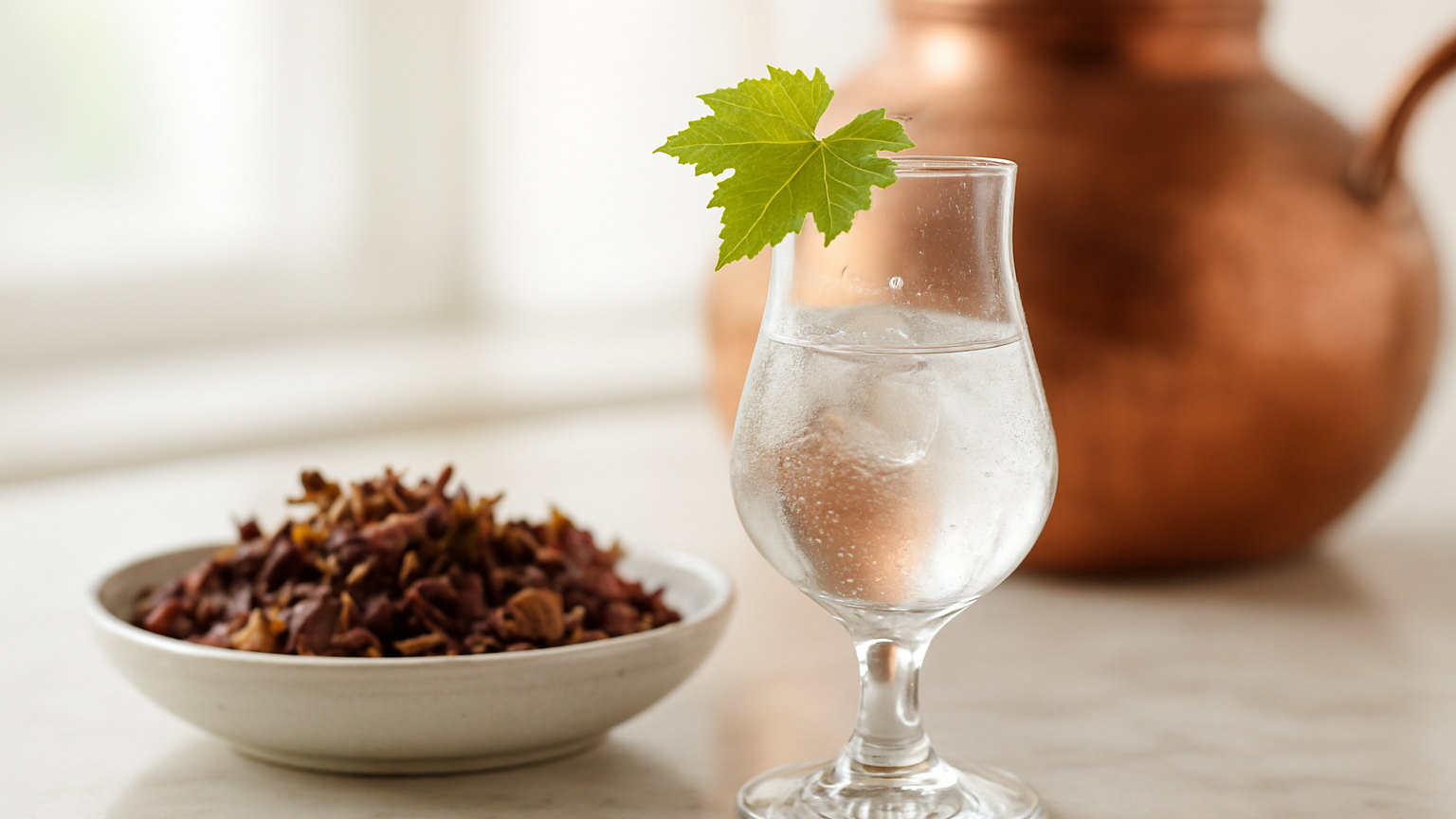
Grappa is made from vinacce, the grape skins, pulp, pips and sometimes stalks left over after pressing for wine. It is therefore a pomace brandy rather than a wine brandy, which puts it in the same family as cognac while making it a very different proposition.
Why use pomace at all?
Originally, thrift. Pomace was a waste product of winemaking, still containing sugar and alcohol, and distilling it turned agricultural residue into something saleable. Grappa was a peasant spirit made on farms, and its rough reputation dates from that period.
Modern grappa is a different product. Producers now treat pomace as a raw material to be handled carefully, collecting it fresh and distilling it quickly, and the best examples are refined spirits sold at serious prices.
How is it made?
Pomace is collected as soon as possible after pressing, because it oxidises and spoils quickly. It may already contain alcohol if it came from red winemaking, where fermentation happens with the skins, or it may need fermenting first if it came from white wine pressing.
It is then distilled, traditionally in a bain marie or steam heated still to avoid scorching the solid material, which would give burnt flavours. Both pot stills and column stills are used, and many producers distil each grape variety separately.
Is it protected?
Yes. Grappa is a protected designation and may only be produced in Italy, the Italian speaking part of Switzerland and San Marino, from Italian grape pomace, and distilled in Italy.
France has its equivalent in marc, with marc de Bourgogne and marc de Champagne the best known. Other countries have their own pomace spirits, including tsipouro and tsikoudia in Greece and orujo in Spain.
What does it taste like?
Sharper and more angular than wine brandy, with pronounced grape skin, herbal and sometimes floral notes and a distinctly dry finish. Young grappa is clear and can be austere.
Single varietal grappa, made from one grape, has become the quality end of the category. Moscato gives intense floral aromatics, nebbiolo gives structure and depth, and amarone pomace gives richness. These are labelled by variety and are a good deal more expressive than blended grappa.
Is grappa aged?
Some is. Grappa giovane is clear and unaged. Grappa affinata or invecchiata has spent time in wood, usually at least a year, taking colour and vanilla. Riserva or stravecchia indicates longer ageing.
Aged grappa moves closer to conventional brandy in character, gaining softness at the cost of some of the fresh grape aromatics that distinguish the category.
How should it be served?
Young grappa is best lightly chilled, around ten to fifteen degrees, in a small tulip glass. Very cold serving mutes the aromatics, and warm serving makes the alcohol dominate.
Aged grappa is served at room temperature like a brandy. Either way, small measures suit it, as most grappa is bottled between 40 and 50 per cent.
The traditional Italian use is as a digestif after a meal, and caffe corretto, an espresso with a splash of grappa added, is the everyday version. Pouring a little grappa into the empty coffee cup, known as resentin, is a regional habit worth knowing about.
Is it worth trying if you disliked it before?
Quite possibly. Most people who have written grappa off encountered a cheap blended bottle served as an afterthought at the end of a meal. A single varietal grappa from a good producer, served at the right temperature, bears little resemblance to it and is one of the more distinctive spirits available.
What should you look for on the label?
A named grape variety, a named producer and a region. Grappa made from the pomace of a specific wine, particularly from prestigious appellations, is usually made with more care because the raw material itself was expensive to obtain.
Strength is worth checking too. Most sits between 40 and 50 per cent, and the higher end suits aged expressions better than young ones.