The wide bowled balloon glass, warmed over a candle and cradled in the palm, is the image most people carry of brandy. It is also close to the worst way to serve it, and most cognac houses now recommend something quite different.
What is wrong with the balloon snifter?
Its wide bowl gives a large surface area, which lets ethanol evaporate rapidly. The vapour then collects in the bowl and hits your nose before the subtler aromas can register.
The result is that a fine cognac in a balloon smells mostly of alcohol. The delicate floral and fruit notes that distinguish one brandy from another are simply buried, and no amount of swirling recovers them.
The glass became popular in the twentieth century as a piece of theatre rather than as a tasting vessel, and its persistence owes more to films than to anyone who works with brandy.
What should you use instead?
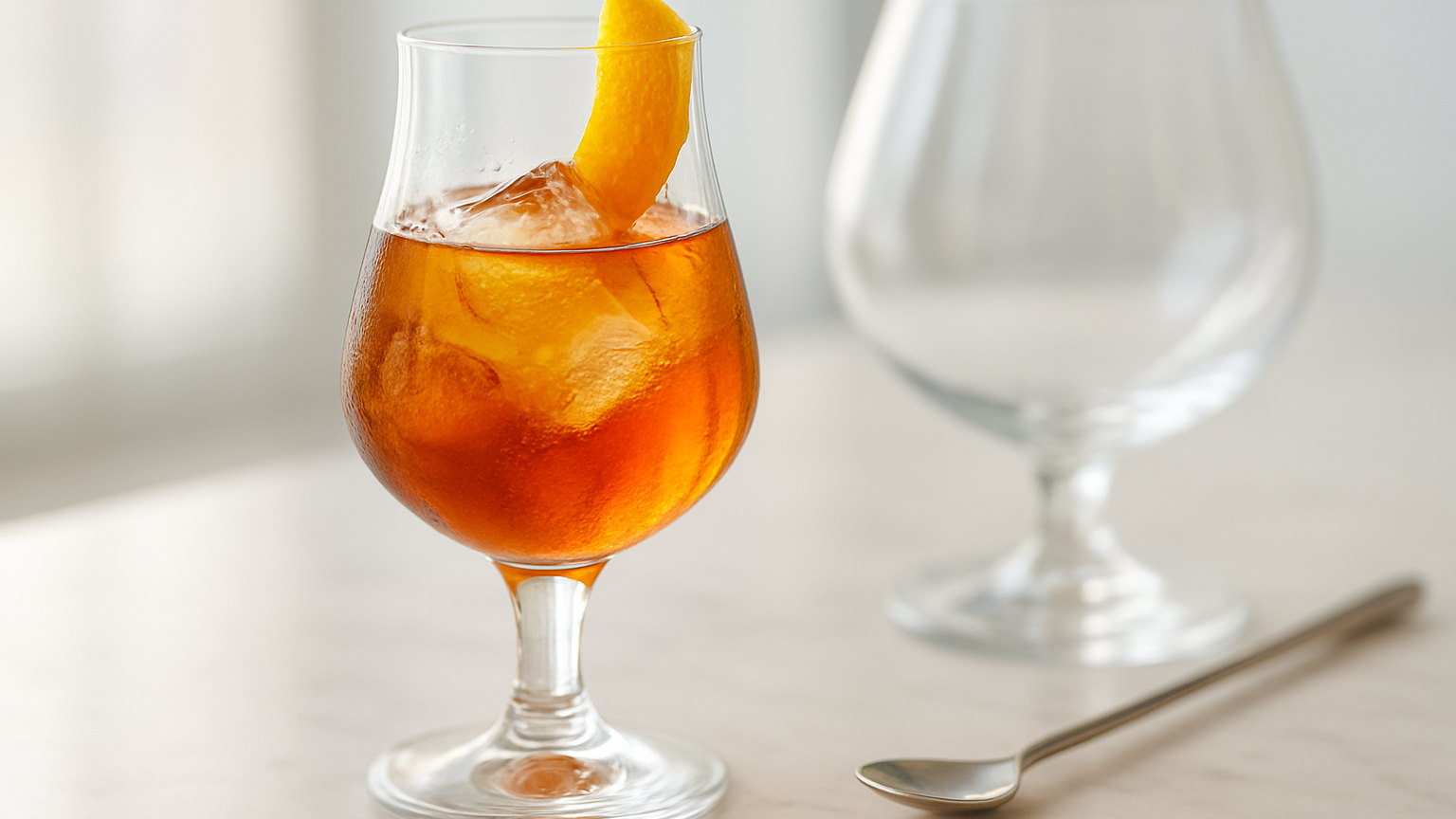
A tulip shaped glass, narrower at the rim than at the widest point. The shape concentrates aroma and channels it upwards while limiting the surface area available for ethanol to evaporate from.
- A copita or sherry style glass works very well and is inexpensive.
- A small white wine glass is a perfectly good substitute if you have nothing else.
- Purpose designed cognac tulips are made by several glassmakers and are the standard in the region itself.
Whatever you use, pour a modest measure. A large pour in a small glass defeats the shape.
Should brandy be warmed?
No, and this is the clearest reversal of traditional practice. Heating drives off alcohol faster, which increases the very problem the balloon glass creates.
Warming over a flame was a device to make thin, harsh brandy more palatable by forcing its limited aromatics into the air. A good cognac needs no such help, and applying heat to it destroys the balance the blender spent years building.
The warmth of your hand around the bowl is sufficient and is all that is needed. Room temperature, around eighteen to twenty degrees, is where brandy shows best.
Does swirling help?
Gently, once or twice, to release aromatics. Vigorous swirling in a wide glass simply accelerates alcohol evaporation.
Letting the glass rest for a few minutes after pouring does more good than swirling. Brandy opens noticeably with air, and older spirits in particular change over ten or fifteen minutes in the glass.
Should you add water or ice?
A few drops of water can help a high strength or very old brandy, in the same way it does with whisky, reducing the alcohol burn and letting other aromas through. Most cognac is bottled at 40 per cent and needs little.
Ice is a matter of preference rather than error. Cognac on the rocks is common in several markets and is a perfectly reasonable warm weather serve, at the cost of muting the aroma. Younger expressions such as VS suit it better than old ones.
What about long drinks?
Brandy with tonic or ginger ale over ice is an excellent drink and has become a standard serve in France itself. A summit, which is cognac with tonic, cucumber and lime, was promoted by the region for exactly this purpose.
Use a VS or VSOP for these. Putting an XO into a tall glass with a mixer wastes the qualities you paid for, and the mixer will flatten them regardless of how good the spirit is.
Does the glass really make that much difference?
Pour the same brandy into a balloon and a tulip and smell them side by side. The difference is immediate and larger than most people expect, and it is the cheapest improvement available to anyone who already owns a decent bottle.
The same principle applies across spirits. Any glass that narrows at the rim concentrates aroma, which is why nosing glasses for whisky, sherry copitas and cognac tulips all share broadly the same shape despite being sold for different categories.