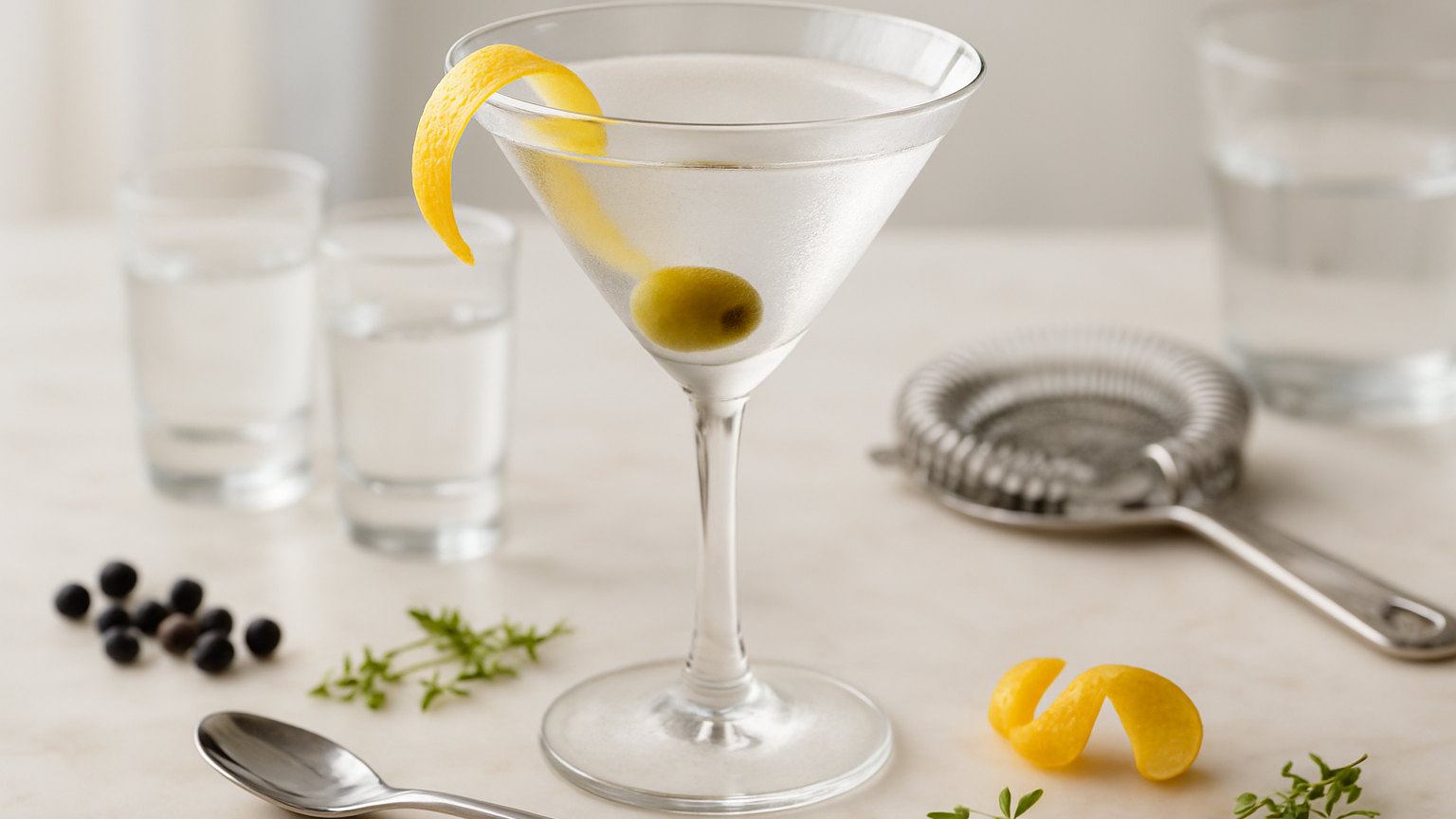
A martini has two ingredients and a great deal of water from the ice. There is nothing to hide behind, which is why bartenders use it to assess a gin and why the choice of bottle matters more here than in any other classic drink.
What does a martini ask of the gin?
Three things. Enough botanical intensity to remain audible after chilling and dilution, enough strength that the finished drink does not taste watery, and a profile that works with vermouth rather than against it.
Chilling is the reason strength matters. Cold suppresses aroma, and a stirred martini finishes around 28 to 32 per cent alcohol after dilution, having picked up roughly a quarter of its final volume as water from the ice. A gin bottled at the legal minimum of 37.5 per cent has very little left to give by that point, which is why the same bottle can taste excellent in a gin and tonic and thin in a martini.
Which style should you choose?
- Classic London dry at 43 to 47 per cent. The default and the safest choice. Juniper forward, dry, and exactly what the drink was built around.
- Navy strength at 57 per cent. Makes an assertive, aromatic martini and stands up to a wetter ratio with plenty of vermouth. Not a gentle drink.
- Earthier, root heavy styles. Produce a rounder and slightly savoury martini, which suits drinkers who find sharp juniper too austere.
- Floral or cucumber led gins. Delicate and easily lost. They can work in a wetter martini with a light touch, but the character often disappears under the vermouth.
- Sweetened or fruit flavoured gins. Generally a poor fit. The drink relies on dryness for its structure.
How much vermouth should you use?
Far more than the mythology suggests. A ratio between five to one and three to one gin to vermouth gives a drink with actual flavour, and many bartenders work at two to one or even lower. The tradition of merely waving the vermouth bottle at the glass produces cold gin rather than a cocktail.
Vermouth freshness is the other half of the equation and is where most home martinis fail. Vermouth is a fortified wine, it oxidises, and an open bottle kept in a cupboard for six months has gone stale. Keep it refrigerated and use it within a month or two, buying small bottles rather than large ones.
Should a martini be shaken or stirred?
Stirred, if you want the classic result. Stirring chills with less aeration, producing a clear, silky, weighty drink. Shaking chills faster, dilutes more, aerates the liquid and leaves tiny ice fragments, giving a cloudier and sharper drink with a lighter texture.
Neither is wrong and the shaken version has plenty of admirers. What is worth knowing is that the difference is real and physical rather than a matter of etiquette.
Does the garnish change the gin you should pick?
It changes the drink enough to be worth pairing deliberately. A lemon twist adds citrus oil and brightens the whole thing, which suits a classic juniper led gin. An olive adds salt and a savoury note, which pairs better with an earthier gin. A pickled onion, making the drink a gibson, adds sharp acidity and works with something dry and structured.
Does an expensive gin make a better martini?
Not reliably. What matters is style and strength rather than price, and a well made mid priced London dry at 45 per cent will usually outperform a delicate, expensive, botanically elaborate gin in this specific drink, because the elaborate one was designed to be noticed in a tall glass with tonic.
The most useful experiment is to make two small martinis side by side with different gins and the same vermouth, ratio and technique. The difference is unmistakable, and after two or three such comparisons you will know which bottle you want in the freezer rather than which one reviews well.