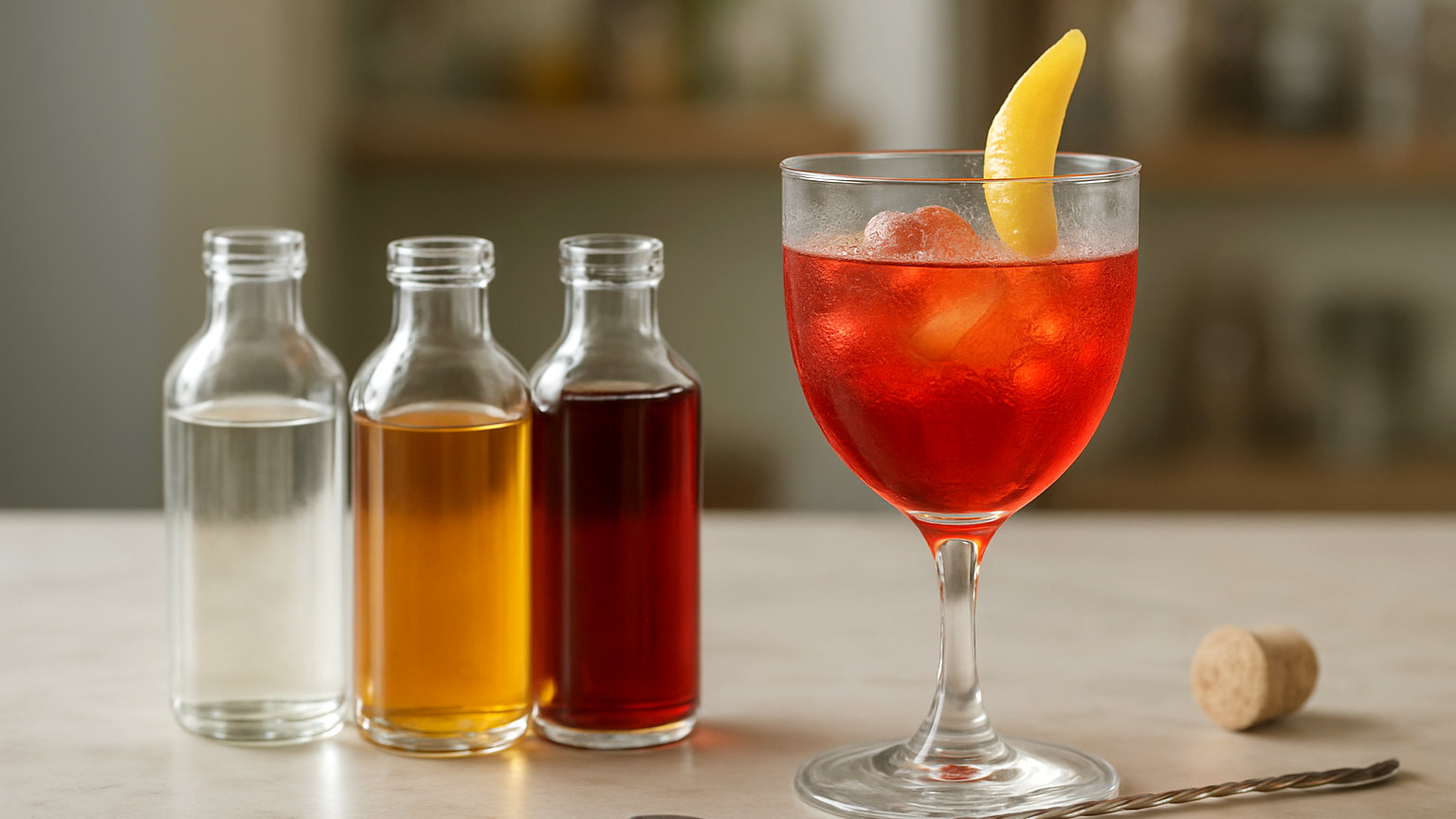
The word creme on a liqueur bottle causes regular confusion. Creme de cassis, creme de menthe and creme de cacao contain no dairy whatsoever. The term refers to a high sugar content and the thick texture that comes with it.
What does the law require?
A liqueur labelled creme de must contain at least 250 grams of sugar per litre, more than double the minimum for an ordinary liqueur.
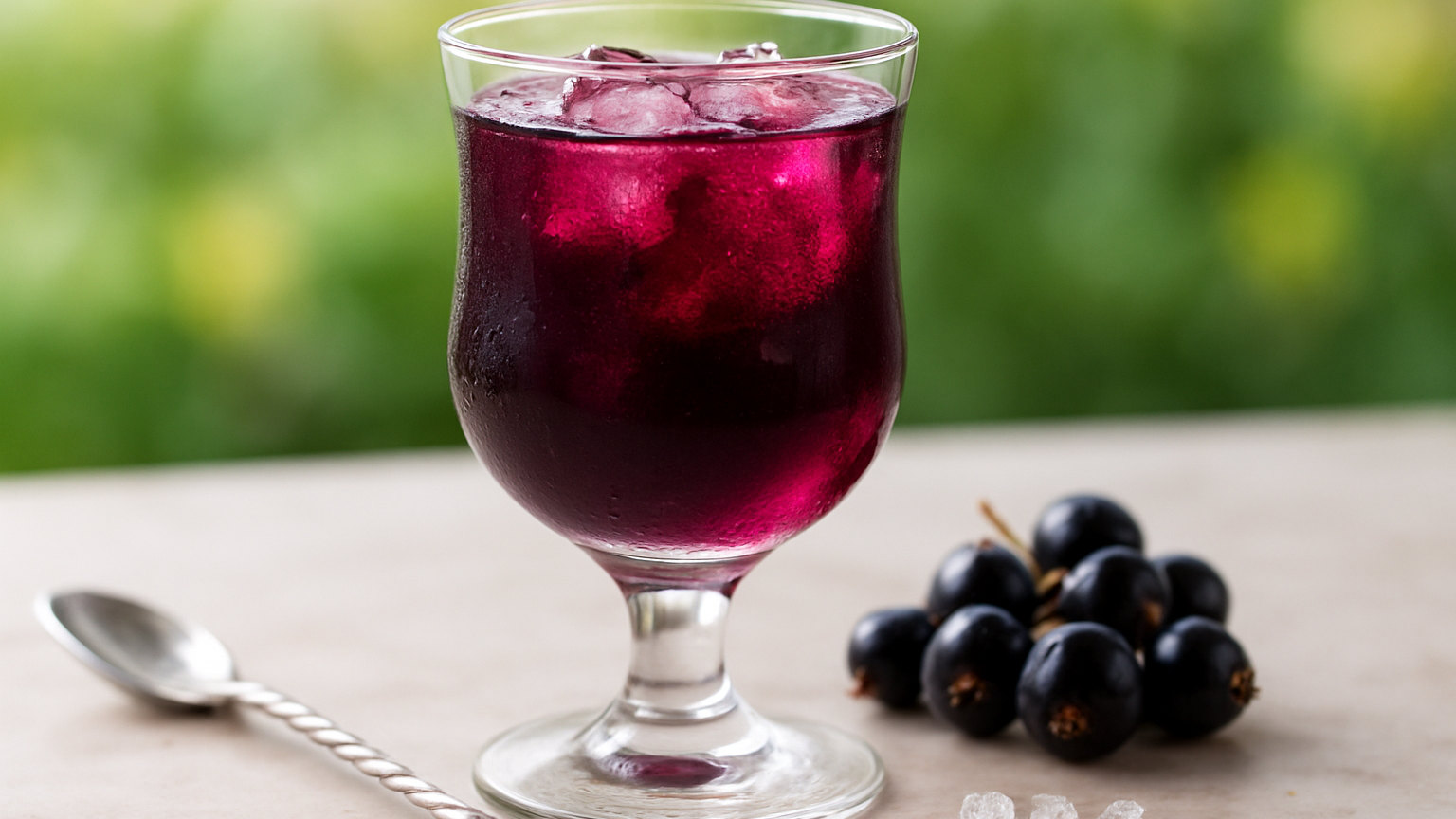
Creme de cassis has a higher requirement again, at 400 grams per litre. That is an enormous quantity of sugar, and it explains both the syrupy texture and why cassis is used in small measures.
Which are the important ones?
- Creme de cassis. Blackcurrant, deep purple, intensely fruity. The base of a kir and a kir royale.
- Creme de cacao. Chocolate, available dark or white, the white being clear rather than differently flavoured. Used in a brandy alexander and a grasshopper.
- Creme de menthe. Mint, green or clear. Used in a grasshopper and a stinger.
- Creme de violette. Floral and unmistakably violet. Essential in an aviation.
- Creme de mure, blackberry, used in a bramble.
- Creme de peche, framboise, banane and others, each following the same pattern.
How do you use them?
Sparingly, and with the sugar accounted for. Because a creme is at least a quarter sugar by weight, adding one to a cocktail means reducing or removing any other sweetener.
A kir is a good illustration of how little is needed: a small measure of cassis topped with dry white wine, or with sparkling wine for a kir royale. The proportion of cassis is small precisely because the liqueur is so concentrated.
In a bramble, the creme de mure is drizzled over the finished drink rather than shaken in, so the sweetness arrives gradually rather than all at once.
Does quality vary?
Considerably. At the cheap end, a creme may be little more than sugar syrup with flavouring and colouring. At the quality end, particularly with cassis from Burgundy, the fruit content is high and the flavour genuinely tastes of the blackcurrant rather than of sweets.
Since a bottle lasts a long time in most homes, buying the better version is usually worthwhile. The difference shows most in a kir, where there are only two ingredients.
Which are worth owning?
For most home bars, one or two at most. Creme de cassis is the most versatile, working in a kir, a bramble variation and as a modifier in whisky and gin drinks.
Beyond that, buy the specific creme a drink you actually make requires. Creme de violette in particular is bought for the aviation and then used for very little else, which is worth knowing before committing to a full bottle.
How long do they keep?
Longer than most liqueurs, thanks to the sugar, though the fruit aromatics fade. Expect a year or two of good flavour after opening, with the bright fruit character going first.
Cassis and other dark fruit cremes darken and dull over time. Storing them in a cupboard rather than in light slows this considerably, and refrigeration after opening extends fruit flavour further, at the cost of making them harder to pour.
What about crystallisation?
Common in cremes and entirely harmless. Sugar crystals form around the neck or in the base of the bottle, particularly if it has been stored cold or the cap has not sealed properly.
Warm the bottle gently and shake it to redissolve the crystals, and wipe the neck after each pour to stop the cap sticking. It is a nuisance rather than a fault, and an inevitable consequence of the sugar levels the category requires.
Can you make a creme at home?
Yes, and fruit versions are straightforward. Steep the fruit in spirit for a week or two, strain thoroughly, then add sugar syrup until the texture thickens noticeably.
Reaching commercial sugar levels at home usually produces something cloying, so most people stop well short and end up with a fruit liqueur rather than a true creme. That is generally the better drink, though it will not behave identically in a recipe written for the commercial version.