Navy rum is one of the few spirits categories named after an institution rather than a place or a process. The institution is the Royal Navy, the ration was genuine, and it ran for more than three hundred years before ending on a specific and well documented date.
What was the rum ration?
Rum entered the Royal Navy in the seventeenth century, largely because it kept better at sea than beer and was available in the Caribbean. It became a formal daily issue, and for a long period the allowance was half a pint of rum per man per day.
That is a substantial quantity, and the consequences for shipboard discipline were predictable enough that the Navy took steps to manage it.
What was grog?
In 1740 Admiral Edward Vernon ordered that the ration be diluted with water before issue, and split into two servings during the day rather than one. Vernon was known as Old Grog after the grogram cloak he wore, and the diluted ration took his nickname.
Lime or lemon juice and sugar were added later, which had the incidental benefit of supplying vitamin C. The connection between citrus and the prevention of scurvy was established during this period, and the Navy's adoption of lime juice is the origin of the term limey.
How did it end?
The ration was progressively reduced through the nineteenth and twentieth centuries as ships became more technical and the incompatibility of alcohol with modern machinery became obvious. The final issue took place on 31 July 1970, a date remembered as Black Tot Day.
Remaining stocks were placed in storage, and bottles of genuine surviving naval rum occasionally come to auction at prices reflecting their rarity rather than their drinkability.
What was actually in it?
A blend, and this is the part that informs the modern style. Naval rum was assembled from several Caribbean sources, with Demerara rum from Guyana forming a substantial part, alongside Trinidadian and Jamaican components.
The resulting profile was dark, rich and full bodied, with molasses, treacle, dried fruit and a distinct smoky depth from the Demerara stills. It was blended for consistency across a fleet rather than to showcase any one distillery.
What does navy rum mean on a bottle today?
Very little in legal terms. There is no protected definition, and any producer may use the phrase. In practice it signals a dark, full bodied blended rum in the historic style, frequently with Demerara character and often bottled above 40 per cent.
Some producers make a serious attempt to reconstruct the blend from the appropriate distilleries. Others use the term as packaging for an ordinary dark rum. As so often with rum, the country of origin and the distilleries named tell you more than the style description does.
How does navy rum relate to navy strength?
They are separate ideas that overlap. Navy strength refers specifically to 57 per cent alcohol, the historic gunpowder test threshold. Navy rum refers to the blend style and may be bottled at any strength.
A rum can be one, both or neither. A bottle labelled navy strength rum at 57 per cent is making a claim about proof; one labelled navy rum at 40 per cent is making a claim about style.
What do you do with it?
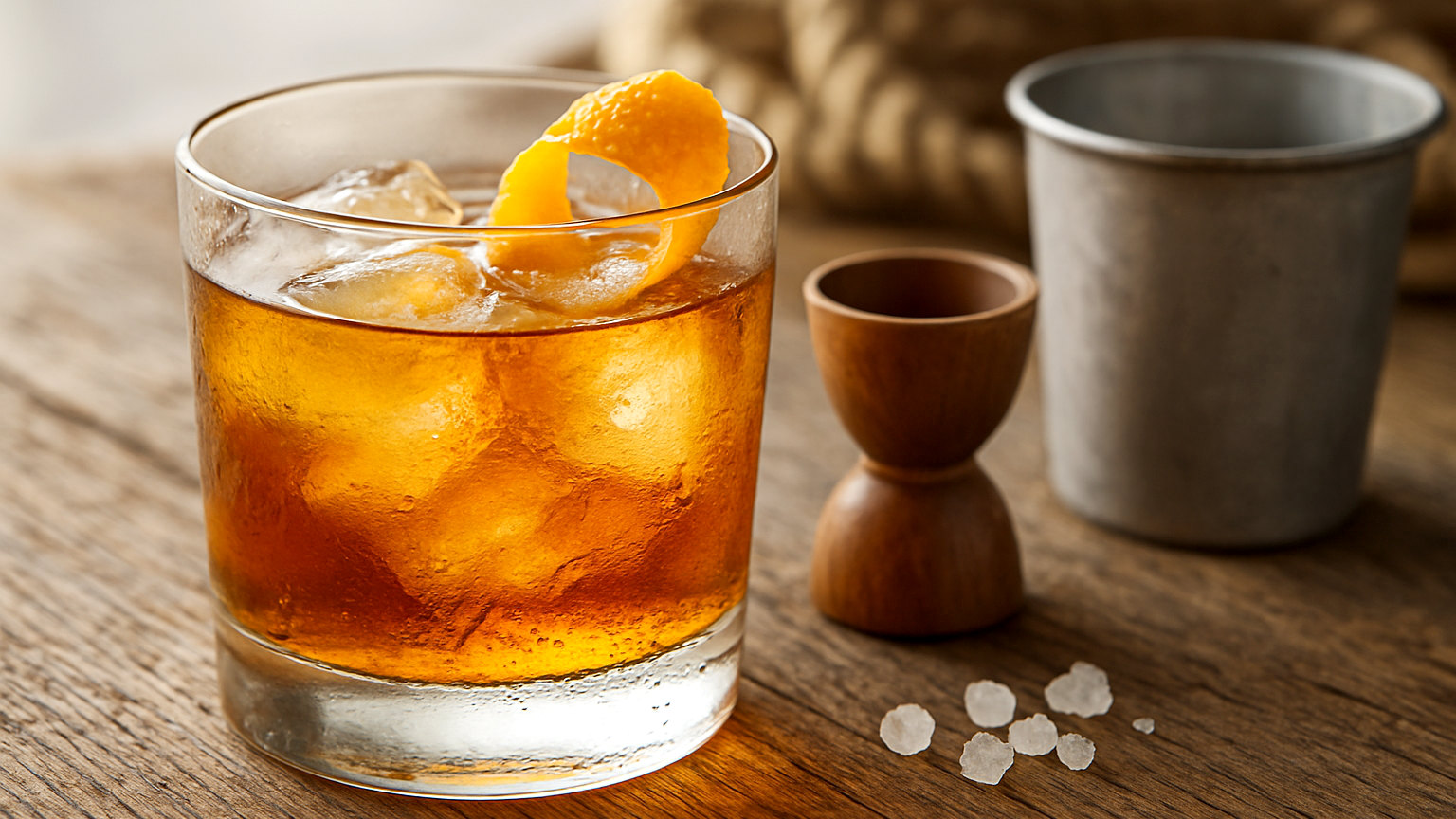
It suits drinks that need a rum with weight. A dark and stormy with ginger beer and lime works well, as does a grog made properly with water, lime and a little sugar, which is a better drink than its reputation suggests.
It is also the traditional base for rum punch and for hot buttered rum, and the richness stands up to spices, citrus and sweetness where a lighter rum would disappear. Neat, it rewards a splash of water, and the better examples have genuine complexity beneath the molasses.
If you want the historic version rather than the style, look for bottlings that name their component distilleries, particularly Guyanese ones. Those are the rums attempting to recreate the blend rather than borrowing the name.