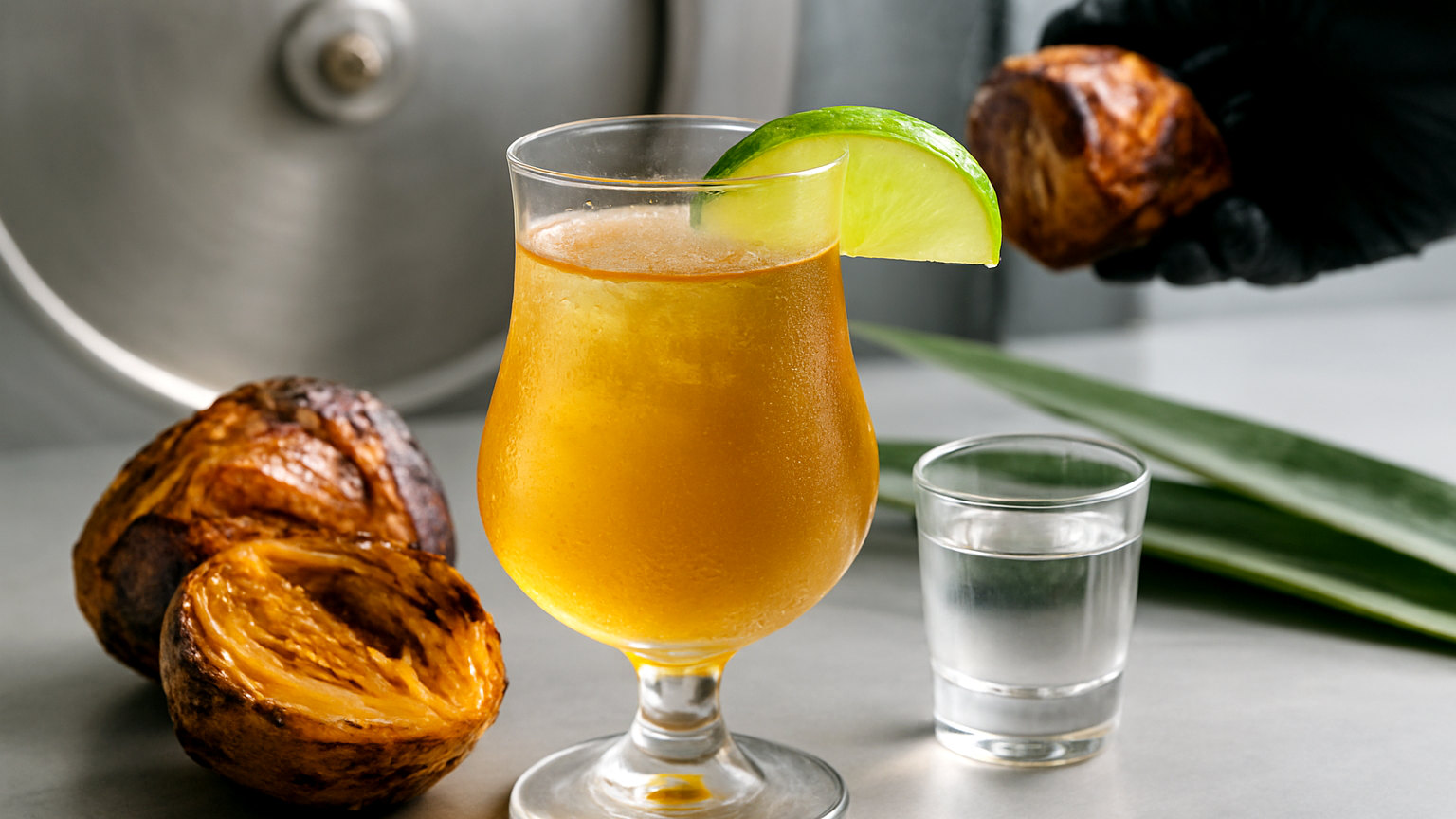
Agave has to be cooked before it can be fermented, because the plant stores energy as inulin rather than as fermentable sugar. How that cooking is done is one of the most consequential decisions in tequila production and one of the least visible to the buyer.
What are the three methods?
- Brick ovens, or hornos. Masonry chambers where agave is cooked with steam for 24 to 72 hours, then rested. The traditional method.
- Autoclaves. Stainless steel pressure vessels that cook under pressure in eight to fourteen hours. Now the most common approach by volume.
- Diffusers. Industrial machines that shred raw agave and wash the sugars out with hot water, often with acid, then cook the resulting liquid rather than the plant.
What does each do to the flavour?
Slow cooking in a brick oven allows the Maillard reaction and caramelisation to develop fully, producing cooked agave, sweet potato, molasses and baked fruit notes. It also gives time for the plant's own enzymes and structures to break down gradually.
Autoclaves reach the same chemical end point faster and under pressure. The result is cleaner and lighter, with less of the deep cooked character, though a well run autoclave process can produce very good tequila. Many respected distilleries use them.
Diffusers are the contested one. Because the agave is never really cooked as a plant, much of the flavour development simply does not happen, and acid hydrolysis is used to break the inulin down chemically. The resulting spirit is widely described as thin, neutral and lacking agave character, and additives are often used to compensate.
Why do producers use faster methods?
Yield and cost. A diffuser extracts a substantially higher proportion of the available sugar from each plant than traditional cooking, which matters enormously when agave is expensive. Autoclaves cut cooking time by three quarters and reduce labour and energy costs.
During agave shortages these pressures intensify, which is when diffuser use tends to spread.
Does the label tell you?
Almost never. There is no requirement to disclose cooking method, and no producer using a diffuser advertises the fact.
What you can do is look for the opposite claim. Distilleries using brick ovens tend to say so prominently, often alongside references to tahona crushing and long fermentation. Independent enthusiast databases also track production methods by NOM number, and looking up the four digit code on a bottle will usually tell you what equipment the distillery runs.
How does crushing fit in?
After cooking, the agave must be crushed to release the juice, and the same traditional versus efficient split applies.
A tahona is a large stone wheel that turns in a circular pit, crushing cooked agave slowly and keeping the fibres in contact with the juice. It is slow, expensive and produces a notably textured, earthy spirit. Roller mills are faster and cleaner. Some distilleries blend tahona and roller mill batches to get both qualities.
Can you taste the difference?
In a blanco, clearly. Oven cooked, tahona crushed tequila has weight, sweetness and a cooked vegetal depth that diffuser produced spirit does not. Side by side the gap is obvious even to someone new to the category.
In an aged tequila the difference narrows, because oak fills some of the space. In a margarita with strong lime and orange liqueur it narrows further, though a thin spirit still shows as a hollow middle in the drink.
What should you do with this?
Use it as a tiebreak when choosing between similarly priced bottles. Look up the NOM number, check what equipment the distillery uses, and favour those that cook in ovens and disclose their methods.
It is also the best explanation for why two bottles both labelled 100 per cent agave, at similar prices, can taste so different. The phrase covers the raw material; it says nothing about what was done to it.
None of this means autoclaves produce bad tequila. Plenty of well regarded distilleries use them and make excellent spirit, often blending autoclave and oven cooked batches deliberately. The method worth avoiding is the diffuser, and that is the one no label will admit to.