Vodka is frequently made from wheat, rye or barley, all of which contain gluten. It is also generally accepted as gluten free. Both statements are true, and the reason is what happens during distillation.
Why does distillation remove gluten?
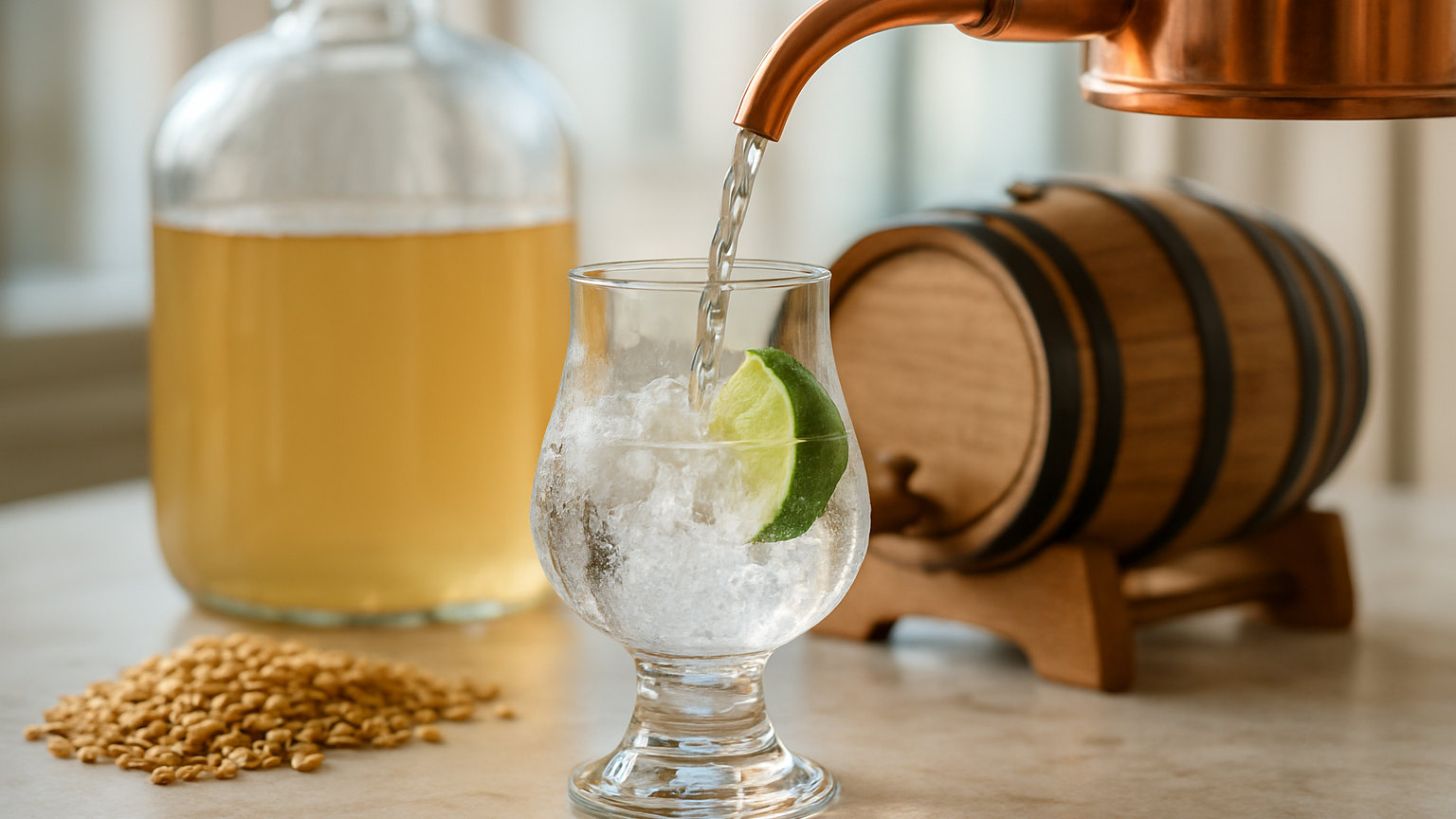
Gluten is a protein, and proteins are large, heavy molecules with high boiling points. Distillation works by evaporating alcohol and condensing the vapour, and proteins do not evaporate. They stay behind in the still.
Vodka is additionally rectified to at least 96 per cent alcohol, which is the most thorough separation applied to any spirit category. Whatever survives that process, gluten protein is not part of it.
What do the authorities say?
Food standards bodies in the United Kingdom, European Union and United States accept that distilled spirits made from gluten containing grains may be labelled gluten free, on the basis that the distillation process removes the protein.
Coeliac support organisations in several countries take the same position and advise that plain distilled spirits are safe for people with coeliac disease. Testing of distilled spirits made from wheat and barley consistently finds gluten below the detection thresholds used for gluten free labelling.
None of this is medical advice, and anyone with coeliac disease or a diagnosed sensitivity should follow guidance from their own clinician or national coeliac organisation rather than a general article.
Where does the risk actually lie?
Not in the distillation, but in what happens afterwards.
- Flavoured vodka. Flavourings, colourings and sweeteners added after distillation have not been through the still, and some may contain gluten or be produced on shared equipment.
- Additives for texture. Where any post distillation addition is made, the reasoning about protein removal no longer covers it.
- Mixers. Some beer based or malt based mixers contain gluten, and a vodka drink is only as gluten free as everything else in the glass.
Plain, unflavoured vodka is the straightforward case. Anything with a flavour on the label deserves a look at the producer's own statement.
What is grain free vodka?
Vodka made from a base other than cereal grain. It exists partly for people who prefer to avoid the question entirely and partly because different bases produce different textures.
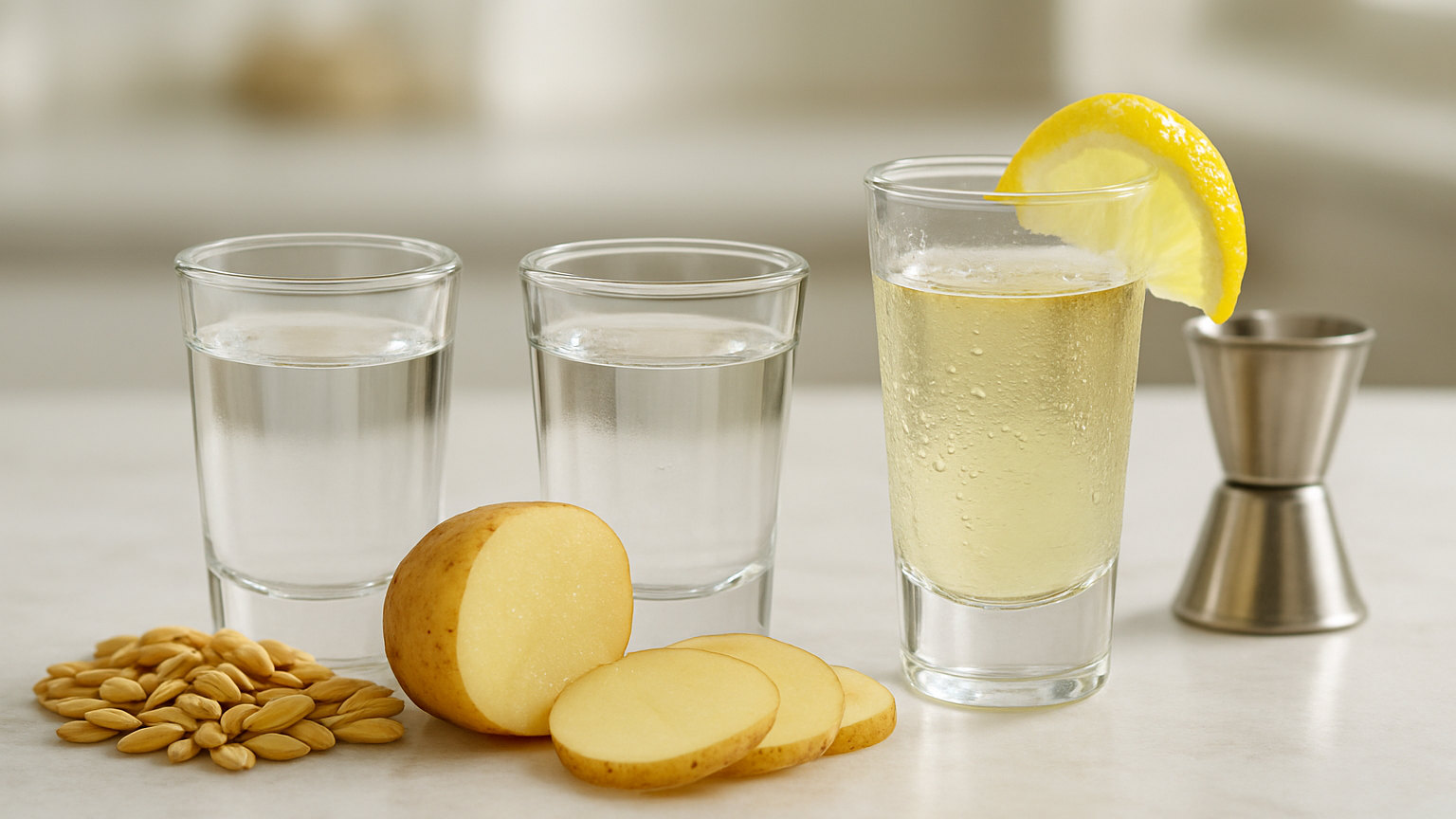
- Potato vodka, traditional in Poland, with a fuller and creamier mouthfeel.
- Grape vodka, made from wine or pomace, soft and faintly floral.
- Maize vodka, which is technically a grain but not a gluten containing one, clean and slightly sweet.
- Sugar cane, molasses and sugar beet vodka, high yielding and generally neutral.
- Whey vodka, made from a dairy byproduct, and unusual enough to be a talking point.
Producers using these bases almost always state it prominently, since it is a selling point.
Is grain free vodka better?
Not inherently. It is different, and the differences are mostly textural. Potato gives weight, grape gives softness, maize gives neutrality. If gluten is a concern for you, grain free removes the question altogether. If it is not, choose on the basis of how the vodka tastes rather than what it was made from.
How do you check a specific bottle?
Look for a gluten free claim on the label, which in most markets is a regulated statement rather than a loose one. Failing that, check the producer's website, since almost all of them address the question directly.
For flavoured products, look for an ingredients statement or contact the producer. Spirits are not generally required to list ingredients, so the absence of a list is not evidence either way, and asking is the only reliable route.
What about beer based or malt spirits?
A small number of products described as vodka in some markets are made by distilling a malt based wash to a lower strength, retaining more character. Where distillation is complete these are subject to the same reasoning about protein removal, but the category is less standardised and the labelling less consistent, so it is worth checking rather than assuming.
Cross contamination during bottling is the other question people raise. Large scale spirits production generally runs on dedicated lines with cleaning regimes between products, and gluten free claims on the label are made against a regulated threshold rather than as a general assurance, so the claim itself is the thing to look for.