
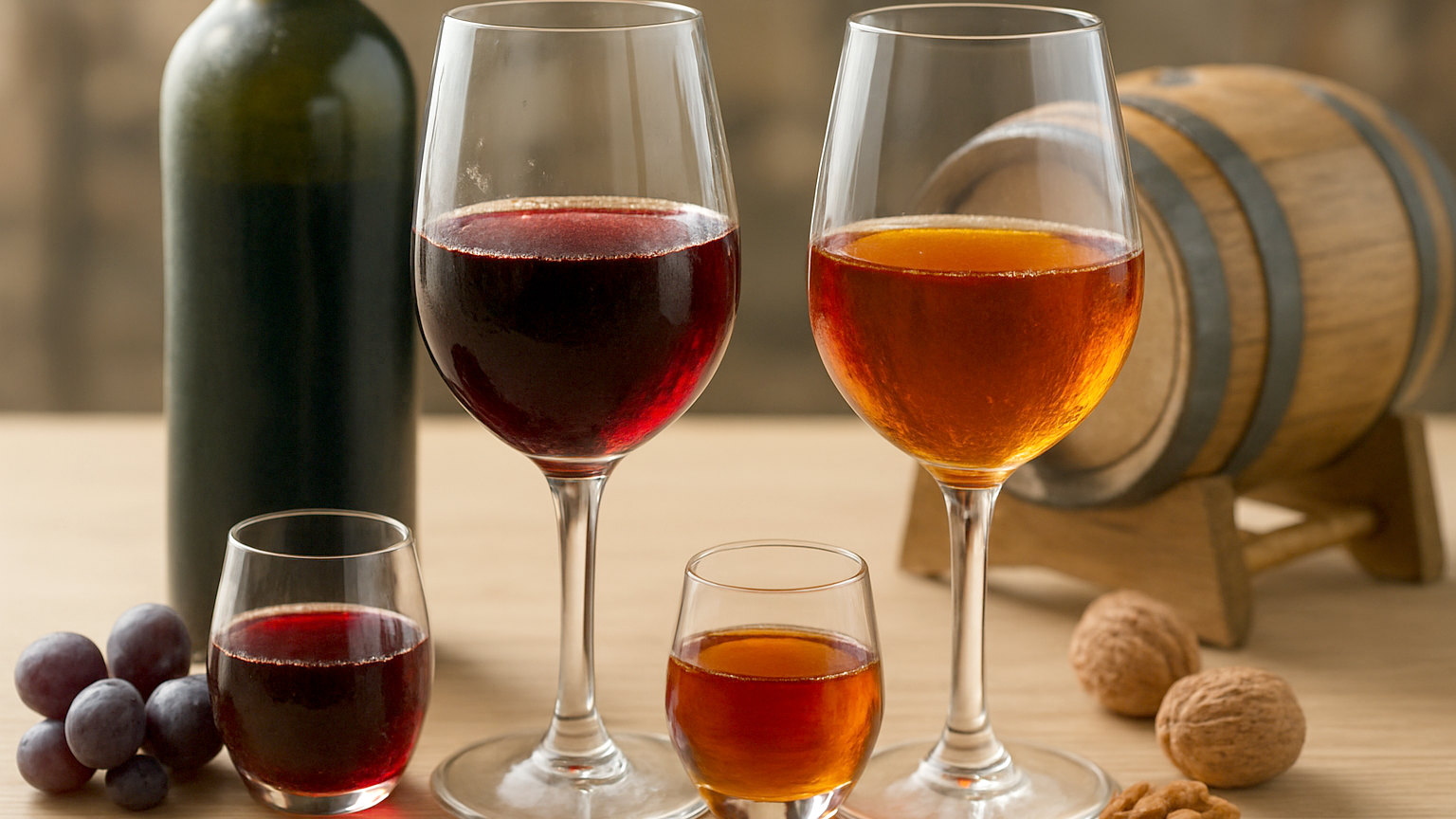
The port shelf is confusing because the names describe several different things at once: colour, ageing method, quality level and vintage status. The confusion dissolves once you know that port divides into two families, and that the division is about where the wine spent its life.
Wines aged in bottle keep their fruit and their deep colour, developing slowly in the absence of oxygen. Wines aged in cask lose colour and gain nutty, caramelised complexity through slow oxidation. Every style belongs to one camp or the other.
The bottle-aged family
Ruby is the entry point: young, deeply coloured, fruity port aged briefly in large vessels and bottled to be drunk immediately. Reserve ruby is a step up, with more selective sourcing and a little more age.
Late bottled vintage, usually abbreviated to LBV, comes from a single year and spends four to six years in cask before bottling. Most is filtered, which means it needs no decanting and keeps reasonably well once opened, and it is the sensible everyday choice for anyone who wants something approaching the vintage style without the price. Unfiltered or traditional LBV exists too, throws a sediment and behaves more like vintage port.
Vintage port sits at the top. It is made only in years the houses declare, which happens a few times a decade, spends around two years in cask and is then bottled unfiltered to age in glass for anything from ten to fifty years. It is powerful, tannic and closed when young, throws a heavy sediment and requires decanting. Single quinta vintage port is the same thing from one estate, usually in years not declared generally, and is often better value.
The cask-aged family
Tawny port ages in smaller casks with air contact, gradually losing its purple colour and turning amber, while the fruit becomes fig, walnut, caramel and dried apricot. Basic tawny is young and unremarkable, but aged tawny carrying an indication of ten, twenty, thirty or forty years is where the category becomes genuinely rewarding.
Those numbers are important to read correctly. They indicate the average age of the blend rather than the age of the youngest component, which is unusual in wine labelling and is stated openly by the trade.
Colheita is a tawny from a single year, cask-aged for a minimum of seven years and often far longer, with both the harvest year and the bottling date on the label. These are frequently the most interesting bottles in the category and considerably cheaper than vintage port of similar age.
The rest
White port is made from white grapes and ranges from dry to sweet. Served long over ice with tonic and a slice of lemon, it is one of the better summer drinks and bears no resemblance to what people expect port to be. Rosé port is a modern invention aimed at the same market.
Crusted port is a blend of several years bottled unfiltered, developing a sediment like vintage and needing the same treatment at a lower price. Garrafeira is a rare Portuguese speciality involving ageing in glass demijohns.
Choosing between them
The practical question is what you want the wine to do. For a bottle to open now and finish over a fortnight, aged tawny is the answer: it needs no decanting, it is already mature, and its oxidative character means air does it no further harm.
For a wine to drink with blue cheese on a winter evening at modest cost, LBV is the sensible choice. For something to lay down or to mark an occasion, vintage port is what the category is famous for, with the accompanying requirements of decanting, patience and finishing the bottle within a day or two.
Anyone new to the category is generally better served starting with a ten year old tawny than with a young vintage, since the tawny is ready and the vintage will be difficult for another decade.


