
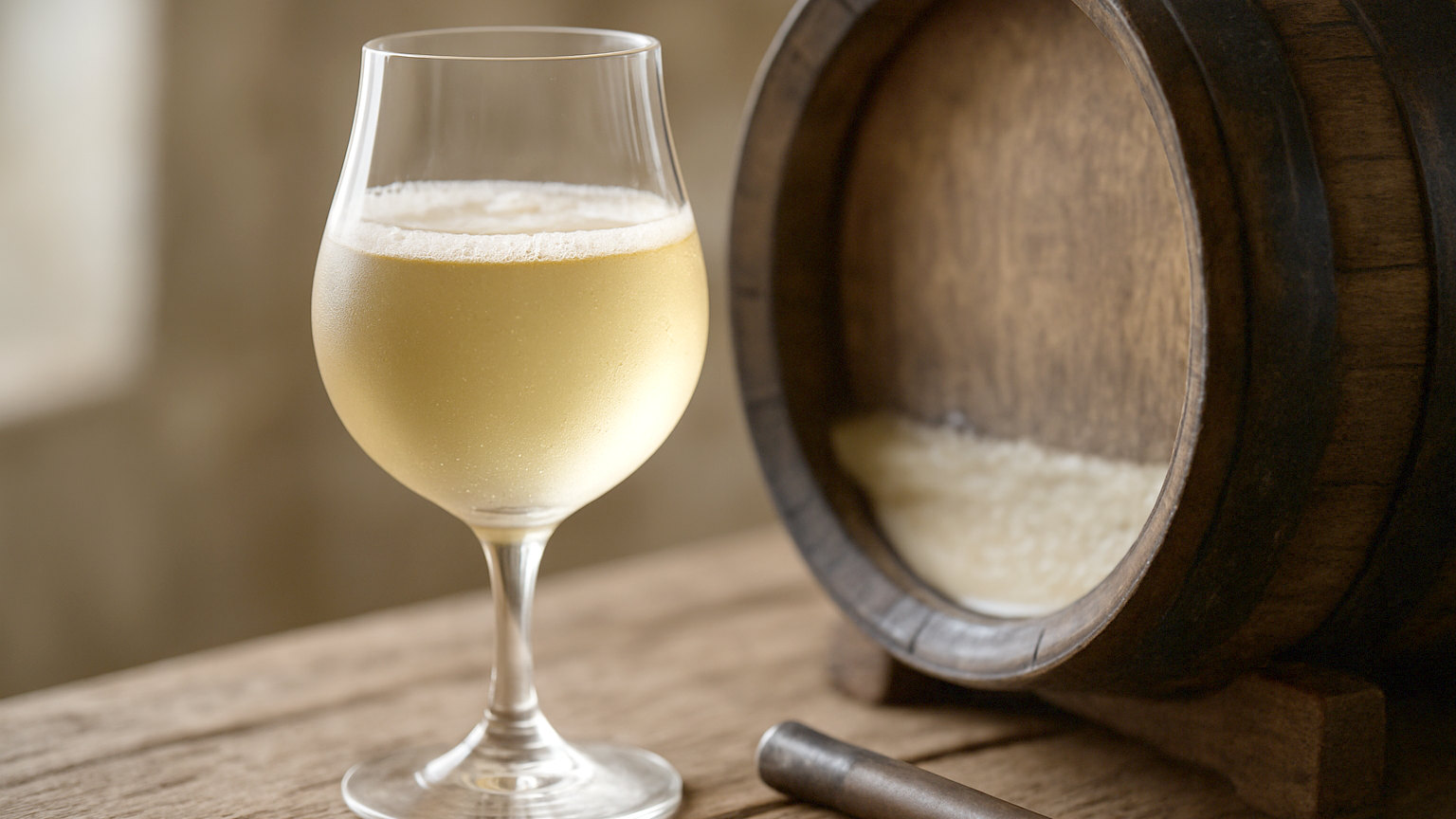
Look into a butt of maturing fino and there is a thick, wrinkled, greyish-white film floating on the surface of the wine. It is alive. Flor is a naturally occurring film-forming yeast, and it is the single most distinctive thing about sherry production.
No other major wine style depends on a living organism sitting on top of the wine for years, consuming it and shielding it simultaneously, and the flavours it produces cannot be achieved any other way.
What the yeast is doing
Flor forms a physical barrier between the wine and the air in the butt, which is deliberately left partly empty to give the yeast room to breathe. That barrier prevents oxidation, which is why fino stays pale and fresh while an oloroso in the next row turns brown.
The yeast also feeds. It consumes alcohol, glycerol and any remaining traces of sugar, and it metabolises volatile acidity. In doing so it strips the wine of sweetness and body, leaving something extremely lean and dry.
What it gives back is a set of compounds found nowhere else in wine, most importantly acetaldehyde, which produces the distinctive tangy, bruised-apple, almondy character that defines fino. The saline, bready, yeasty quality that sherry drinkers value comes from the same source.
The conditions it needs
Flor is particular. It survives only between roughly fifteen and fifteen and a half per cent alcohol, which is why the initial fortification decision determines a wine's entire future. Fortify a butt to seventeen per cent and the yeast dies, and the wine becomes an oloroso instead.
Humidity and temperature matter too, which is why the bodegas are built the way they are: tall, with high ceilings, thick walls, small high windows and earth floors that are watered to keep the air damp. The flor thickens in spring and autumn and thins in the heat of summer and the cold of winter, so it grows in cycles through the year.
Sanlúcar de Barrameda, on the Atlantic coast, is cooler and more humid than Jerez, so the flor there grows thicker and more consistently. That is the reason manzanilla, which is fino made in Sanlúcar, tastes noticeably more saline and delicate than fino from inland.
What happens when it dies
Flor does not last indefinitely. If the wine is fortified further, or if the yeast simply fails as the wine ages and nutrients run out, the protective layer disappears and oxygen reaches the wine for the first time.
That is how amontillado is made. It has lived both lives: the tangy, saline character of years under flor, followed by the nutty, oxidative depth of years exposed to air. The combination is why amontillado is such a complex wine and why it sits between the two main styles in every respect.
Where flor dies unexpectedly or behaves unusually, the result can be classified as palo cortado, a category the trade describes with a certain amount of mystique and which shares the aromatic delicacy of amontillado with the body of an oloroso.
Why it matters when you buy
Two practical consequences follow. Wines aged under flor have never been exposed to oxygen, so they are fragile once opened and should be treated like white wine: kept in the fridge, finished within a week or so, and served cold.
Freshness also matters more than in any other fortified wine. Fino and manzanilla are best drunk young, and bottles that have sat on a shelf for years lose their vitality. Some producers now print bottling dates for exactly this reason.
The most direct way to taste what flor does is to buy an en rama bottling, which is filtered minimally and bottled with more of its flor character intact. It is noticeably more pungent and yeasty than a standard fino, and it makes the process obvious in a way that no description manages.
These bottlings are usually released in small batches at particular times of year, often in spring and autumn when the flor is at its thickest, and the label frequently states the date the wine was drawn from the butt. That is a level of transparency almost unheard of in fortified wine and a reasonable indication that the producer expects you to drink the bottle promptly.


