Marsala is a fortified wine from western Sicily, and in most British kitchens it exists as a bottle bought for a chicken dish and then forgotten at the back of a cupboard. That reputation is not entirely undeserved, since a great deal of what is exported is made for exactly that purpose, but it obscures a category with genuine quality at its upper end.
The wine was developed commercially in the late eighteenth century by English merchants trading in Sicily, who fortified local wine to survive the voyage home in the manner already established for port and madeira.
How it is classified
Marsala uses three overlapping systems, which is part of why the labels are confusing.
Colour comes first: oro is golden, ambra is amber, and rubino is ruby, made from red grapes rather than the white grillo, catarratto and inzolia that dominate.
Sweetness comes second: secco is dry, semisecco medium and dolce sweet.
Ageing comes third and matters most. Fine requires a minimum of one year, superiore two, superiore riserva four, vergine five, and vergine stravecchio or riserva ten. The vergine designations are the ones to look for.
The distinction that matters
Vergine marsala is made without any sweetening additions at all. The wine is fermented dry, fortified with grape spirit and aged oxidatively, sometimes in a solera system, and nothing further is added.
Everything below it may be adjusted with mosto cotto, a cooked grape must that adds sweetness and colour, or with concentrated must. Those additions are what give cheap marsala its characteristic caramelised, slightly artificial quality, and they are permitted precisely because the wine was developed for markets that wanted sweetness at low cost.
A vergine or vergine stravecchio tastes entirely different: dry, nutty, saline, with dried apricot and walnut, closer to an amontillado sherry or a dry madeira than to anything in the cooking aisle.
Why the reputation stuck
Volume and price. Marsala found a large export market as an inexpensive sweet wine and later as a kitchen ingredient, and producers responded to that demand. Cheap sweetened marsala sold in enormous quantities and the fine wines were made in small volumes that rarely left Italy.
The pattern is familiar from sherry, and the outcome is similar: a category with real quality at its top end sitting unnoticed behind an image formed by its cheapest products.
Using it and drinking it
For cooking, the dry styles work best in savoury dishes. Chicken and veal marsala, mushroom sauces and risotto all suit a dry or medium wine, while zabaglione and tiramisu call for a sweeter one. A modest bottle is perfectly adequate for this and there is no argument for using an expensive one.
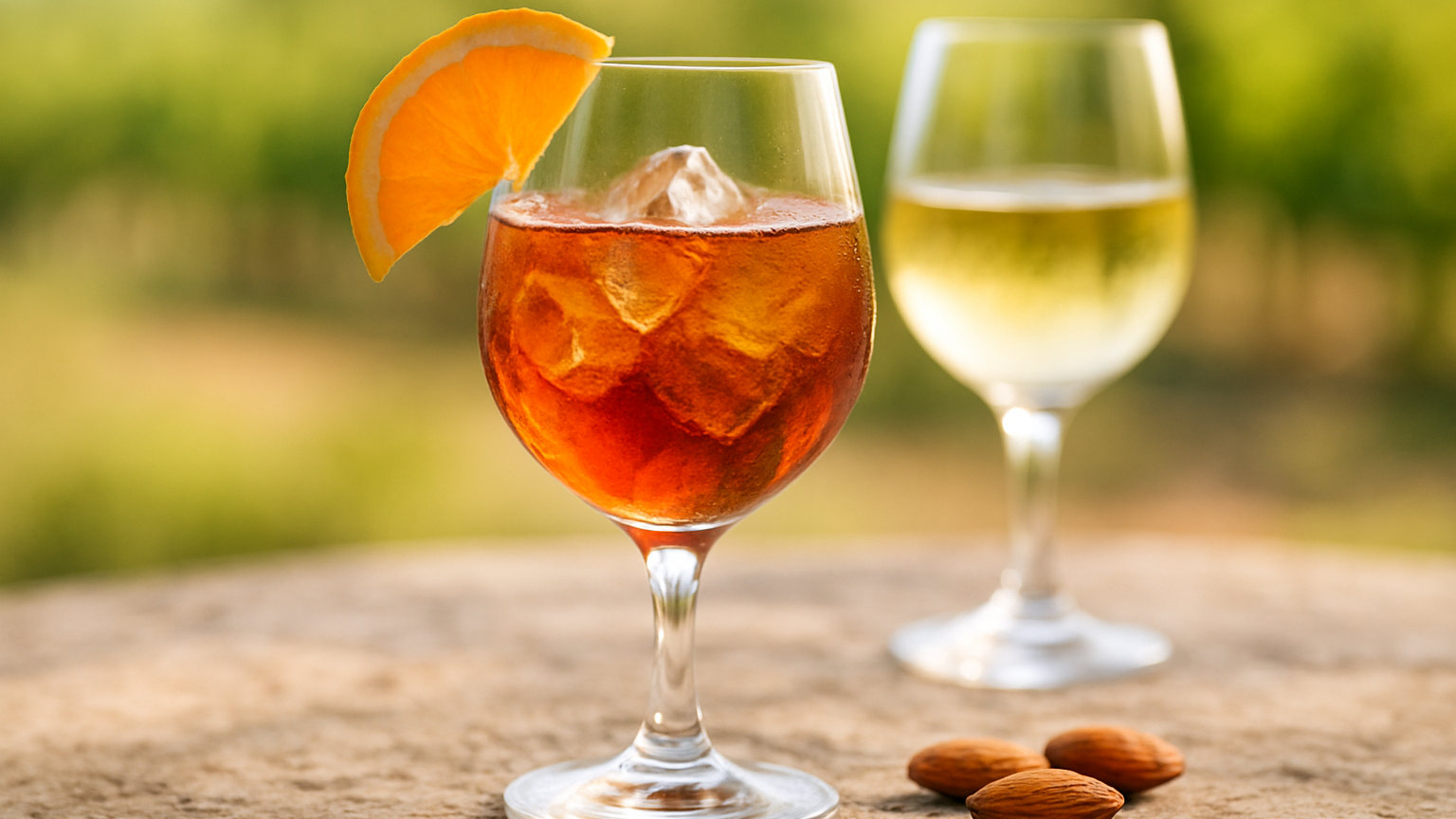
For drinking, seek out a vergine. Serve it cool at around twelve to fourteen degrees in a normal wine glass, and treat it as you would an amontillado: with almonds, aged cheese, cured meats or simply on its own before a meal.
Sweet marsala works with dried fruit, hard cheese and pastries, and it is worth trying alongside a slice of something almondy.
Once opened, marsala is robust. Oxidative ageing means further air exposure does little, and a bottle will keep for several months in a cupboard, which is convenient for a wine most people use occasionally. That durability is also why the cooking bottle survives so long, though a wine open for three years has passed the point where anyone should be putting it in a sauce.
What to look for on the label
Three words are worth finding. Vergine indicates no sweetening additions and a minimum of five years ageing. Stravecchio or riserva alongside it indicates ten. Soleras on a marsala label means the wine has been aged through a fractional blending system in the manner of sherry, which is a sign of a serious producer rather than a mass-market one.
Conversely, a bottle marked fine, sold cheaply and described as suitable for cooking is telling you exactly what it is. There is nothing wrong with buying it for that purpose, and no reason to expect anything else from it.
The category is small enough that the producer's name carries real weight. A handful of houses on the island make wine to a serious standard, and their bottles are stocked by specialist merchants rather than supermarkets.