Sherry is fortified wine from a small area of southern Spain around Jerez de la Frontera, and it is probably the most undervalued fine wine in the world. It is also, in Britain, saddled with an image of sweet brown liquid drunk by elderly relatives at Christmas, which describes one minor style and misrepresents everything else.
The reality is a category spanning bone-dry, saline, extraordinarily savoury wines through to intensely sweet ones, aged through elaborate systems for decades and sold for a fraction of what comparable complexity costs anywhere else.
Where it comes from
Production is confined to the sherry triangle in Andalusia, marked by Jerez de la Frontera, El Puerto de Santa María and Sanlúcar de Barrameda. The defining soil is albariza, a brilliant white chalk that reflects sunlight and retains winter rain deep down, releasing it slowly through the summer.
The overwhelming majority of sherry is made from palomino, a grape that produces neutral, low-acid white wine of no particular distinction. That neutrality is the point: everything interesting in sherry happens after fermentation, and a more assertive grape would get in the way.
Two other varieties appear for sweet wines. Pedro Ximénez, usually shortened to PX, and moscatel are both sun-dried before pressing to concentrate their sugars.
The two paths after fermentation
Once the base wine is made and dry, it is classified and fortified, and the level of fortification determines everything that follows.
Wine fortified to around fifteen per cent develops a living film of yeast on its surface called flor, which consumes oxygen and protects the wine beneath. This is biological ageing, and it produces fino and manzanilla: pale, bone dry, tangy and saline.
Wine fortified to seventeen per cent or above cannot support flor, since the yeast dies at that strength. It ages in contact with air instead, darkening and developing nutty, caramelised complexity. This is oxidative ageing, and it produces oloroso.
Amontillado begins under flor and then loses it, so it has both experiences: the tangy character of biological ageing followed by oxidative depth. Palo cortado is a rare and slightly mysterious category that sits between the two.
The solera and what it means
Sherry is not a vintage product. It is aged through a solera, a system of stacked butts in which a portion is drawn from the oldest level for bottling, that level is topped up from the next, and so on, with new wine entering at the youngest stage.
Because no butt is ever emptied, every bottle contains a fraction of wine from many years, and the system produces remarkable consistency. It also means an age statement is an average rather than a minimum, and the top designations, marked VOS and VORS, indicate averages of twenty and thirty years respectively.
Why the reputation went wrong
Britain was for centuries sherry's most important market, and what sold in volume was cream sherry, a sweetened oloroso blend created specifically for British tastes. It was cheap, it was heavily advertised, and it became what the word meant to most people.
As drinking habits changed, the category declined and its image calcified. Vineyard area in Jerez shrank dramatically, and prices stayed low because demand collapsed rather than because the wine got worse.
The result is an anomaly. A solera-aged amontillado of thirty years average age can be bought for the price of an ordinary bottle of Burgundy, and a fino costs less than a supermarket sauvignon blanc. There is no other corner of the wine world where that kind of value is available, and it exists entirely because of a reputation the wines never deserved.
Where to begin
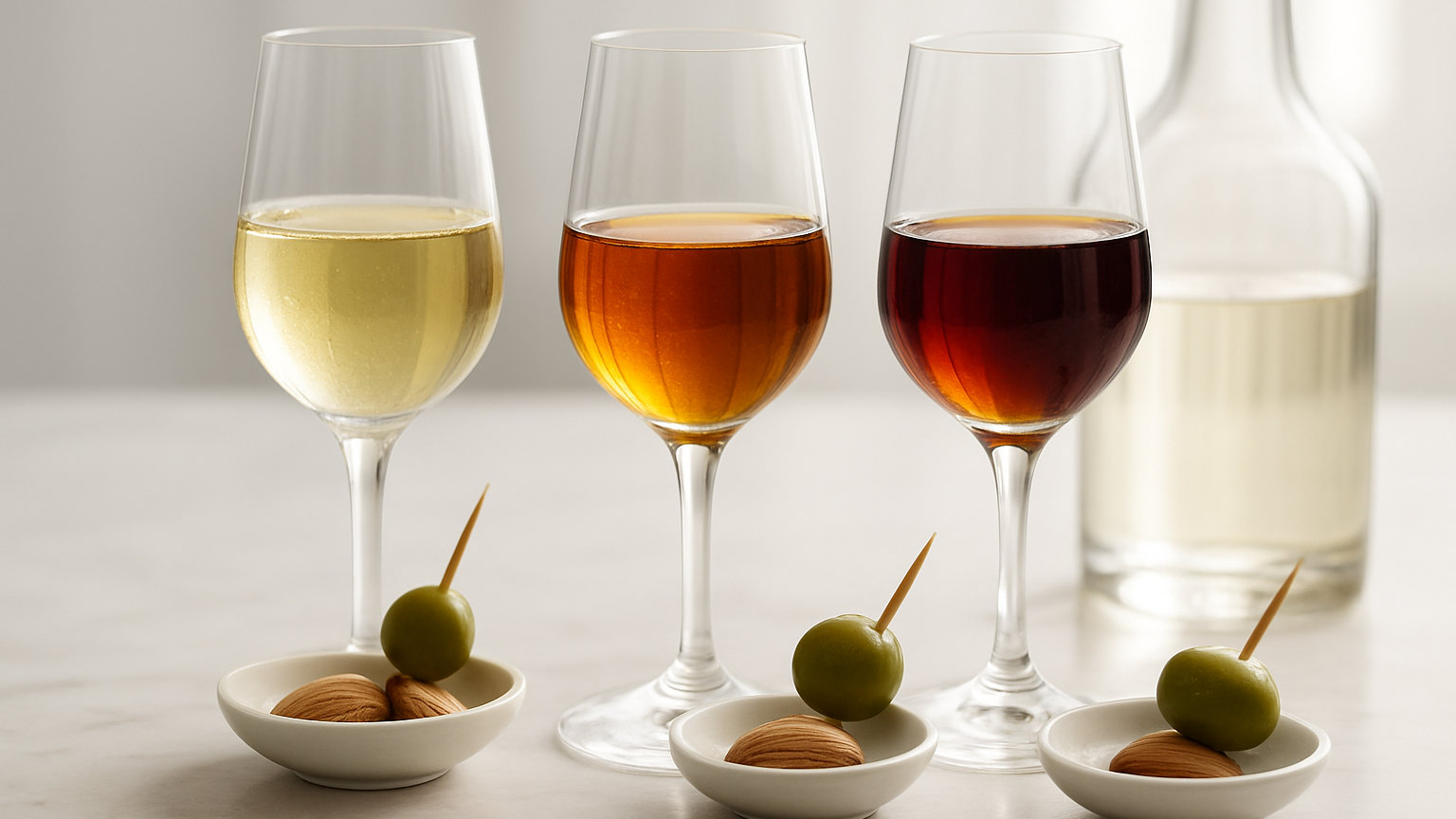
The most efficient introduction is to buy a fino and a dry oloroso at the same time and taste them side by side. Both are sherry, both are completely dry, and they are so unlike each other that the comparison makes the whole category legible in a single sitting.
Serve the fino properly cold and the oloroso at cellar temperature, put out some olives, almonds and a piece of hard cheese, and use ordinary wine glasses rather than the small schooners that British convention supplies. Almost everything people believe about sherry falls apart within twenty minutes of doing this.