
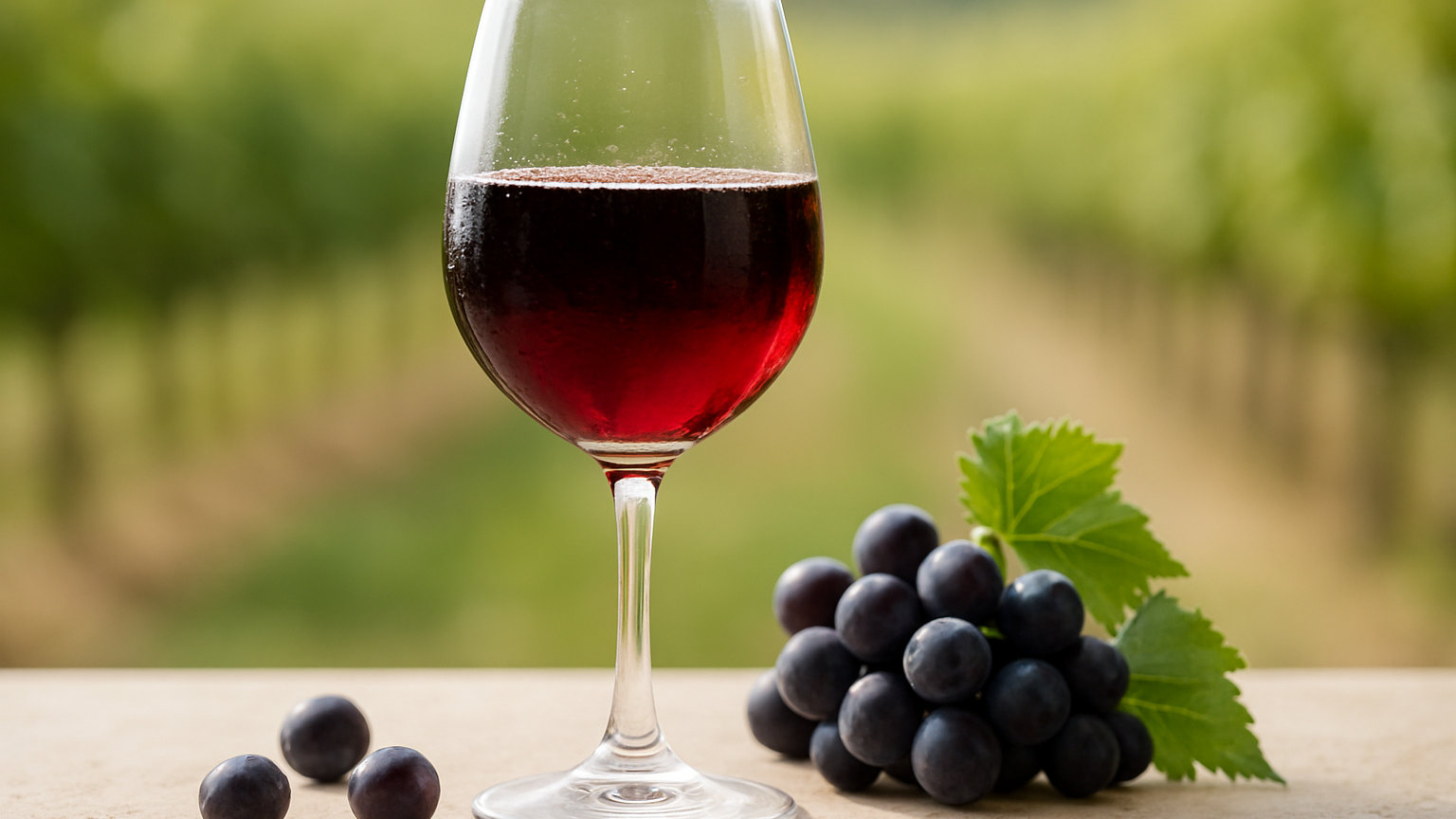
Cabernet sauvignon is the most widely planted red wine grape in the world, and its success is not an accident of marketing. It is the product of a chance crossing between cabernet franc and sauvignon blanc, identified by DNA analysis in the 1990s, and it inherited a set of physical characteristics that happen to suit both growers and winemakers unusually well.
The berries are small and thick-skinned, which gives a high ratio of skin to juice and therefore plenty of colour, tannin and flavour compounds. The skins are also resistant to rot, and the vine buds late, which protects it from spring frost. For a grower, it is a forgiving plant that travels well.
What it tastes like
The signature is blackcurrant, so consistently that the French use cassis as shorthand for the variety. Around it sit cedar, graphite, tobacco and often something green and herbaceous when the fruit has not ripened fully, usually described as green pepper or mint.
Structurally it is firm, with high tannin and good acidity, which is why young cabernet can feel severe and why it repays either food or time. Oak ageing is almost universal and adds vanilla, spice and sometimes coconut depending on the wood, which has become so much part of the expected profile that unoaked cabernet tastes strange to most drinkers.
Why it is so often blended
Cabernet sauvignon ripens late, and in its home region of the Médoc in Bordeaux it does not ripen reliably every year. The traditional response was to plant several varieties and blend, insuring against the failure of any one of them.
Merlot ripens earlier and brings softness, plum fruit and flesh to fill the middle of the palate where cabernet can be lean. Cabernet franc adds aromatic lift and fine tannin, while petit verdot contributes colour and structure in small quantities. The result is a blend that is more complete than any of its components alone, and the model has been copied across the world.
Bordeaux itself divides on this. On the left bank of the Gironde, gravel soils drain and reflect heat, favouring cabernet, and the blends are cabernet-dominant. On the right bank, cooler clay soils suit merlot, which leads there. Two wines from the same appellation system, twenty miles apart, are consequently built around different grapes.
How it changes with climate
In cooler regions, cabernet leans savoury and structured, with restrained blackcurrant, cedar and a herbal edge, and it usually needs several years for the tannin to soften. This is the classic Bordeaux profile and much of what is made in Bolgheri in Tuscany and in cooler parts of Chile.
In warmer regions, the fruit ripens further into blackberry and black cherry, the alcohol rises, and the tannin becomes rounder and more velvety. Napa Valley built its reputation on this style, and Australia, Argentina and South Africa all produce versions of it. The green herbaceous note largely disappears with full ripeness, which some drinkers regard as an improvement and others as a loss of character.
Whether it is worth ageing
Good cabernet is among the most reliable red wine for cellaring, because tannin and acidity together provide the structure that long ageing requires. Over a decade or more the tannin polymerises and softens, the primary blackcurrant fruit evolves towards dried fruit, leather and cigar box, and the wine becomes something quite different from what went into the bottle.
That said, the great majority of cabernet sold is made to be drunk now, and putting an eight pound bottle away for ten years will not produce a fine wine, only an old cheap one. Ageing potential comes from concentration and structure, which cost money to achieve.
If you want to understand the grape, buy an inexpensive New World bottle and a modest left bank Bordeaux and open them together. The gap between them is the whole argument about ripeness in one evening.
It is also worth knowing that cabernet's ubiquity has a downside. Because it sells reliably, it has been planted in a great many places where it never fully ripens, and under-ripe cabernet is one of the least appealing wines on any shelf, all green pepper and hard tannin with no fruit to carry it. A cheap cabernet from a cool region is usually a worse buy than a cheap wine made from a variety that actually suits the place.


