
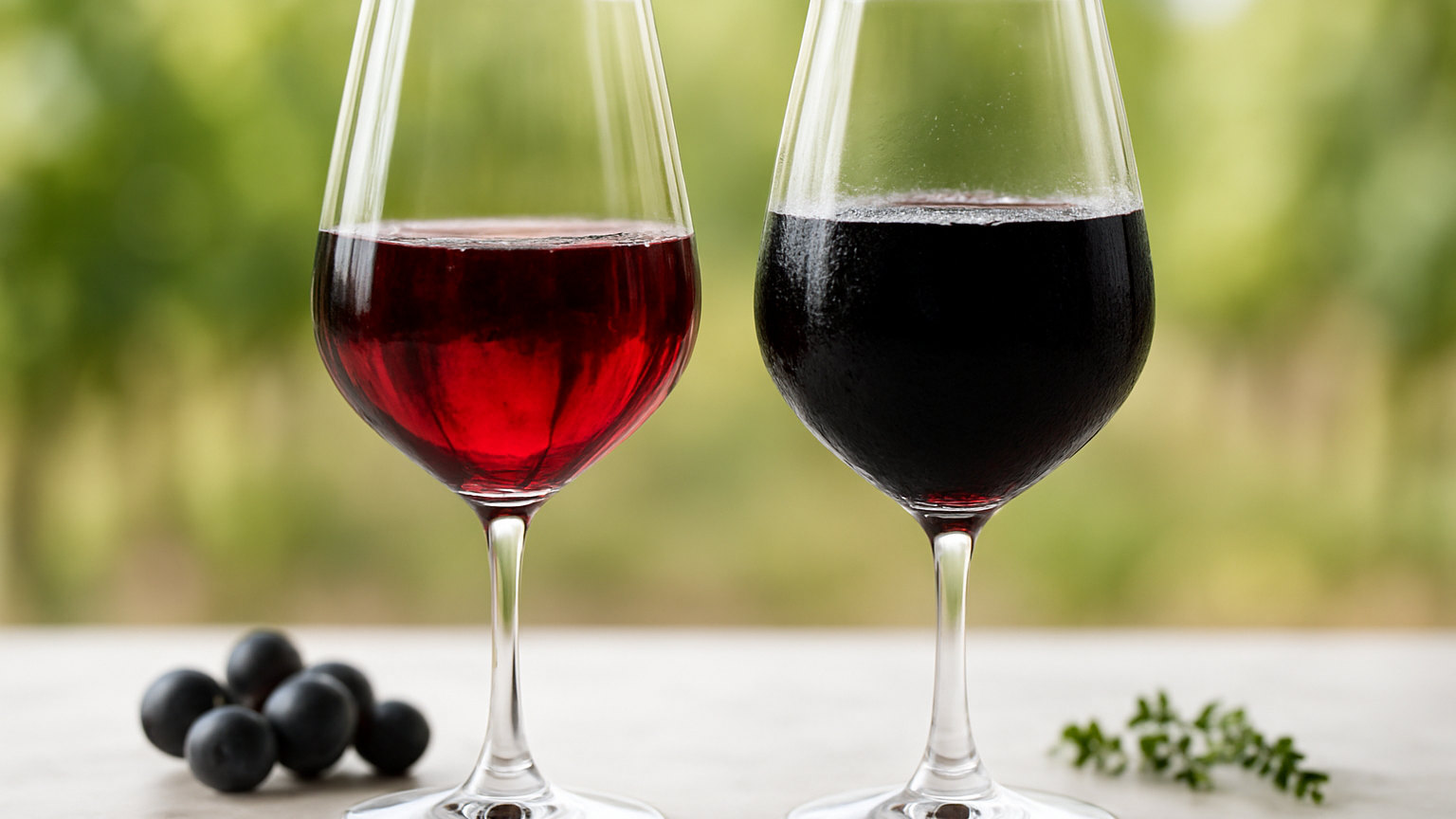
Syrah and shiraz are the same grape. There is no genetic difference, no distinct clone that justifies the separation and no legal rule requiring one word rather than the other. What has developed instead is a useful convention, in which the name on the label signals which of two traditions the winemaker is working in.
Producers aiming at the restrained, savoury, peppery style associated with the northern Rhône tend to use syrah wherever they are in the world. Those aiming at the ripe, generous, fruit-driven style associated with South Australia tend to use shiraz. It is a stylistic declaration rather than a factual one, and it is right often enough to be worth reading.
The northern Rhône original
The grape's home is a narrow strip of steep terraced hillsides along the Rhône valley in France, where it has been grown for centuries and where the climate is at the cool end of what will ripen it. Hermitage, Côte-Rôtie, Cornas and Saint-Joseph are the famous names, and the wines they produce are medium bodied rather than heavy.
The defining characteristic is black pepper, which comes from a compound called rotundone that is far more pronounced in cooler growing conditions. Around it sit dark berry fruit, violets, olive, smoked meat and a savoury, almost bloody quality that divides opinion sharply. The wines are structured, age well over a decade or more, and are built for the table rather than for immediate pleasure.
A distinctive local practice is co-fermenting a small proportion of the white grape viognier with the syrah in Côte-Rôtie, which lifts the aromatics and softens the texture. It sounds unlikely and works remarkably well.
What Australia did with it
Shiraz arrived in Australia in the nineteenth century and found conditions utterly unlike the Rhône. In the warmth of the Barossa Valley and McLaren Vale, the grape ripens fully and easily, producing wines of a completely different character: deep, dense, high in alcohol, with blackberry and plum fruit, chocolate, liquorice and sweet vanilla from generous American oak.
Australia also has some of the oldest surviving vines of the variety anywhere, since phylloxera never reached certain regions, and old-vine shiraz from those sites is among the country's most serious wine. The style built Australia's reputation in Britain in the 1990s and became so dominant that it has taken years for the country's cooler-climate producers to be taken seriously.
Those cooler regions, including the Adelaide Hills, Canberra district and parts of Victoria, now make peppery, medium-bodied wines much closer to the French model, and they frequently label them syrah to say so.
Where else it grows
Chile, South Africa, Washington State and New Zealand all produce good examples, with the South African version in particular occupying interesting ground between the two traditions. In the southern Rhône and Languedoc, syrah is more often a blending partner with grenache and mourvèdre than a solo performer, contributing colour, structure and pepper to a warmer, softer base.
How to choose between them
Decide what you want the wine to do. For a rich stew, a barbecue or anything with strong sweet-savoury flavours, the Australian style has the weight and generosity to cope. For roast lamb, game, or a meal where the wine is meant to accompany rather than dominate, the Rhône style is the better companion, and its pepper and savouriness make it one of the most food-friendly reds there is.
The instructive experiment, as with so much in wine, is to buy one of each at a similar price and open them together. Few grapes demonstrate the effect of climate as clearly, and few make the point that a variety is a starting point rather than a description.
One caution about the naming convention: it is a signal rather than a guarantee. A producer may use either word for reasons of tradition, export market or simple preference, and there are peppery, restrained wines labelled shiraz and rich, oaky ones labelled syrah. Treat the name as a hint about intent, then check the alcohol figure and the region, which between them will tell you more reliably what is in the bottle.


