
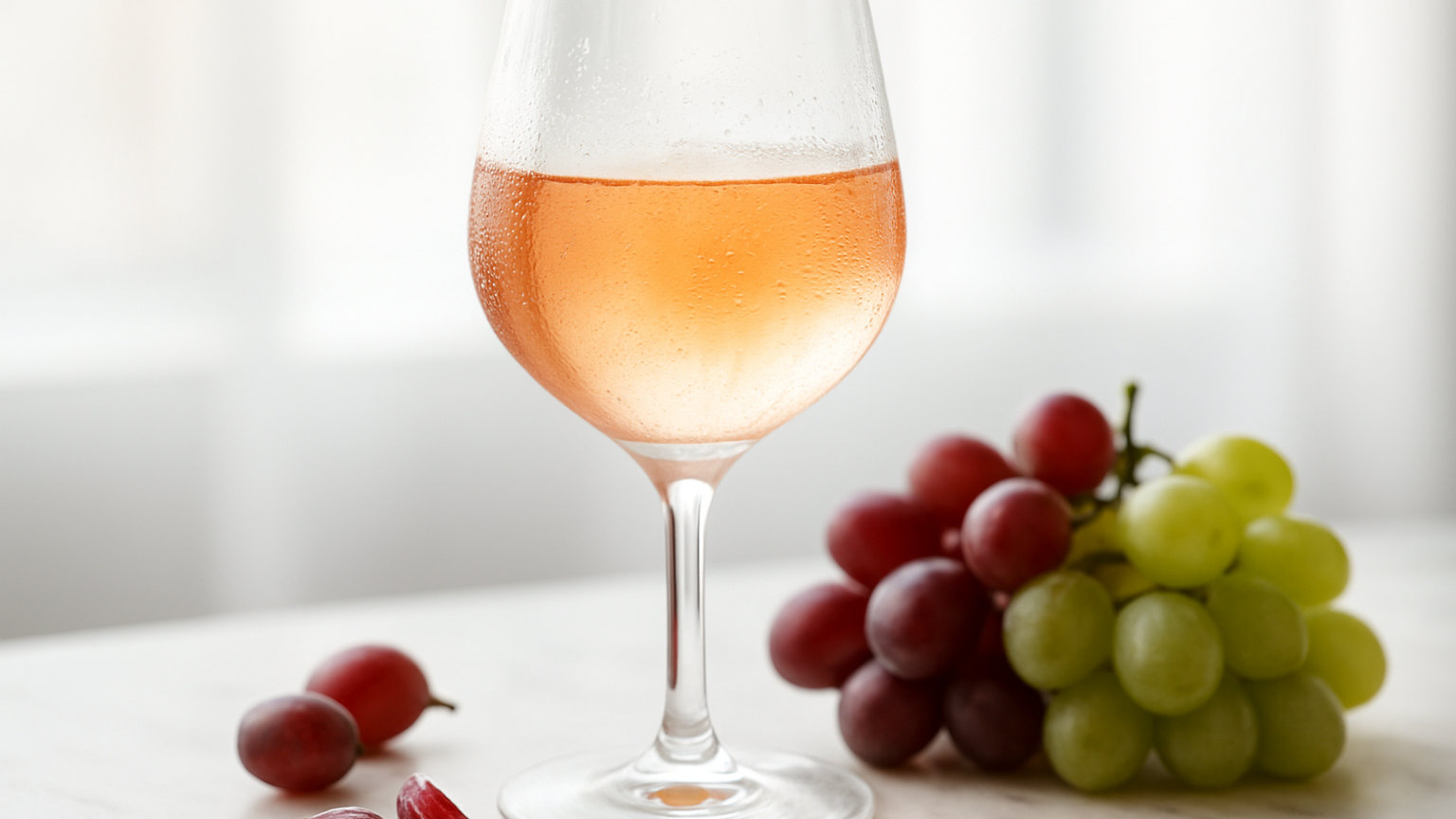
Ask most people how rosé is made and the answer is that red and white wine are mixed together. It is an entirely reasonable guess, since it would produce something pink, and it is wrong almost everywhere.
For still wine in the European Union, blending red and white to make rosé is prohibited outright, and the prohibition is taken seriously enough that a proposal to relax it caused a substantial political row.
How the colour actually gets there
All the pigment in wine lives in the grape skins. The juice inside almost every black grape is pale, which is why a black grape can produce white wine if it is pressed quickly and the skins removed, as happens in Champagne every year.
Rosé is made by allowing brief contact between juice and skins, anywhere from a couple of hours during pressing to a day or so of maceration, then fermenting the pink juice without them. The winemaker controls colour by controlling that contact, and it is a matter of judgement and timing rather than of mixing finished wines.
The third method, saignée, draws pink juice off a tank of red wine early in its fermentation. That is still skin contact, simply arranged differently.
The row of 2009
The prohibition on blending came close to being lifted. In 2009 the European Commission proposed allowing red and white wine to be blended to produce rosé, largely to help European producers compete with New World wines made that way.
The reaction from producing regions, particularly Provence and the southern Rhône, was fierce. Growers argued that the change would allow cheap industrial wine to be sold alongside wine made by traditional methods with no way for a buyer to tell the difference, and that it would devalue appellations built over generations.
The proposal was withdrawn. Traditional method rosé remains the only legal form for still wine in the European Union, and producers regard the outcome as a significant defensive victory.
The exception
Rosé champagne is permitted to be made by blending, and most of it is. A small proportion of still red wine, usually pinot noir from the region, is added to the white base before the second fermentation.
The justification is practical. Champagne is built on consistency, and blending allows precise control over colour year after year in a region where vintage variation is severe. The alternative method, rosé de saignée, exists and produces deeper, fuller wines, but it is far less common.
Outside Europe the rules vary, and blending is permitted in some countries. In practice most quality producers use skin contact regardless, since it gives better results than mixing finished wines, which tends to produce something that tastes like neither parent.
Why the myth persists
Partly because the alternative explanation is not obvious unless someone tells you where colour lives in a grape. Partly because rosé sits between red and white on a shelf and in the mind, so a mixture seems the natural interpretation.
And partly because the myth carries a slight implication that rosé is a lesser product, an afterthought assembled from leftovers. That perception has taken a long time to shift and is one reason the category was undervalued for decades.
Knowing how it is really made changes how the wines read. A pale Provence rosé was grown, picked and pressed with pink wine as the intention from the start, at a lower ripeness than the same grapes would have reached for red. It is a wine made on purpose, and that is a considerably better starting point for judging it than assuming somebody topped up a vat.
The related myth about white wine
A second misconception follows from the same misunderstanding about where colour lives. Many people assume white wine must be made from white grapes, when in fact it can be made from black ones provided the juice is separated from the skins quickly.
Champagne is the standard demonstration, since a large proportion of it is made from pinot noir and meunier, both black grapes, and emerges entirely colourless. Blanc de noirs, meaning white from blacks, is the term for a wine made this way. Once that is clear, rosé stops looking like a mixture of two things and starts looking like what it is: a decision about how long to leave the juice in contact with the skins.


