
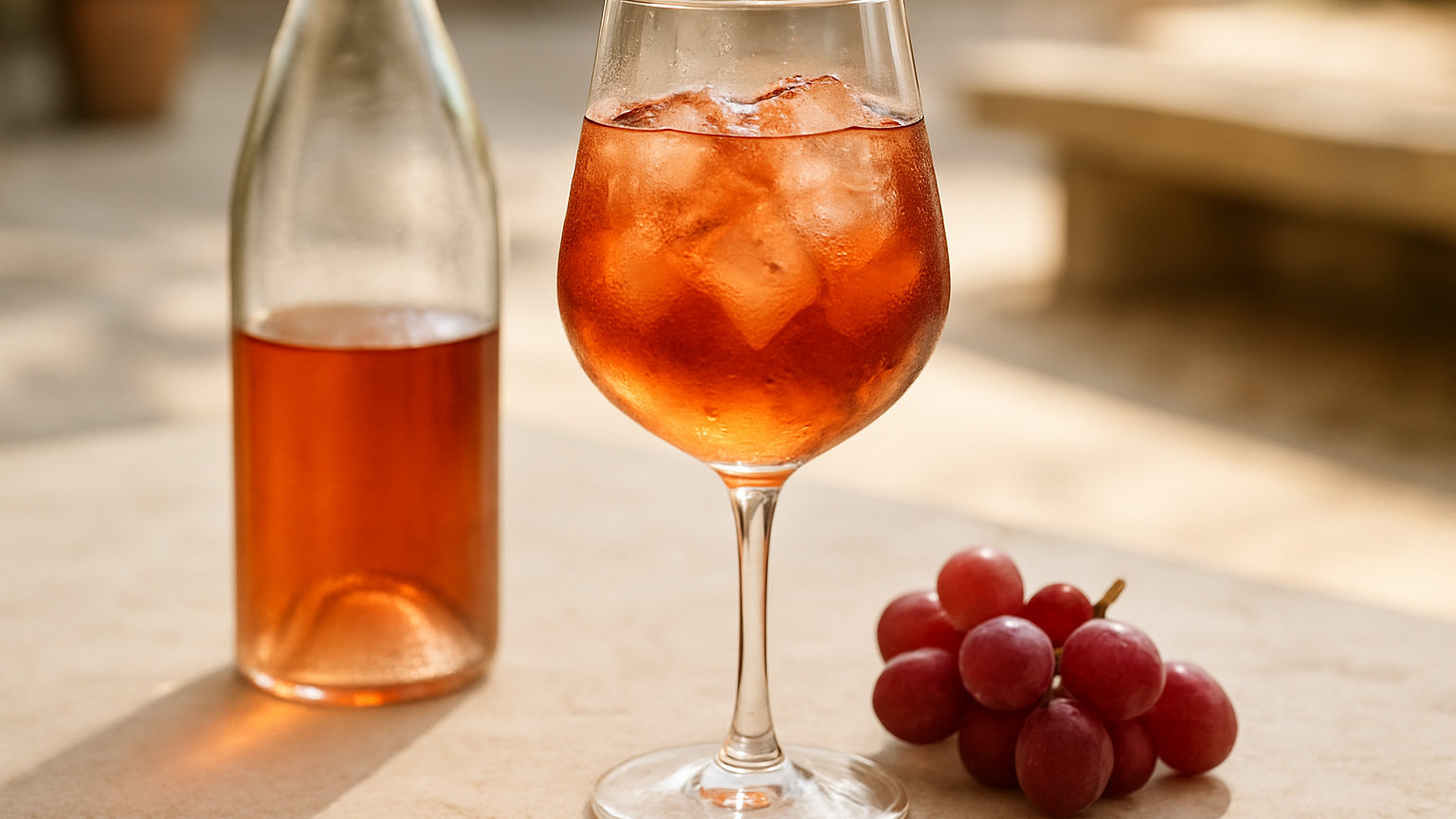
Tavel is a small appellation on the west bank of the Rhône, opposite Châteauneuf-du-Pape, and it is the only appellation in France permitted to produce rosé and nothing else. No red, no white, just pink wine, and the wine it makes is the opposite of everything the current fashion prizes.
Where Provence aims for the palest possible colour and a delicate frame, Tavel is deep, sometimes almost light red, full-bodied, high in alcohol and built for the table. It has been made this way for centuries and shows no sign of changing to suit the market.
How it is made
The colour comes from a longer maceration than most rosé receives, typically twelve to forty eight hours, extracting substantially more pigment and a little tannin along the way.
The grapes are the southern Rhône set: grenache leading, with cinsault, syrah, mourvèdre, carignan and clairette all permitted, and blends are the norm. Yields are restricted, alcohol commonly reaches thirteen and a half or fourteen per cent, and the wines are fermented to complete dryness.
The soils include the rounded galets, large stones that store heat during the day and radiate it back at night, familiar from Châteauneuf across the river. The result is fully ripe fruit and a wine with genuine substance.
What it tastes like
Deep pink to pale ruby in the glass, with red and black berry fruit, dried herbs, white pepper and a distinct savoury, mineral quality underneath. The texture is full and the finish is long, with enough grip to remind you that there was skin contact.
It is not a refreshing aperitif in the way a pale Provence wine is. It is a wine to drink with food, and it works at a table where a light rosé would vanish.
Why it fell out of fashion
Tavel was for a long time the most prestigious rosé in France, mentioned by writers and served in serious restaurants. The pale revolution left it looking dated, since consumers began using colour as a proxy for quality and a deeply coloured rosé read as old-fashioned or, worse, as sweet.
The appellation has held its line rather than lightening its wines, which is admirable and commercially costly. The consequence is that Tavel is now frequently better value than its quality warrants, since it is competing in a market that has been taught to want the opposite of what it offers.
How to drink it
Serve it at around twelve degrees rather than eight. Over-chilling a wine of this weight suppresses everything that makes it interesting, and a Tavel treated like a summer rosé will taste flat.
At the table it handles food that defeats other pink wine: roast lamb, duck, sausages, paella, garlicky Mediterranean cooking, grilled red meat and rich autumn dishes. It is one of the few rosés that works properly in cold weather.
It also ages, which almost no rosé does. A good Tavel improves for three or four years, developing spiced, savoury complexity, and bottles at five years old can be excellent. Buying two and drinking one a couple of years after the other is a worthwhile experiment.
Whether to try it
If your view of rosé has been formed entirely by pale wines drunk cold in summer, Tavel is the bottle that changes the picture. It demonstrates that the category has a serious end, that colour and sweetness are unrelated, and that pink wine can be built for the table rather than for the terrace.
It will not replace a delicate Provence rosé on a hot afternoon, and it is not trying to. It occupies different ground entirely, and the fact that so few people know it exists is one of the more useful pieces of information in the wine aisle.
Lirac, the neighbouring appellation, is worth knowing as a cheaper alternative. It makes red and white as well as rosé, so it lacks Tavel's single-minded focus, but the pink wines are made in a similar full-bodied style from the same grapes on comparable soils, and they typically cost several pounds less.


