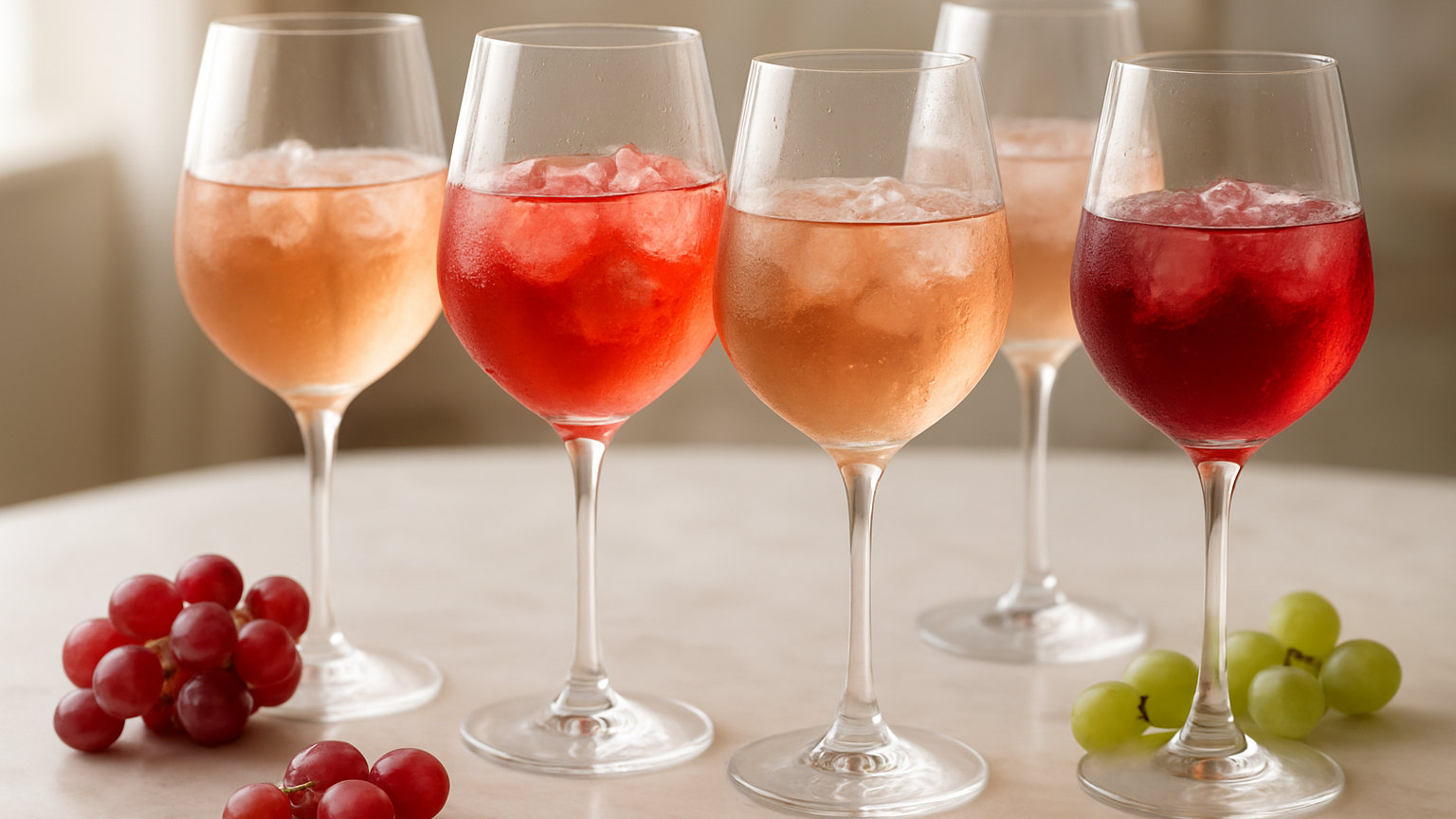
The pale, dry, delicate rosé of Provence has become the international template, to the point where producers in other countries have lightened their own wines to compete. That is a commercial success story and a slight loss, because the regional traditions it displaced were more varied and in several cases more interesting.
France beyond Provence
The Loire produces two quite different things. Rosé d'Anjou, made largely from grolleau, is off-dry, soft and fruity, and it was for decades the pink wine most British drinkers had tried. Cabernet d'Anjou is sweeter still. Alongside them sit dry rosés from cabernet franc in Chinon and Saumur, and from pinot noir in Sancerre, which are crisp, herbaceous and quite unlike the Anjou styles.
The southern Rhône gives Tavel, an appellation that makes nothing but rosé, deep in colour and full in body, and it is the counter-argument to the idea that pink wine must be pale.
The Languedoc produces enormous quantities in the Provence idiom at considerably lower prices, and it is where most of the value in French rosé now sits.
Spain and its rosado tradition
Spanish rosado has historically been deeper coloured and fuller flavoured than the French style, made mainly from garnacha and tempranillo in Navarra, Rioja and Aragon. The traditional wines have real fruit weight, sometimes a little oak, and enough structure to accompany serious food.
Export demand has pushed many producers towards paler, lighter styles, and something is lost in the translation. The classic deeply coloured rosado remains available and is among the best value pink wine anywhere, offering more flavour per pound than most of what sits beside it on the shelf.
Rioja also makes a small quantity of oak-aged rosado in the traditional manner, which is a genuinely distinctive wine and quite unlike anything from France.
Italy, where the variety survived
Italy never abandoned its regional styles, and rosato consequently covers a wider range than any other country. Chiaretto from around Lake Garda, made from corvina, is pale, delicate and floral. Cerasuolo d'Abruzzo, from montepulciano, is cherry-red, full and savoury, and is legally required to be deeper in colour than most countries would permit for rosé at all.
Puglia's negroamaro and primitivo rosés are rich and warm. Sicilian versions from nerello mascalese, particularly on Etna, are saline and mineral. Tuscan rosato from sangiovese is savoury and food-oriented.
Anyone bored of pale Provence-style wine should look here first, since the Italian category offers the most stylistic variety at reasonable prices.
The United States and the blush phenomenon
American rosé is dominated in the public mind by white zinfandel, a pale, sweet, low-alcohol style that became one of the best selling wines in the country from the 1980s. It is sweet by design and has shaped the perception of pink wine for a generation of drinkers.
Alongside it, and largely separate from it, American producers now make serious dry rosé from pinot noir, grenache and other varieties, particularly in Oregon and cooler parts of California. These are made in the European idiom and bear no relation to the blush category.
Elsewhere, and what to try
Portugal makes both a long-established semi-sweet export style and increasingly good dry rosés from indigenous grapes. Germany produces weissherbst and rotling, generally light and often off-dry. South Africa, Australia, New Zealand and Chile all make dry rosé in a broadly international style.
The practical advice is to move sideways rather than upwards. Rather than spending more on another Provence bottle, buy a Spanish rosado, an Italian cerasuolo and a Tavel at similar prices. The three together demonstrate how much ground the category covers, and at least one is likely to suit you better than the version everybody drinks.
The differences between them are also more instructive than any amount of reading, because they isolate variables cleanly. Same broad method, same drinking temperature, entirely different grapes, climates and traditions. Tasting three regional styles side by side teaches you what those factors actually do in a way that comparing three Provence wines at different price points never will.