
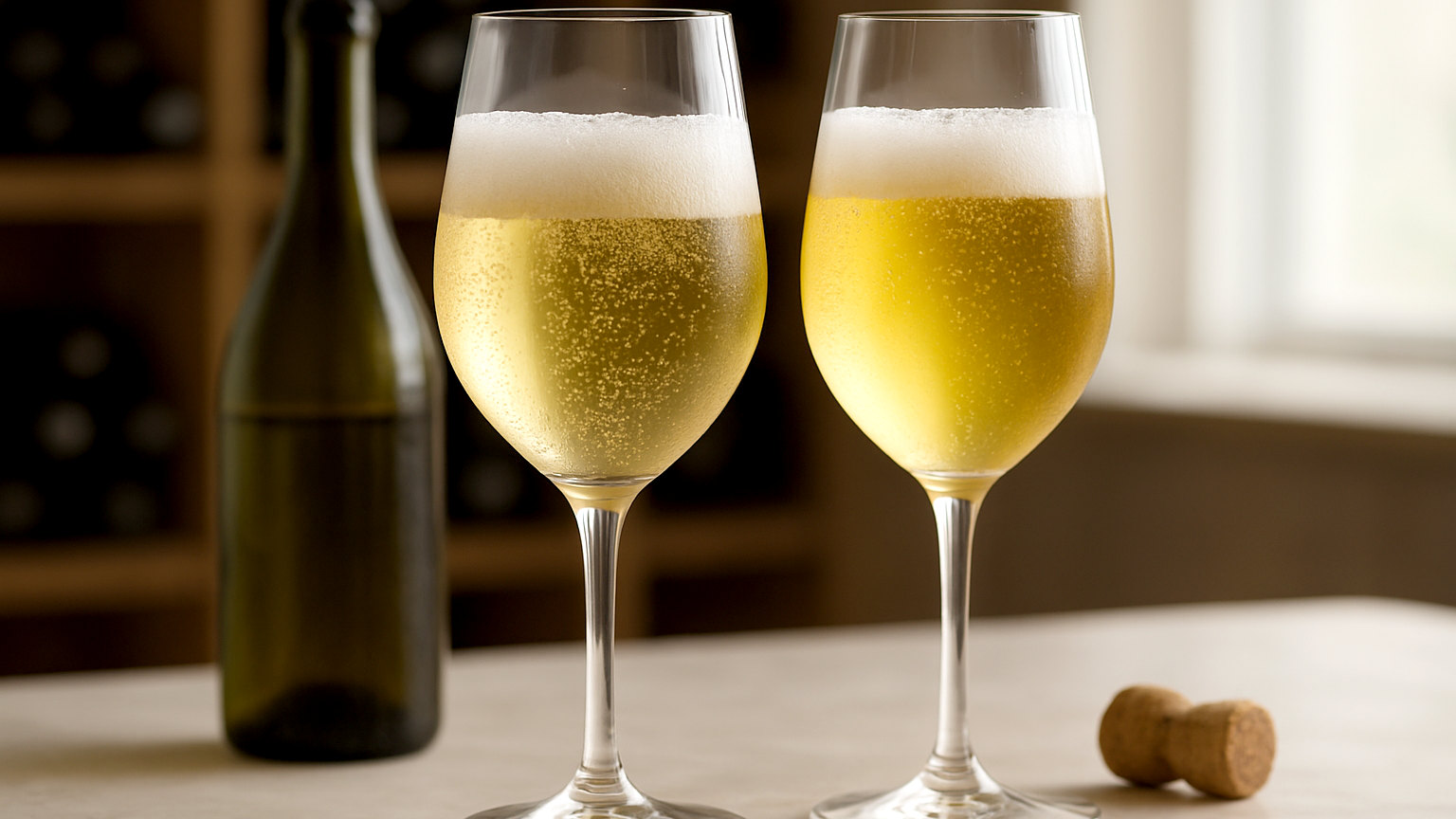
Sparkling wine occupies an unusual position in the ageing question, because a great deal of the maturation has already happened before the bottle is sold. Champagne has spent at least fifteen months on its lees, and often far longer, before it reaches a shop. In that sense it arrives partly aged already.
What happens afterwards depends entirely on the style, and the categories behave very differently.
The wines that do not benefit
Prosecco should be drunk young, within a year or two of the harvest. Its appeal rests on fresh pear and floral aromatics, and those fade. Tank method production means there is no lees character to develop into anything else, so an old prosecco is simply a tired one.
The same applies to most inexpensive sparkling wine of any origin, and to pét-nat, which is bottled to be drunk quickly and is unstable by design.
This is worth knowing because bottles are frequently kept for occasions that never quite arrive. A prosecco bought three years ago for a celebration will not have improved by waiting, and the celebration would be better served by buying a fresh bottle.
The wines that do
Traditional method wines with real structure can develop for a long time. Non-vintage champagne generally improves for two or three years after purchase, gaining depth and losing some of its youthful sharpness. Vintage champagne can develop for ten to twenty years and sometimes far longer.
The changes are substantial. The bready, biscuity character deepens towards toast, nuts, honey and mushroom. Citrus fruit becomes dried fruit and marmalade. The mousse softens, becoming finer and creamier rather than sharp, and the colour deepens towards gold.
Good gran reserva cava, top crémant, English sparkling wine and vintage sparkling from cool regions all age along similar lines, since the mechanism is the same.
Why disgorgement date matters more than vintage
The single most useful piece of information on a bottle, if the producer prints it, is the disgorgement date. While the wine sits on its lees, the yeast protects it from oxidation and development is very slow. Once disgorged, the wine begins ageing at a normal rate.
This means two bottles of the same non-vintage wine can be at completely different stages. One disgorged five years ago will taste mature; one disgorged last month will taste young and tight. The vintage tells you when the grapes were picked; the disgorgement date tells you when the clock started.
Some producers release late disgorged bottlings deliberately, holding wine on its lees for a decade or more before disgorging. These arrive with the freshness of a young wine and the complexity of an old one, and they demonstrate the principle neatly.
Storing it properly
The requirements are the same as for still wine, with one addition. Constant cool temperature, ideally between ten and fifteen degrees, matters more than the exact figure, since fluctuation drives wine in and out of the cork and lets oxygen in. Darkness matters particularly for sparkling wine, since it is often bottled in clear or lightly tinted glass and is vulnerable to light damage, which produces a distinctive stale, cabbage-like fault.
Bottles should lie on their side to keep the cork moist. A dried cork loses its seal and the pressure escapes, which is the most common way an old bottle is ruined.
A domestic fridge is not a storage solution. It is too cold for long-term keeping, too dry, and the vibration and light from opening the door repeatedly do the wine no favours. Chill a bottle for a few hours before drinking rather than storing it there for months.
If you want to try ageing, buy two or three bottles of a good vintage champagne, drink one immediately and keep the others. The comparison a few years later teaches more than any amount of reading about what maturity actually does.
Be aware that not everyone enjoys the result. Mature champagne trades freshness and lift for depth and savoury complexity, and a drinker who values the crisp, citrus character of a young wine may find an old one heavy and oxidative. That is a legitimate preference rather than an untrained palate, and discovering it early saves years of storing bottles you would rather have drunk on release.


