
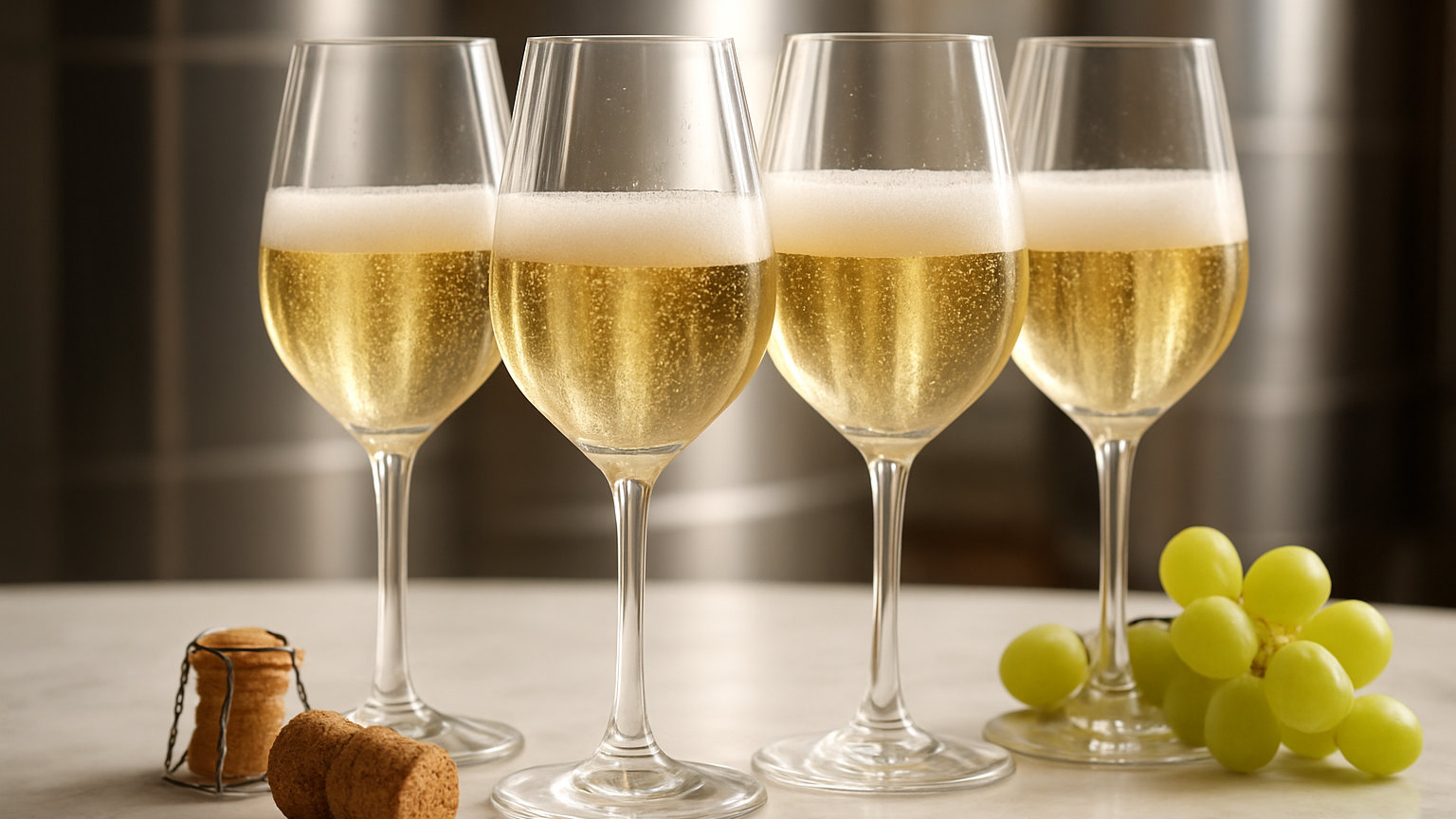
All sparkling wine relies on the same underlying fact: fermentation produces carbon dioxide, and if the gas cannot escape it dissolves into the wine. Every method is a variation on trapping that gas, and the choice between them explains more about a bottle than the grape or the region does.
The differences are not subtle. Two wines made from identical fruit in the same year, one fermented a second time in bottle and one in a tank, will taste so unalike that most people would not guess they were related.
The traditional method
This is the technique used for Champagne, cava, crémant and English sparkling wine, and it is laborious enough that the labour is most of the cost.
A still base wine is made first, deliberately high in acidity and low in alcohol. It is bottled with a small addition of sugar and yeast, sealed, and left to ferment a second time inside that bottle. The carbon dioxide produced has nowhere to go and dissolves into the wine, building pressure of around six atmospheres, which is roughly three times a car tyre.
The wine then rests on the dead yeast cells, the lees, for months or years. That contact is where the characteristic bready, biscuit and brioche flavours come from, and the longer it lasts the more pronounced they are. Finally the sediment is worked down into the neck by gradual turning, the neck is frozen, and the plug of frozen lees is ejected under pressure. A small dose of wine and sugar, the dosage, tops up the bottle and sets the final sweetness before the cork goes in.
The tank method
Also called the Charmat or Martinotti method, this conducts the second fermentation in a large pressurised steel tank rather than in individual bottles, then filters and bottles the wine under pressure.
It is faster, far cheaper and produces a different result on purpose. Because the wine spends little or no time on lees, the bready character never develops, and what remains are the primary fruit and floral aromas of the grape. For prosecco, made from glera, that is exactly the point: pear, apple and white flowers, fresh and immediate.
The method is not a cheap imitation of the traditional one. It is the right tool for aromatic grapes whose charm would be buried under years of autolytic flavour, and criticising prosecco for lacking brioche notes misunderstands what it is trying to be.
The ancestral method and simple carbonation
The oldest technique of all, méthode ancestrale, involves bottling a wine before its first fermentation has finished, so the remaining fermentation happens in the bottle. There is no second fermentation, no disgorging and usually no dosage, which leaves the sediment in the bottle and the wine cloudy.
This is what pét-nat, short for pétillant naturel, refers to. Pressure is lower and more variable than in traditional method wine, the style is unpredictable between bottles, and the results range from delightful to distinctly odd. It has become fashionable, and the fashion has outpaced the consistency.
At the bottom of the market, carbon dioxide is simply injected into still wine as it would be into a soft drink. The bubbles are large, they disappear quickly, and the wine has none of the fine texture the other methods produce. Labels rarely advertise it, but a very cheap sparkling wine with a coarse, aggressive fizz has usually been made this way.
Reading the method from the bottle
The label usually tells you if you know the wording. Traditional method, méthode traditionnelle, méthode classique or bottle-fermented all indicate the first technique, and Champagne, cava, crémant and English sparkling wine use it by regulation.
Prosecco and most inexpensive sparkling wine use the tank method, and the absence of any production statement is itself informative. In the glass, fine persistent bubbles and bready aromas point to bottle fermentation; larger bubbles and pure fruit point to a tank.
Neither is better in the abstract. What matters is matching the method to the occasion, since a bready, complex traditional method wine and a bright, fruity tank method one are useful for completely different things.


