
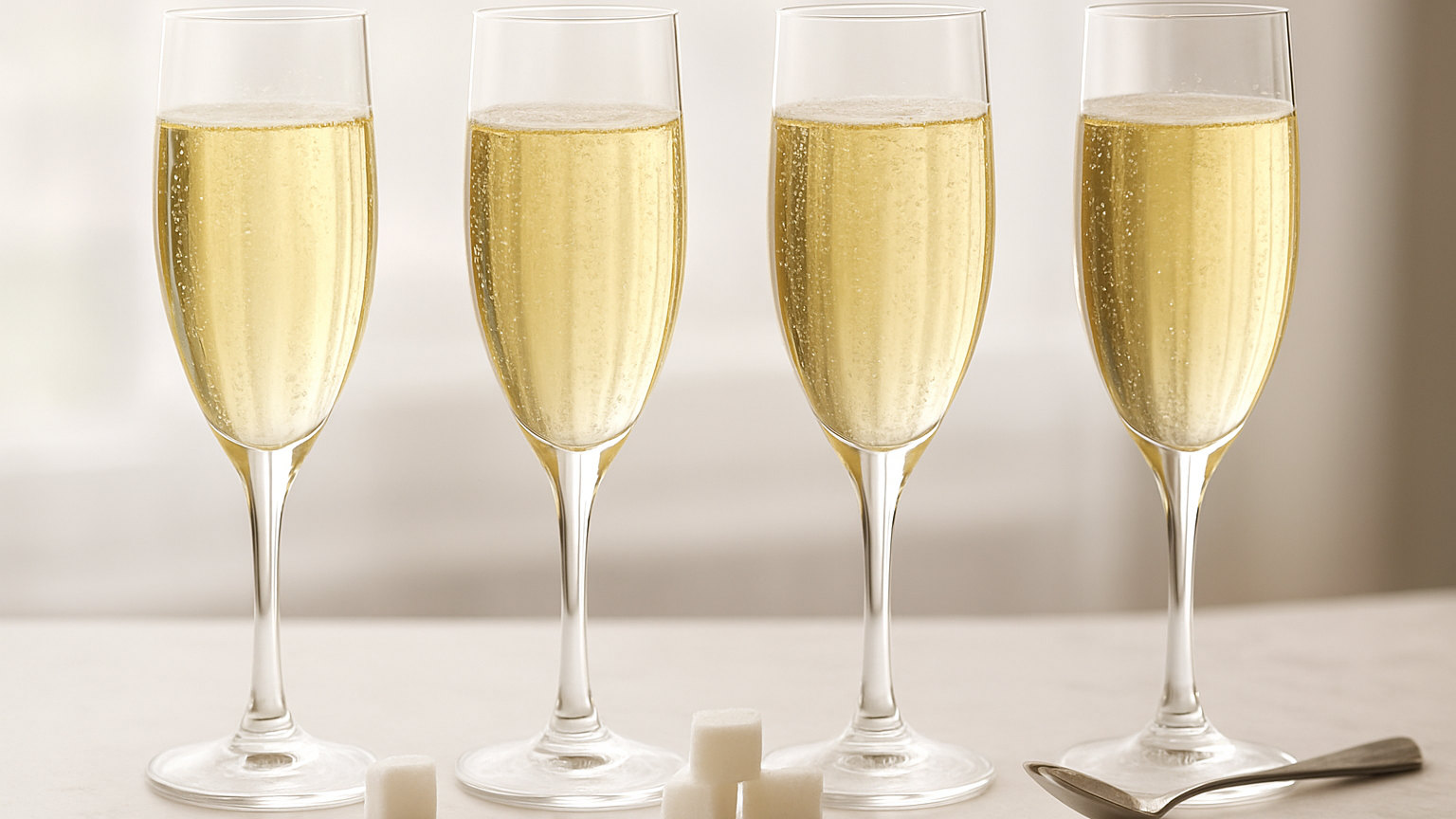
If one piece of wine labelling deserves to be described as actively misleading, it is the sweetness scale for sparkling wine. Extra dry is sweeter than brut. Dry is sweeter than extra dry. A wine labelled brut nature contains almost no sugar at all, despite nature suggesting something rustic rather than austere.
The terms are legally defined and correspond to measurable sugar levels, so once learned they are reliable. They simply run in an order that nobody would design today.
The scale, from driest to sweetest
Brut nature, sometimes labelled brut zéro or pas dosé, contains up to three grams of sugar per litre and usually none added at all. Extra brut runs to six grams. Brut, by far the most common designation, allows up to twelve grams and is the standard dry style.
Above that the terms become counterintuitive. Extra dry, also written extra sec, contains between twelve and seventeen grams, making it perceptibly sweeter than brut. Sec or dry runs from seventeen to thirty two grams and tastes distinctly off-dry. Demi-sec covers thirty two to fifty and is a dessert-level sweetness, while doux, above fifty, is rare and genuinely sweet.
The historical explanation is that nineteenth century sparkling wine was sweetened heavily, often to a hundred grams or more, so a wine at seventeen grams genuinely was dry by comparison. Tastes moved towards dryness and the terminology did not follow.
Where the sugar comes from
In traditional method wine, sweetness is added at the very end. After the frozen plug of yeast sediment is ejected, the bottle is topped up with a mixture of wine and sugar called the dosage, and the quantity added sets the final category.
The dosage does more than sweeten. Sparkling base wines are made deliberately high in acidity, and without dosage many would be uncomfortably sharp. A well judged dose balances that acidity, and the wine will not taste sweet even at ten or twelve grams because the acid conceals it.
This is why sugar content on paper and perceived sweetness diverge so widely. A brut champagne at ten grams tastes bone dry; a still wine at the same level would taste noticeably sweet.
Why zero dosage divides opinion
Wines made with no dosage at all have become fashionable, presented as the purest expression of the fruit and the site with nothing to hide behind. When the base wine is ripe and concentrated, the results are precise and impressive.
When it is not, the wine can be lean, hard and hollow, since the sugar was doing structural work that nothing has replaced. Zero dosage is unforgiving, and it requires excellent fruit rather than simply a decision to leave the sugar out. The style is worth trying and is not automatically superior to a well balanced brut.
Prosecco uses the same words differently
The same terms apply to prosecco, and because most prosecco is made in an extra dry style, a great many people who believe they dislike sweet sparkling wine are drinking it without realising.
If you find prosecco cloying, look for one labelled brut, which will be considerably drier, and the newer brut nature category is now appearing as well. This single check makes more difference to the drink than moving up a price bracket.
The practical summary is straightforward. For an aperitif or with savoury food, buy brut or drier. For a wine to drink on its own without food, extra dry may suit better than its name suggests. For dessert, demi-sec is the only category on the shelf that will not taste sour beside the pudding.
One further point applies to cheaper bottles. Sugar covers a multitude of shortcomings, and a dosage at the upper end of the brut range can mask thin, unripe base wine that would be obvious without it. This is part of why very cheap brut nature is rare, and why an inexpensive sparkling wine that tastes noticeably rounded is usually telling you something about what was added rather than about how good the fruit was.


