The champagne most people know is made by houses that own comparatively few vineyards and buy the majority of their grapes from thousands of small growers across the region. The house's skill lies in blending that fruit into a consistent style, and it is a genuine craft.
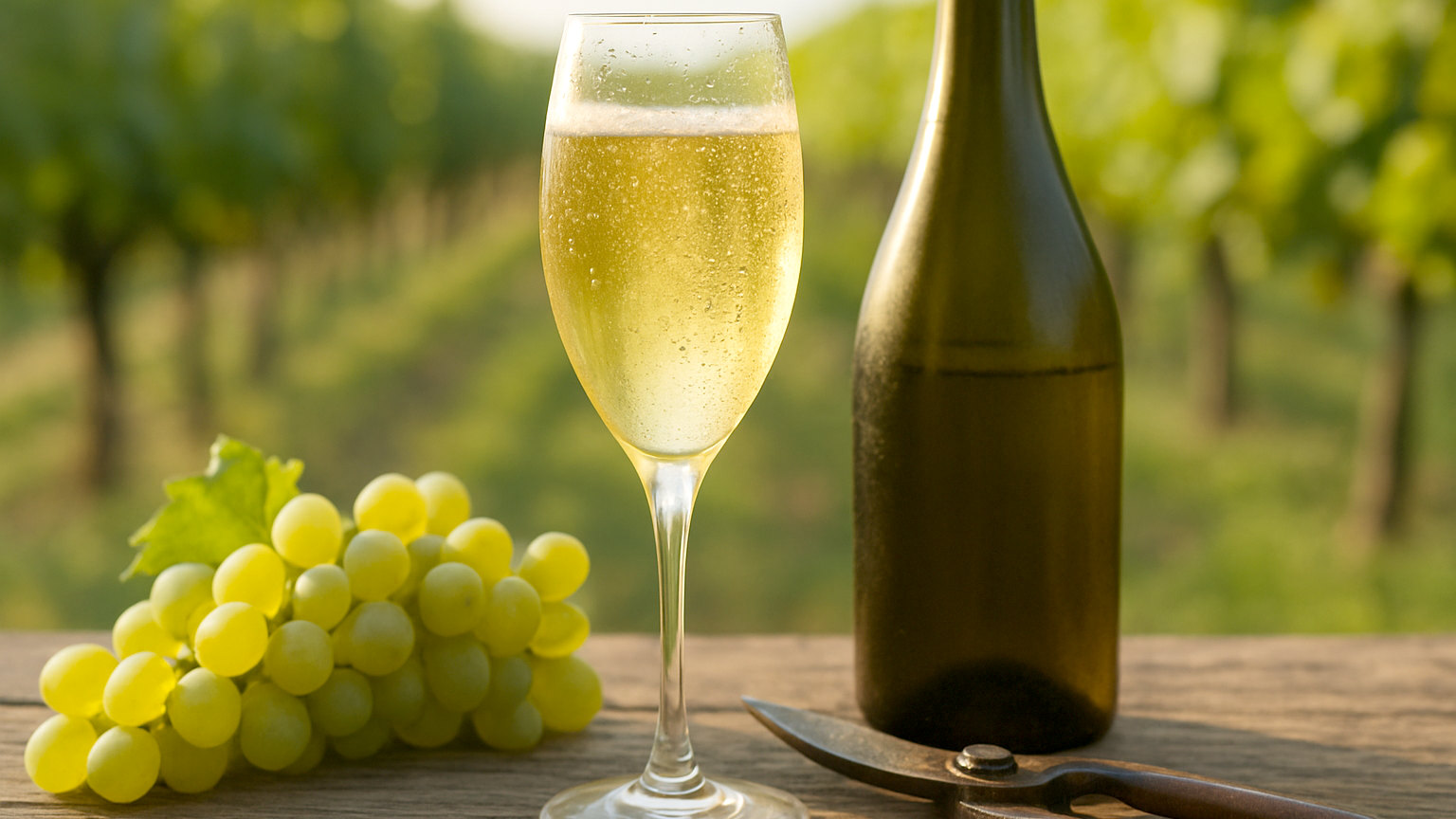
A different model has grown steadily over the past two decades. Growers who once sold their fruit now make and bottle wine from their own vineyards, producing champagne that expresses a particular village or plot rather than a house signature. The category is known as grower champagne, and it has changed what the region offers.
The letters that tell you
Every bottle of champagne carries a small code near the bottom of the label, usually two letters followed by a number, and it identifies what kind of producer made the wine.
RM stands for récoltant-manipulant, a grower who makes wine from their own grapes. This is the mark of a grower champagne. NM stands for négociant-manipulant, a producer that may buy grapes from others, which covers all the famous houses and a great many smaller ones. CM indicates a cooperative, RC a grower selling wine made by their cooperative, and MA a buyer's own brand, which is what most supermarket champagne carries.
The print is deliberately small and the codes are not explained anywhere on the bottle, which makes them one of the more useful pieces of insider knowledge available in wine retail. Once you know to look, they take two seconds to check.
Why these wines taste different
A large house blends across dozens of villages and several vintages to produce a consistent style. A grower typically works with vineyards in one village or a small cluster, so the wine reflects that specific place and that specific year far more directly.
The results are more variable and often more interesting. Growers frequently use lower dosage, more oak fermentation, single vineyard bottlings and older vintages of reserve wine, and many farm organically or biodynamically. Production is small enough that experimentation carries less risk.
The trade-off is consistency. A grower's wine may change noticeably from year to year, which is a virtue if you want individuality and a drawback if you want to know exactly what you are getting.
Value, and why it exists
Grower champagne is frequently better value than equivalent quality from a large house, for a straightforward reason: there is no advertising budget, no sponsorship and no global distribution network to fund. The price reflects the farming and the winemaking rather than the brand.
It is not universally cheap. The most sought-after growers now command high prices, driven by sommelier enthusiasm and limited production. The value sits in the broad middle, where excellent estate-grown champagne can be bought for the price of a standard non-vintage from a famous name.
How to buy it
Independent wine merchants and specialists carry these wines; supermarkets rarely do, since the volumes are too small. Check the RM code, then look at where the estate is based, since the villages carry real stylistic differences.
Chardonnay-dominated wines from the Côte des Blancs tend to be precise and mineral. Pinot noir from the Montagne de Reims gives weight and structure. Meunier from the Vallée de la Marne gives softer, fruitier wines that are approachable young and are frequently the best value of all.
If you have only ever drunk champagne from the large houses, one bottle from a good grower is worth the experiment. It will not necessarily be better, but it will be different in ways that make the whole region more interesting, and it demonstrates that champagne is a wine from particular places rather than simply a brand in a heavy bottle.
It is worth being fair to the houses in the process. Blending across villages and vintages to produce a consistent wine at enormous scale is a genuine skill, and the best non-vintage champagnes are triumphs of that craft rather than compromises. Grower champagne is an alternative philosophy, not a correction of a mistake, and a cellar with both in it is better off than one committed to either.