
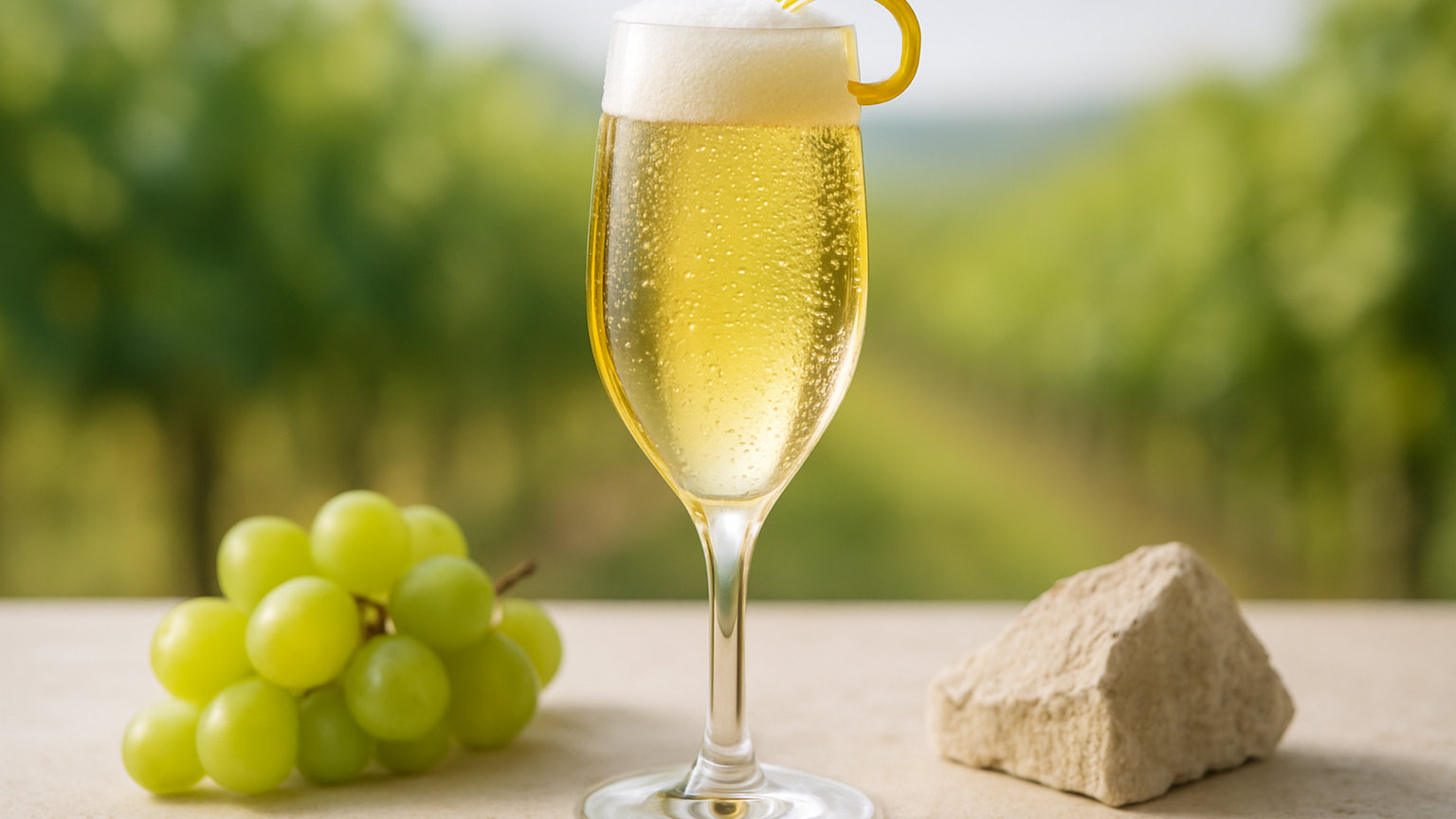
Thirty years ago the phrase English wine invited a joke. Today English sparkling wine wins international blind tastings against champagne with sufficient regularity that the results have stopped being newsworthy, and several champagne houses have bought land in southern England. The transformation is recent, and it has three causes.
The same chalk, a little further north
The geology is the least appreciated part of the story. The chalk that underlies the Champagne region is part of the same formation that surfaces in the North and South Downs, running through Sussex, Kent and Hampshire before dipping under the Channel.
Chalk matters for practical rather than mystical reasons. It drains freely, so vines are not waterlogged in a wet British spring. It also holds moisture deep down, releasing it slowly during dry spells, and it reflects light back into the canopy. For a marginal climate, those properties are extremely useful.
Producers who went looking for chalk did so deliberately, having concluded that if the soil that made Champagne possible also existed in England, the rest might follow.
A climate that has moved
The second factor is temperature. Southern England has warmed measurably over recent decades, and the growing season is now long enough to ripen chardonnay and pinot noir to the modest sugar levels that sparkling wine requires. Crucially, sparkling base wine does not need much ripeness. It needs high acidity and moderate alcohol, which is precisely what a cool climate delivers.
This is why England succeeded at sparkling wine before still wine. The conditions that make ripening red grapes difficult are the same conditions that produce excellent sparkling base wine, and the country found itself in the position Champagne occupied a century ago.
The risks remain real. Spring frost can destroy a crop, and wet summers bring disease pressure, so vintage variation is greater here than in most established regions.
The decision to make it properly
The third cause was a choice. Earlier English wine had focused on German-influenced still whites from hybrid grapes, which produced modest results. From the late 1980s and through the 1990s, a small number of growers planted the champagne varieties, chardonnay, pinot noir and meunier, and committed to the traditional method with long lees ageing.
That meant accepting years between planting and first sale, and considerable investment before any return. The wines that emerged from the 2000s onwards vindicated it, and the industry has expanded rapidly since, with plantings now covering a substantial area across the south of England.
What it tastes like, and what it costs
The house style tends to be higher in acidity than champagne, with green apple, citrus, hedgerow and a distinctly bracing finish. Lees ageing adds the same bready and biscuit notes that bottle fermentation produces anywhere, and the best examples have real length and precision.
Whether it is better than champagne is the wrong question. It is recognisably the same style made in a slightly cooler place, and the acidity is the signature.
The price is the sticking point for many buyers, since English sparkling wine generally costs as much as decent champagne and sometimes more. The reasons are structural: small production, expensive land, high labour costs, low yields, frost risk and none of the economies of scale a region producing hundreds of millions of bottles enjoys.
What it does offer is genuinely local provenance, a distinctive style, and quality that stands comparison at the price. For anyone buying a bottle for an occasion, it is a more interesting choice than a supermarket champagne at similar money, and considerably better value than the entry-level bottles from the largest houses.
The category is also still young enough that producers are learning. Vines planted twenty years ago are only now reaching the age at which they give their best fruit, lees ageing periods have lengthened as houses have accumulated stock, and the early tendency towards very high acidity has been tempered by warmer vintages and better site selection. Whatever the wines are like now, they are a work in progress rather than a finished argument.


