Wine attracts accessories in a way few other drinks manage. Some of them do exactly what they claim, some do something marginal, and some are elaborate solutions to problems that do not exist. Price is a poor guide, since the most expensive item in this article is also one of the few that genuinely works.
Aerators
Pour-through aerators, the funnel-shaped devices that sit in the neck of a bottle or over a glass, work by exposing wine to air as it passes through a chamber. The mechanism is real, and they do accelerate the aeration that decanting provides.
The question is whether they achieve as much as decanting. For a quick glass from a young tannic red, they are a reasonable substitute and considerably faster. For a bottle you intend to drink over an evening, a decanter does the job better because the wine continues to develop.
They are inexpensive and worth owning if you drink young structured reds without wanting to plan an hour ahead.
Preservation systems
This is where the useful gadgets are concentrated, and the three approaches differ substantially in effectiveness.
Vacuum pumps, which draw air out through a rubber stopper, are the most common and the least effective. They remove some oxygen, the seal is imperfect, and the vacuum also pulls aromatic compounds out of the wine. They help slightly and are frequently oversold.
Inert gas sprays, which lay a blanket of argon or nitrogen over the wine's surface, work considerably better and cost very little per use. A can lasts a long time and the physics is straightforward.
Needle-based systems, which pierce the cork and extract wine under argon pressure without ever opening the bottle, work extremely well and preserve a bottle for months. They are expensive, and they make sense for anyone who wants a single glass of something serious rather than a bottle.
The cheapest effective method remains decanting leftovers into a smaller bottle filled to the neck, which costs nothing and beats a vacuum pump comfortably.
Chilling and temperature
Sleeve-style chillers kept in the freezer work well and are useful for outdoor drinking. Rapid chillers that spin a bottle in ice water also work, since the mechanism is simply increased heat transfer.
Whisky-style stones and metal cooling rods are less useful for wine, since they chill modestly and the surrounding glass warms quickly.
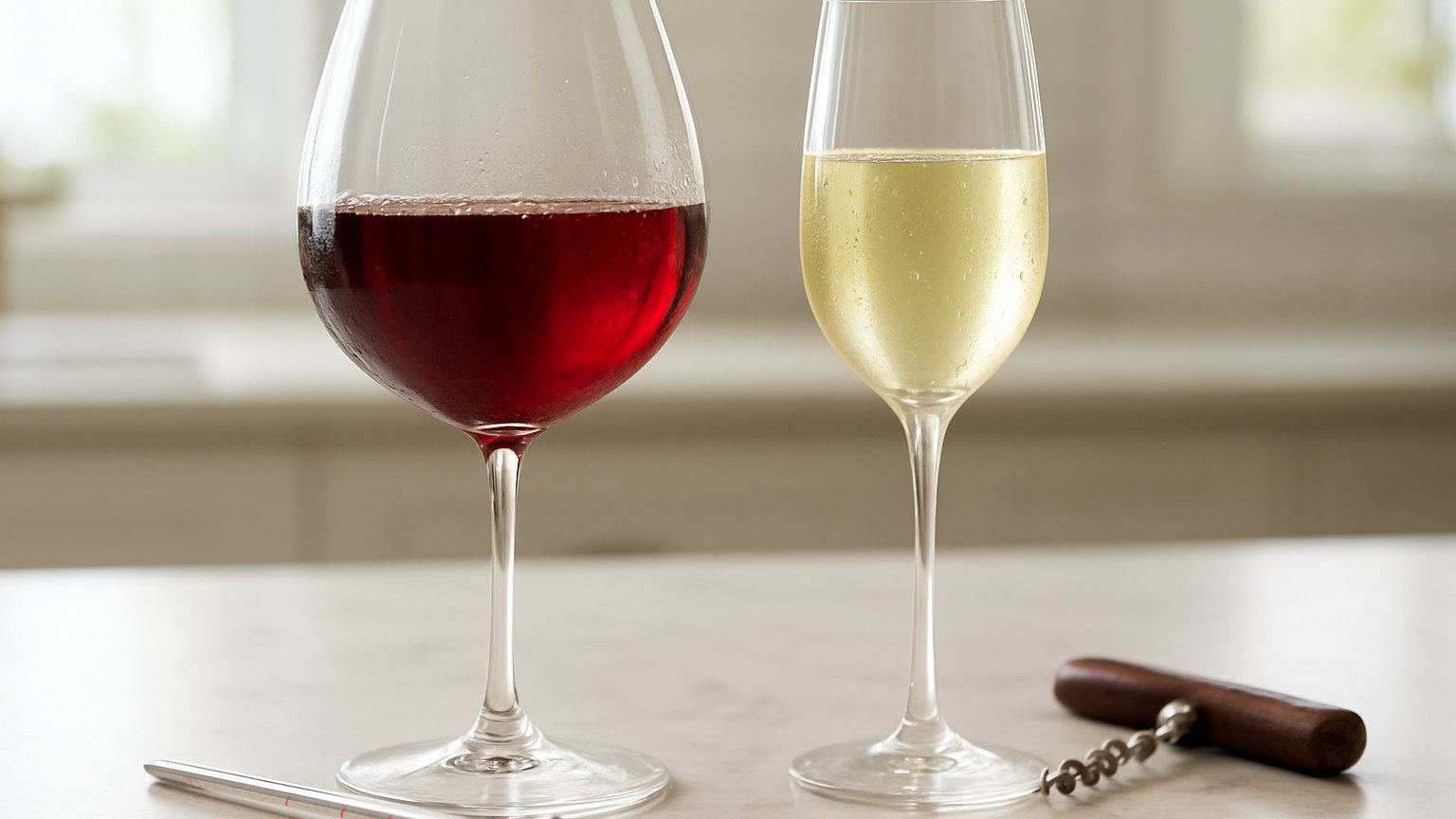
A thermometer strip on a bottle is genuinely helpful for anyone trying to serve wine at the right temperature, and costs almost nothing.
The ones with no evidence
Devices claiming to age wine instantly through magnetic fields, ultrasonic waves or electrical current appear regularly and are unsupported by any credible testing. Wine ageing involves slow polymerisation of tannins and complex chemical reactions over years, and there is no mechanism by which a magnet in a plastic housing replicates it.
Some of these devices do aerate the wine as a side effect of pouring or agitation, which produces a real if modest change that users then attribute to the technology.
Wine glass charms, drip rings and decorative stoppers do what they claim, which is not much, and nobody is pretending otherwise.
What is actually worth buying
A decent corkscrew, specifically a waiter's friend with a double hinge, which is what professionals use and which costs a fraction of the elaborate lever models. A set of good universal glasses. A few small bottles for leftovers. A can of inert gas. A thermometer strip if temperature is a recurring problem.
That covers everything, comes to less than the price of one gadget claiming to age wine in ninety seconds, and will improve your drinking considerably more.