
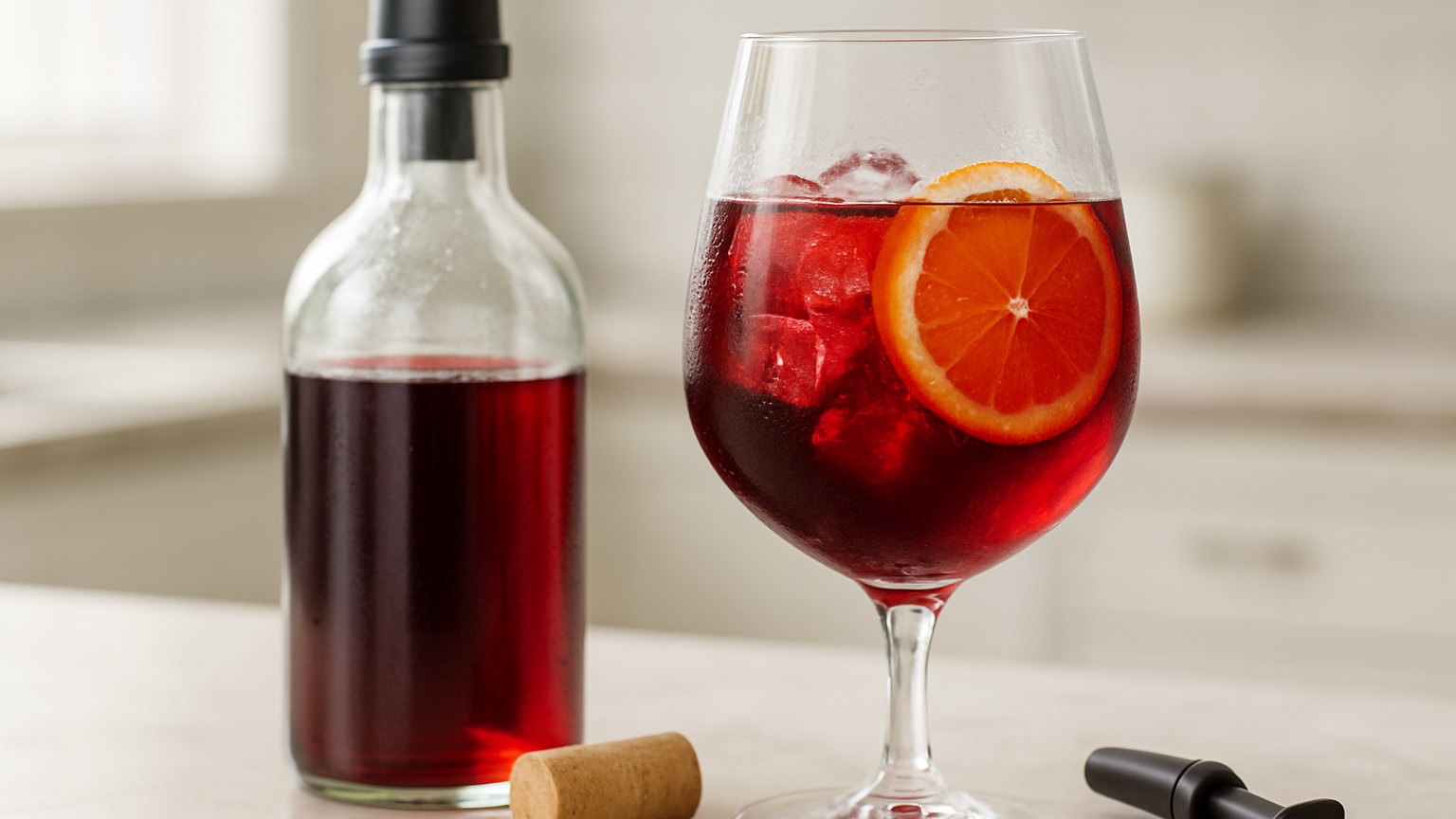
An opened bottle of wine deteriorates through oxidation, and the rate depends far more on how much air is in contact with the wine than on how many days have passed. A bottle three quarters full loses very little overnight; the same bottle with one glass left in it will be noticeably flat by the following evening.
That single fact explains why some preservation methods work and others do not, and it points to the cheapest solution before any equipment is involved.
What actually happens
Oxygen reacts with compounds in the wine, initially producing acetaldehyde, which gives a bruised-apple, slightly sherried character. Fruit aromatics fade first, then the wine flattens, and eventually acetic bacteria convert alcohol to acetic acid and the wine turns towards vinegar.
The process is not uniform across styles. Tannin and acidity both slow it, so a structured red lasts longer than a delicate white, and a high-acid white lasts longer than a soft low-acid one. Sparkling wine has an additional problem, since carbonation escapes independently of oxidation.
How long you have
Rough working figures, assuming the bottle is resealed and refrigerated. Sparkling wine keeps one to three days with a proper stopper, and a great deal less without one. Light whites and rosé last two or three days. Fuller whites and most reds last three to five. Big tannic reds sometimes improve on the second day before declining.
Fortified wines vary enormously depending on how they were aged, with oxidatively aged styles lasting weeks or months and protected ones lasting days.
None of this is about safety. Wine that has oxidised is unpleasant rather than harmful, and it can go into cooking rather than down the sink.
What works
Reducing the air is the most effective approach and the cheapest. Decanting the remainder into a smaller bottle filled close to the neck removes most of the headspace and outperforms every gadget on the market. Half bottles saved from previous purchases are ideal for this.
Refrigeration is the second lever, and it applies to red wine as well as white. Chemical reactions slow at low temperature, and a red kept in the fridge and taken out twenty minutes before serving will last considerably longer than one left on a worktop. The idea that red wine should never be refrigerated is a confusion between serving temperature and storage.
Inert gas sprays, laying argon or nitrogen over the surface, work well and cost little per use.
Simply pushing the cork back in and standing the bottle upright is better than nothing and is the minimum worth doing. Upright matters, since it reduces the wine's surface contact with air compared with a bottle lying down.
What works less well
Vacuum pumps are widely sold and modestly effective. They remove some air, the seal is imperfect, and the reduced pressure also draws aromatic compounds out of the wine. They are better than leaving a bottle open and worse than decanting into a smaller container.
Needle-based systems that extract wine through the cork under argon are genuinely excellent and preserve a bottle for months, which makes them worth considering for anyone who drinks single glasses of expensive wine. For everyday bottles the cost is difficult to justify.
The practical routine
If half a bottle is left, recork it and put it in the fridge. If a third or less is left and you want it in two days rather than tomorrow, pour it into a small bottle first.
Take reds out twenty minutes before drinking. And if a bottle has been open a week, taste it before serving it to anyone, because the difference between three days and seven is usually the difference between a glass of wine and an ingredient for a stew.


