
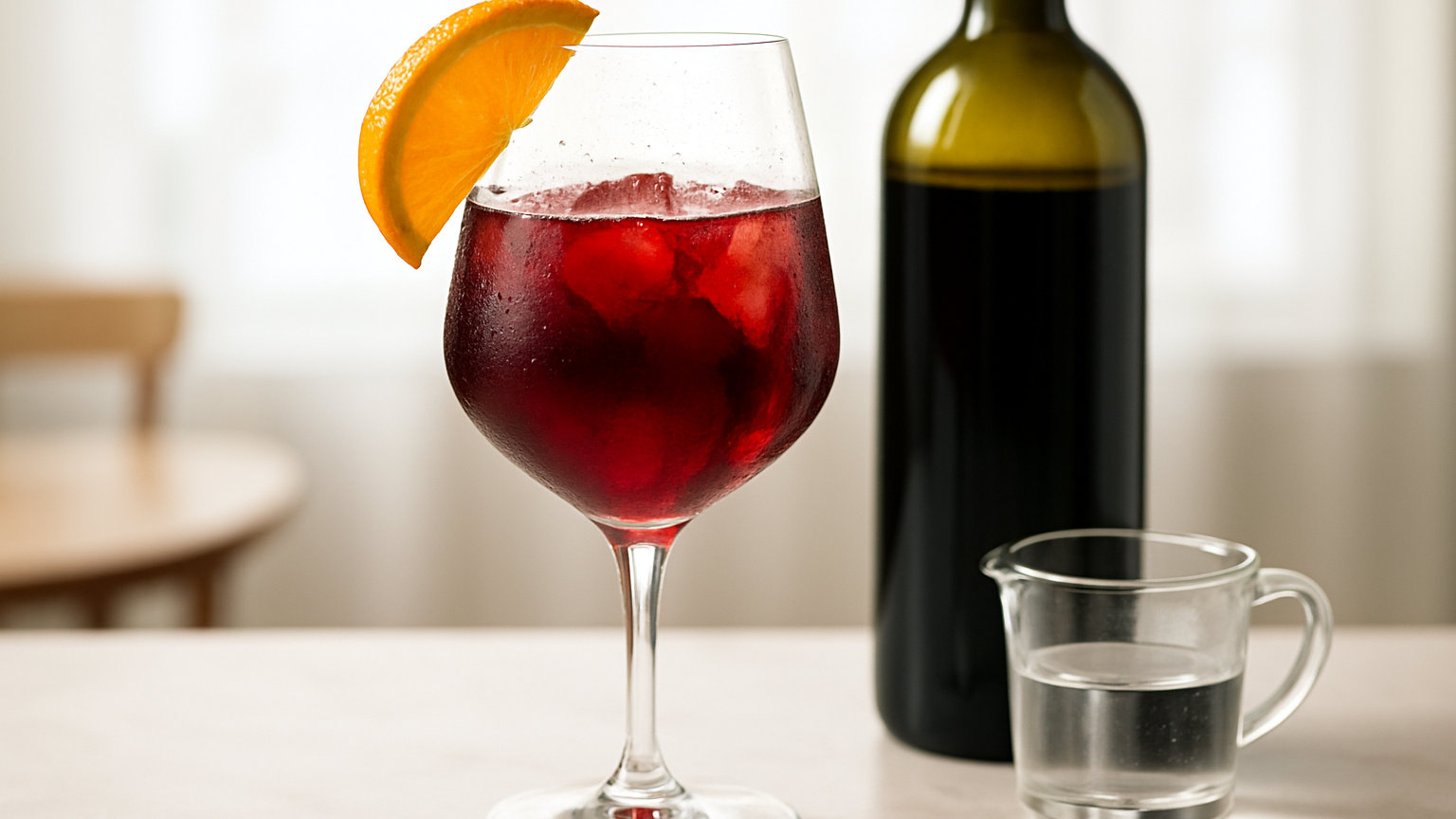
A standard wine bottle holds 750 millilitres, and how many servings that represents depends entirely on what you pour it into. The answer ranges from six to ten, which is a wider spread than most people realise when opening a bottle for two.
The measures used in Britain
Licensed premises in the United Kingdom serve wine in prescribed measures, and the three common ones are 125, 175 and 250 millilitres. A 750 millilitre bottle therefore yields six 125 millilitre glasses, roughly four and a quarter 175 millilitre glasses, or three 250 millilitre glasses.
Bars are required to make the smallest available measure known to customers, though it is frequently not advertised prominently and asking for it is entirely reasonable.
At home there is no requirement to measure anything, which is where the difficulty arises.
Why home pours run large
Wine glasses have grown substantially over the past few decades. A modern glass may hold 450 or 550 millilitres, and a pour that looks modest in a bowl that size can easily be 200 millilitres or more.
Research into pouring behaviour has consistently found that people pour more into wider glasses, more into glasses held in the hand than standing on a table, and more when the wine is the same colour as the glass is dark. None of these effects is large individually and together they add up.
The practical consequence is that a bottle shared between two people at home is frequently three generous glasses each rather than the four modest ones the arithmetic suggests.
Calculating units
The formula is straightforward. Multiply the volume in millilitres by the alcohol percentage and divide by 1,000. A 175 millilitre glass of wine at 13 per cent is therefore 2.3 units. A 250 millilitre glass at 14 per cent is 3.5.
A whole 750 millilitre bottle at 13 per cent contains 9.75 units, which is a figure worth knowing because bottles are often mentally treated as a single item rather than as a quantity.
United Kingdom Chief Medical Officers' guidance is that both men and women should not regularly drink more than 14 units a week, spread over three or more days. Whether and how that applies to any individual is a matter for them and their doctor, but the arithmetic above is what turns a label into a number.
Other bottle sizes
A half bottle holds 375 millilitres and is genuinely useful for anyone who wants a couple of glasses without committing to a full bottle. They cost slightly more per millilitre and waste considerably less, and they are worth seeking out for wines that fade quickly once opened.
A magnum holds 1.5 litres, equivalent to two bottles, and is not merely a novelty. The larger volume relative to the amount of oxygen under the cork means wine ages more slowly and more evenly in magnum, which is why serious collectors favour them.
Larger formats continue upwards with a series of biblical names, and are mostly for display.
A practical suggestion
Measure a 175 millilitre pour into your usual glass once, using a kitchen jug, and note where it comes to. Most people are surprised by how little of the glass it fills.
Knowing that mark does not oblige anyone to stick to it, but it converts an abstract number on a bottle into something visible, which is more useful than any amount of general advice.


