
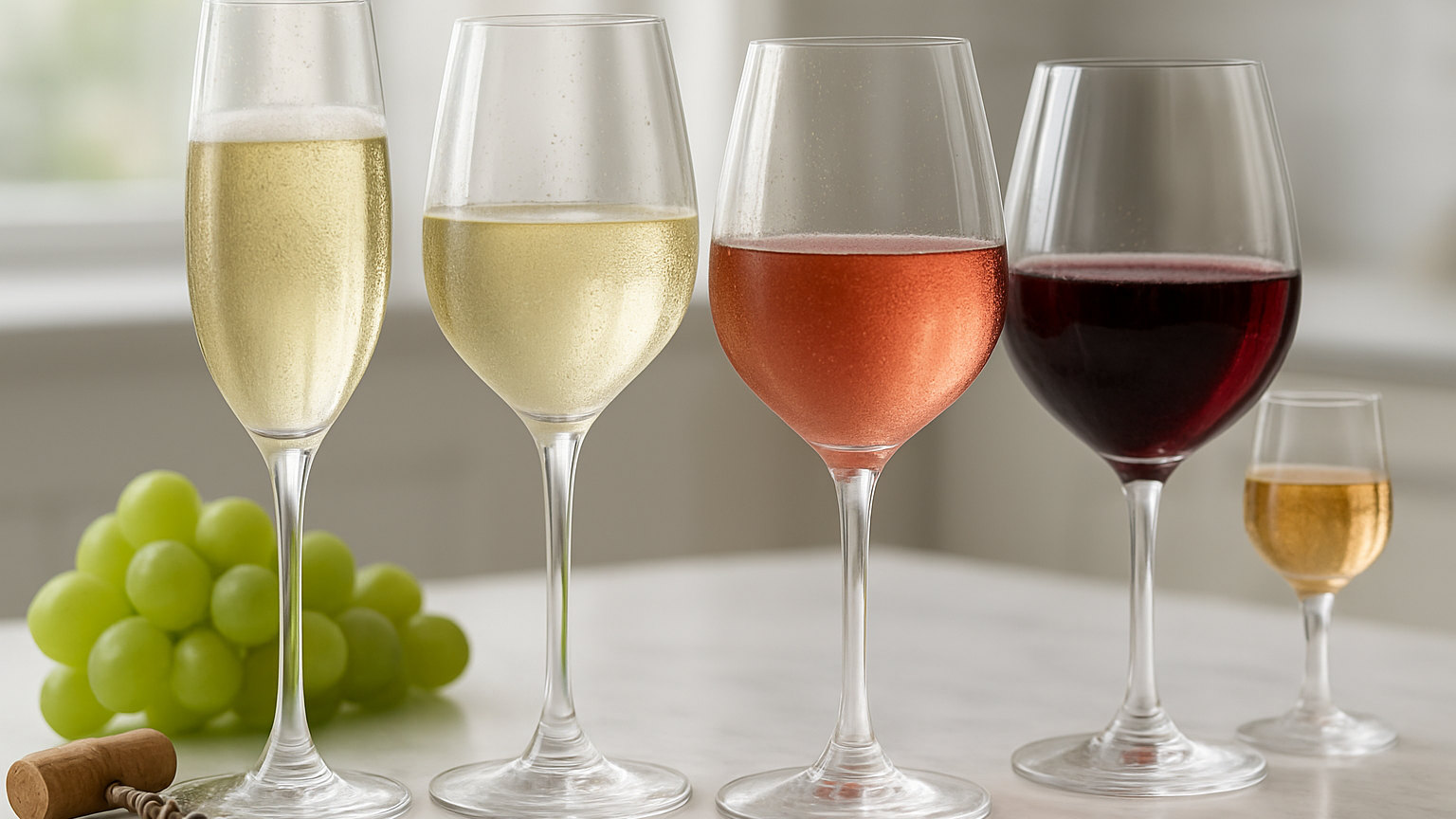
Serving more than one wine raises a question that most people answer by instinct and occasionally get wrong. The order matters because each wine changes how the next one tastes, and a badly sequenced evening can make a good bottle seem thin.
The underlying principle is that the palate adapts to what it has just experienced. Anything that follows something more intense will seem weaker by comparison, which is why the conventions all run in the same direction.
The four rules
Light before heavy. A delicate wine served after a powerful one will seem dilute and characterless, while the same wine served first shows what it has. This is the most important of the four.
Dry before sweet. Sugar lingers on the palate and makes anything following it taste sour and hollow. A dry wine after a dessert wine is close to unpleasant.
Young before old. Mature wines are usually more subtle and complex, and they need an unfatigued palate. A young, tannic wine served afterwards would trample them.
White before red, broadly. This follows from the first rule more often than not, since whites are generally lighter, and the tannin in red wine lingers in a way that affects everything after it.
Where the rules conflict
They frequently do, and the resolution is a matter of judgement. A rich oaked chardonnay is heavier than a light Beaujolais, so the white-before-red rule and the light-before-heavy rule point in opposite directions. Follow weight rather than colour, since weight is the principle and colour is the shorthand.
A mature light red before a young powerful white is another case where the conventional order should be abandoned.
Sparkling wine goes first almost always, being light, high in acidity and designed as an aperitif. The exception is a sweet sparkling wine with dessert.
Planning a meal
The simplest approach is to sequence by the food, since a well planned menu already runs from lighter to richer. Sparkling with canapés, a crisp white with a fish starter, a fuller white or a light red with the main, a bigger red with cheese, something sweet with pudding.
Two practical points make this work. Serve modest measures, since three wines at a generous pour each is a great deal of wine over a meal. And use a fresh glass for each wine if you can, or at minimum rinse with a splash of the next wine rather than with water, which dilutes.
If you only have one set of glasses, sequence becomes more important rather than less, since residue from a heavy red in the bottom of a glass will ruin a delicate white.
For a tasting rather than a meal
The same principles apply with more rigour. Work from light to heavy, dry to sweet, young to old, and keep the pours small at around fifty to seventy five millilitres so that palate fatigue does not set in halfway through.
Water and plain bread or crackers between wines help reset the palate. Avoid strongly flavoured food during the tasting itself, since cheese in particular flatters wine considerably and will distort your judgement of what is in the glass.
Limit the number. Beyond six or seven wines, most people's ability to discriminate falls away sharply regardless of how carefully the order was planned, and the last two bottles are wasted on a tired palate.
The final point is that these are guidelines rather than laws. If someone brings a bottle and wants to open it, opening it out of sequence is a smaller loss than the awkwardness of refusing, and no evening has ever been improved by strict adherence to a serving order.


