
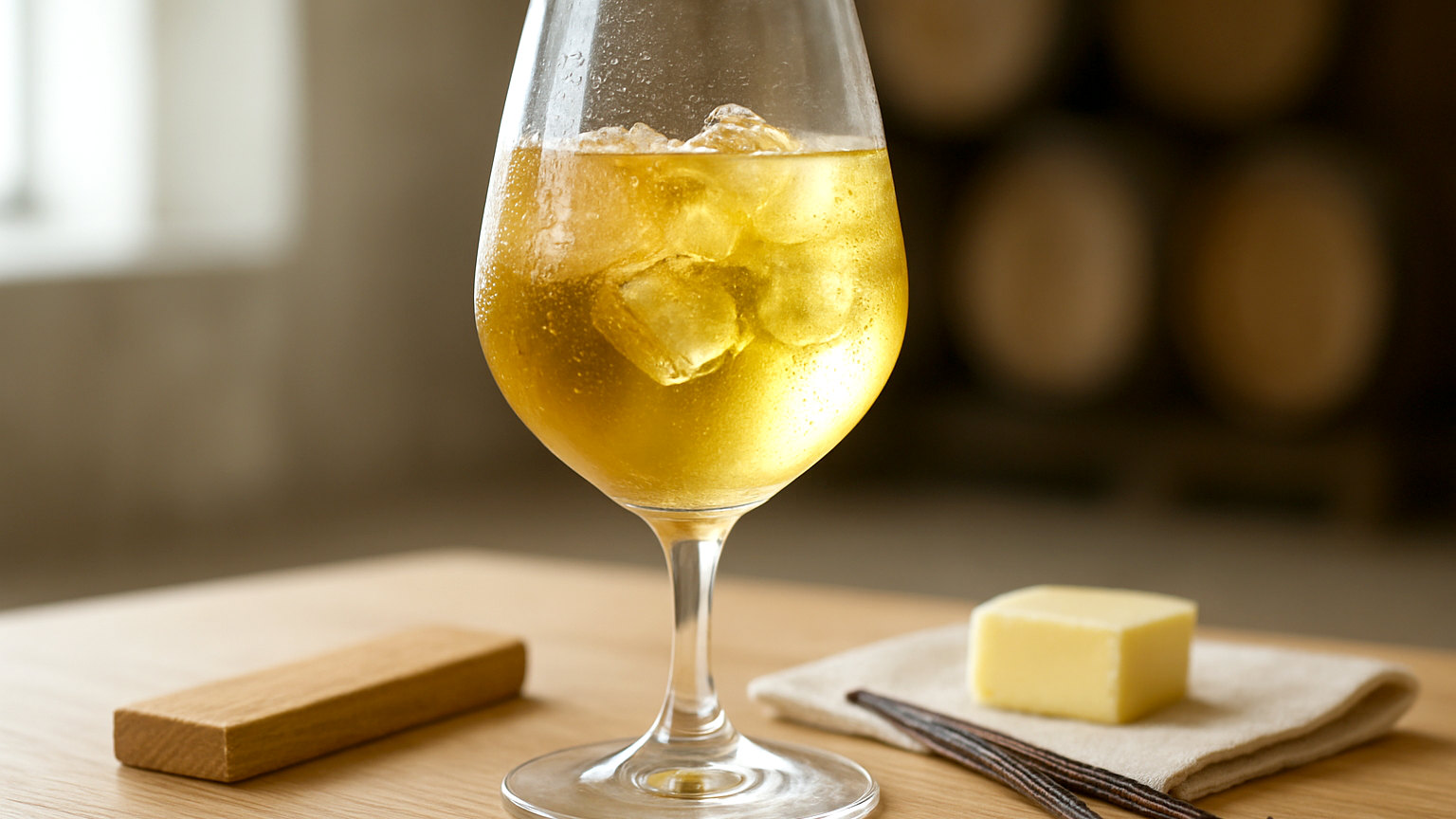
Chardonnay occupies an unusual position: it is simultaneously the most planted white wine grape in the world, the source of the most admired white wines ever made, and a variety that a great many drinkers announce they dislike. The explanation is that most people saying so are not describing the grape at all. They are describing a winemaking style that peaked in the 1990s.
Chardonnay itself is remarkably neutral. Compared with sauvignon blanc or riesling, which announce themselves aromatically before you have raised the glass, chardonnay carries relatively little intrinsic flavour, offering citrus, apple and stone fruit depending on climate. That neutrality is precisely why winemakers love it: it takes an imprint from everything done to it.
What oak does, and what it is doing alongside
Fermenting or ageing chardonnay in oak barrels adds vanillin, giving vanilla, and lactones, giving coconut and cream. Toasting the barrel over a flame produces additional notes of caramel, toast and clove. New barrels give far more of this than older ones, so the percentage of new oak a producer uses is the main dial controlling how obvious the effect will be.
Oak rarely acts alone, and this is the part usually omitted. The buttery character people associate with oaked chardonnay is not from wood at all. It comes from malolactic conversion, a secondary process in which sharp malic acid is converted to softer lactic acid, producing diacetyl along the way. Diacetyl is the compound used to flavour popcorn butter, and it is unmistakable once identified.
Add lees stirring, which builds creamy texture, and you have three techniques that between them produce a wine so far from the underlying fruit that the grape is almost incidental.
How the backlash happened
During the 1980s and 1990s, heavily oaked chardonnay sold extraordinarily well, and producers responded by pushing the style further. At the cheaper end, wines were made in steel tanks with oak chips added, delivering the flavour signature at a fraction of the cost and with none of the integration a barrel provides.
The result was a great deal of wine tasting of vanilla, butter and sawdust with very little fruit underneath. A consumer reaction followed, sufficiently widespread that it acquired an acronym in the wine trade, and sales of a grape capable of extraordinary things collapsed among people who had only ever met it in that costume.
What the grape does when left alone
Unoaked chardonnay, fermented in stainless steel with malolactic conversion blocked, is a different proposition entirely: lean, citrus-driven, with green apple and a stony, saline quality. Chablis is the reference point, and a good one bears no resemblance whatsoever to the buttery style.
Between the extremes sits most of the best white burgundy, where restrained use of oak, much of it older barrels, frames the fruit rather than covering it. The lesson is not that oak is bad. It is that oak is a seasoning, and the failure was one of proportion.
Reading the label
Producers now generally tell you. Unoaked and unwooded appear explicitly, and Chablis is unoaked or lightly oaked by convention. References to barrel fermentation, French oak or bâtonnage signal the richer style, and a deep golden colour in the bottle is a reasonable visual clue.
If you decided years ago that you dislike chardonnay, the honest test is a bottle of Chablis and an unoaked Australian or Chilean example. There is a fair chance the objection was never to the grape, and the range it covers is wider than almost anything else in white wine.
The style has also moved on considerably since the backlash. Producers in Australia, California and Chile who once made the broadest, sweetest versions now largely pick earlier, use less new oak and block malolactic conversion in part of the blend, producing wines with the texture of the old style and far more freshness. A modern oaked chardonnay from a good producer is a different wine from its equivalent of thirty years ago, which is worth knowing before assuming the category has stood still.


