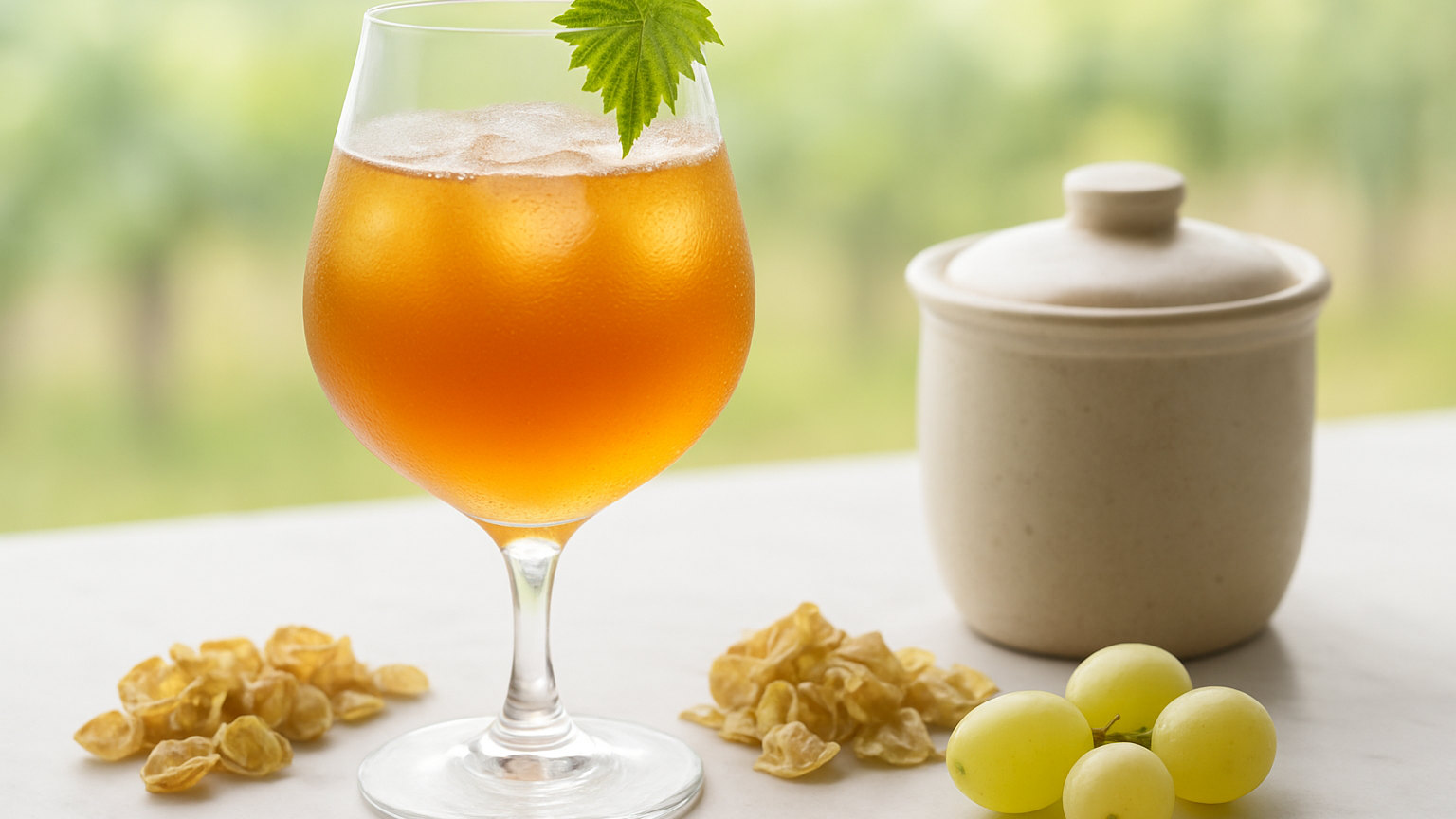
Orange wine is made from white grapes fermented in contact with their skins, in the way red wine is made. The skins contribute colour, ranging from deep gold through amber to a genuine orange, along with tannin and a set of flavours that no conventionally made white wine possesses.
Despite its recent appearance on fashionable wine lists, the technique is ancient. It is arguably the older method, since separating juice from skins before fermentation requires equipment and intent, while simply letting everything ferment together does not.
How it differs from ordinary white winemaking
Conventional white wine is pressed immediately, and the juice ferments alone. The skins, which contain most of the colour compounds, tannins and a great many aromatic precursors, are discarded.
Orange wine leaves them in, for anywhere from a few days to several months. Extended contact extracts phenolic compounds, giving the wine structure and grip that whites otherwise lack, and produces flavours of dried apricot, orange peel, tea, nuts, honey and often a savoury, slightly oxidative quality.
The practical consequence is a wine that behaves like a red in several respects. It has tannin, it can be served warmer than a white, it ages better than most whites and it handles food that would flatten a conventional white entirely.
Where it comes from
Georgia has the strongest claim, with an unbroken tradition stretching back thousands of years. Wine is fermented and aged in qvevri, large clay vessels buried in the ground, often with skins, stems and pips included. The country's rkatsiteli grape is the classic base, and the method has been recognised as culturally significant by UNESCO.
The modern revival began in north east Italy and neighbouring Slovenia in the 1990s, where a small group of producers in Friuli and the Brda region reintroduced long skin contact. From there the practice spread through the natural wine movement to Austria, France, Spain, Australia, South Africa and beyond.
Terminology remains unsettled. Orange wine, amber wine and skin contact wine all describe the same thing, with amber preferred in Georgia and skin contact favoured by producers who dislike the fashionable connotations of orange.
What to expect in the glass
Expect something genuinely unlike other white wine. The aromatics are more savoury than fruity, the texture is grippy rather than smooth, and the finish is often nutty and slightly bitter. First-time drinkers frequently describe it as tasting like cider or dry sherry, which is a reasonable first approximation.
Quality varies widely, partly because the style overlaps heavily with low-intervention winemaking and some producers accept faults as character. A well made orange wine is complex and precise; a poorly made one can be volatile, murky and unpleasant. Buying from a merchant who tastes what they stock matters more here than in most categories.
How to serve and what to eat
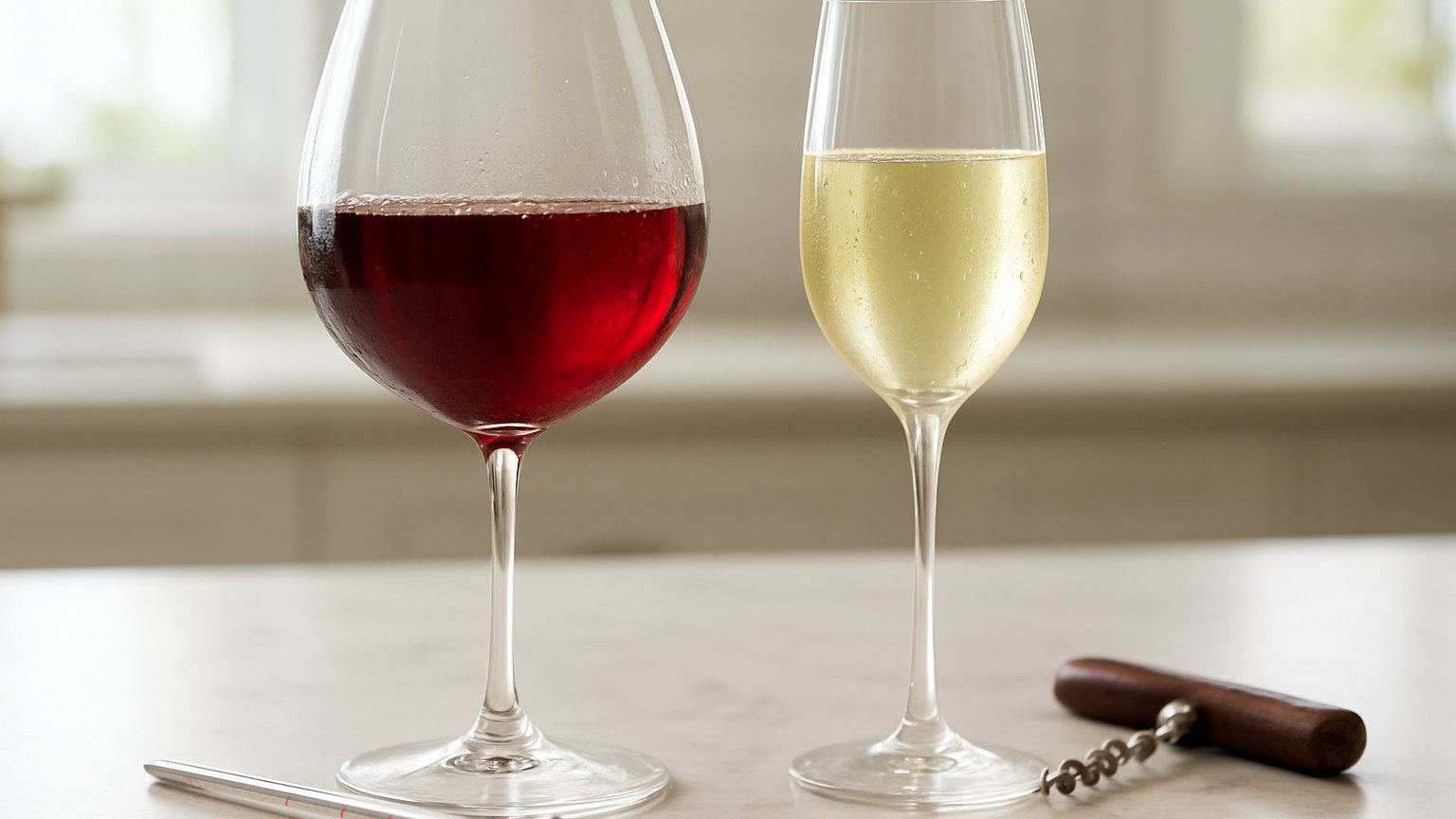
Serve it cool rather than cold, around twelve to fourteen degrees, and in a proper wine glass rather than a small one, since the aromatics need room. Many benefit from decanting, and most improve over an hour in the glass.
At the table it is unusually useful, precisely because it occupies ground neither white nor red covers well. It handles strongly flavoured, spiced and fermented food that defeats most wine: curries, Korean and Middle Eastern cooking, aged and washed-rind cheese, mushrooms, roast vegetables and charcuterie.
If you are trying it for the first time, start with something from Friuli or Slovenia with moderate skin contact rather than an extreme example, and drink it with food rather than on its own. Approached that way it is far less strange than its reputation suggests, and it fills a genuine gap in what wine can do.
It is also worth knowing that orange wine and natural wine are not the same thing, though they are frequently sold together. Skin contact is a technique, and it can be applied with modern equipment, careful sulphur use and full technical control. Some of the most reliable orange wines are made by conventional producers who simply chose to leave the skins in, and they are a better introduction than the more experimental end of the category.