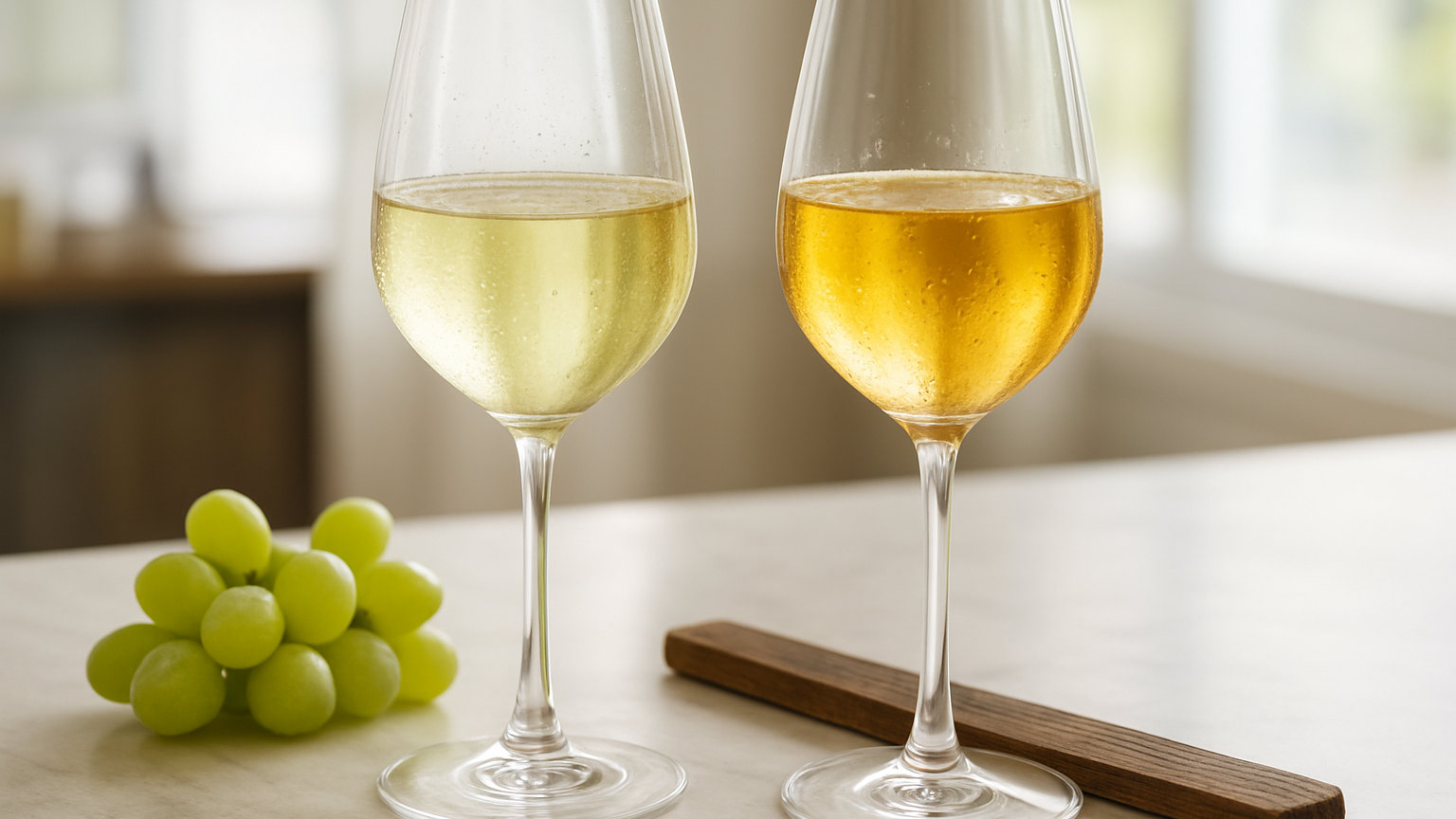
Supermarkets divide white wine into crisp and rich as though the two were opposites on a single dial. In one sense they are, but the labels obscure something more useful: the difference is the result of specific decisions, most of which a winemaker takes deliberately, and knowing what they are lets you predict a bottle before opening it.
Red wine gets much of its identity from tannin, which white wine largely lacks because the skins are removed before fermentation. White wine therefore has to build structure from other things, and how a producer chooses to do that is what separates a bracing Muscadet from a broad, buttery Californian chardonnay.
Acidity sets the starting point
The single largest factor is acidity, and that is decided principally in the vineyard rather than the winery. Grapes lose acid as they ripen, so fruit grown in a cool region and picked early retains a great deal of it, while fruit from a warm region picked late has considerably less.
High acidity reads as crispness, freshness and length. It also makes a wine feel lighter than its alcohol level alone would suggest, which is why a sharp German riesling at twelve per cent can seem more delicate than a soft Italian white at the same strength. Where acidity is low, a wine tastes broader and rounder, and if it drops too far it becomes flabby, which is the technical term for a wine with nothing holding it together.
Malolactic conversion softens the edges
After the main fermentation, a winemaker can allow a second, bacterial process in which sharp malic acid is converted into softer lactic acid. Malic is the acid in a green apple; lactic is the acid in yoghurt, and the shift in character is roughly what that comparison suggests.
The conversion also produces diacetyl, the compound responsible for the buttery note in many chardonnays. It is used extensively in chardonnay and in fuller styles generally, and deliberately blocked in aromatic wines such as riesling and sauvignon blanc, where the fresh acidity is the point. This single decision does more to move a wine from crisp towards rich than anything else that happens indoors.
Oak and lees add weight
Fermenting or ageing a white wine in oak barrels contributes vanilla, spice and toast, along with a little tannin and the slow oxygen exposure that softens a wine over months. Stainless steel contributes nothing, which is exactly why it is used for wines meant to taste of fruit and acid alone.
Lees ageing works differently and is less well known. Leaving a wine in contact with the spent yeast cells after fermentation, sometimes stirring them through the wine, adds a creamy texture and bready, savoury notes without adding oak flavour. It is how producers give weight to a wine while keeping it fresh, and it explains why some unoaked whites still feel substantial.
Reading the style before you buy
These four factors combine in predictable ways, and the label usually gives enough away. A cool-climate origin, an alcohol figure around twelve per cent or below, and no mention of barrels points firmly towards crisp. A warm region, alcohol at thirteen and a half or above, and any reference to barrel fermentation, oak or lees stirring points towards rich.
Grape variety narrows it further, since some varieties are almost always made one way. Muscadet, albariño, assyrtiko, grüner veltliner and most sauvignon blanc sit at the crisp end. Chardonnay covers the entire range depending on treatment, viognier and marsanne sit at the rich end almost regardless of what is done to them.
Neither end is superior, and the choice should follow the occasion. Crisp whites suit warm weather, shellfish, salads and drinking without food. Rich whites suit cold weather, roast chicken, cream sauces and situations where you want the wine to fill the room rather than refresh it. Knowing which you are buying is more useful than knowing which is fashionable.