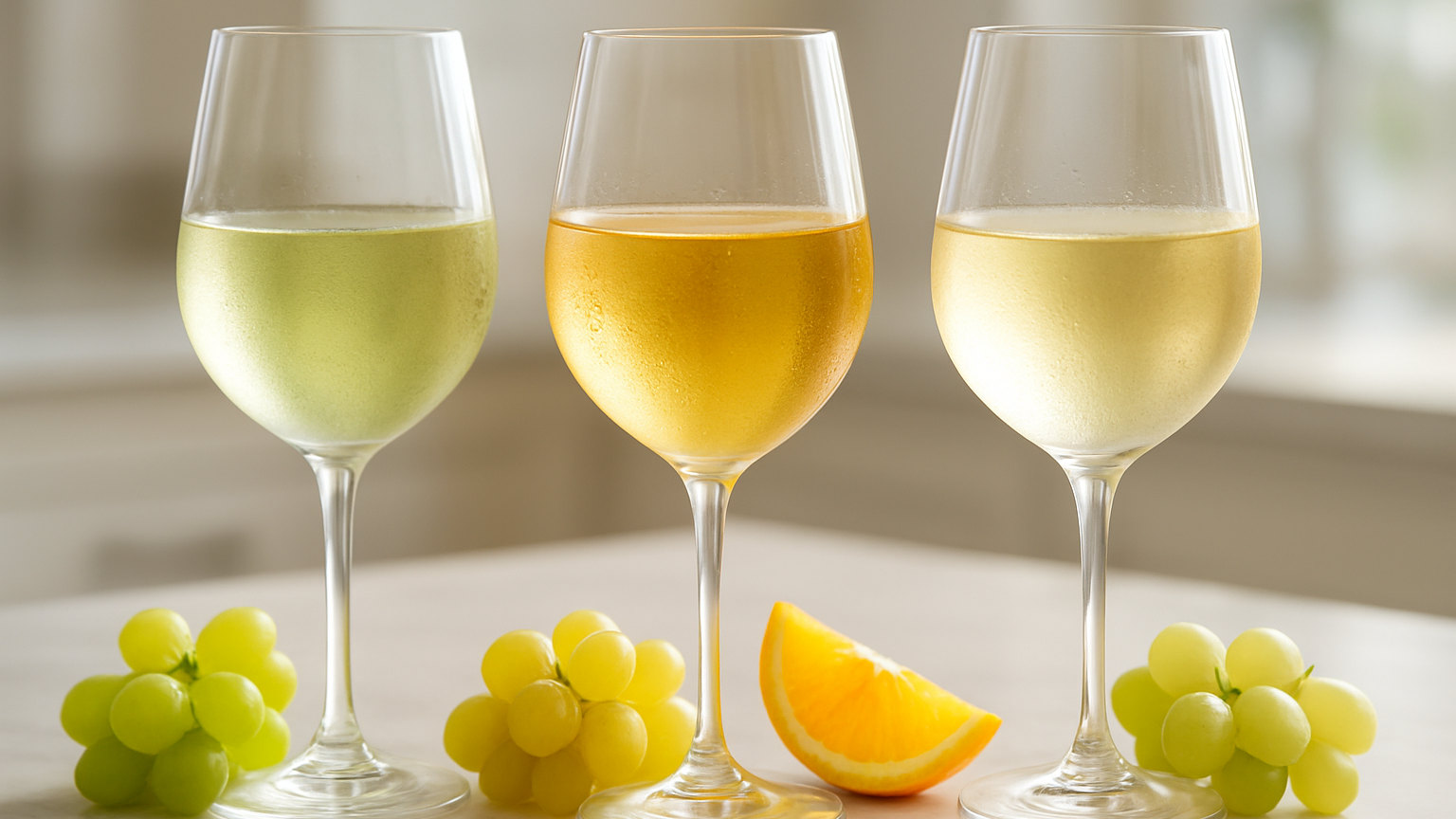
White wine is often treated as the simpler half of the wine world, which is precisely backwards. Reds share a broad family resemblance because they all get structure from tannin. Whites do not, and the distance between a steely Chablis and an oaked Californian chardonnay made from the same grape is greater than the distance between most red varieties.
That variety is an argument for exploring deliberately rather than settling early. Six grapes account for most of what is sold in Britain, and each demonstrates something the others do not.
Start at the sharp end
Sauvignon blanc is the obvious first bottle, not because it is the best but because it is the most legible. Its aromatics are unmistakable: cut grass, gooseberry, elderflower, and in the New Zealand style a burst of passionfruit and grapefruit. Acidity is high, oak is usually absent, and the wine tastes emphatically of itself.
Once that is familiar, albariño from north west Spain and picpoul from southern France both offer crisp, saline, citrus-driven whites without sauvignon's herbaceous signature. They demonstrate that freshness does not require aggressive aromatics, which is a useful thing to learn early.
Then meet the shape-shifter
Chardonnay is the grape that most rewards attention, because it is a blank canvas that takes the shape of whatever is done to it. Unoaked and cool-grown, it produces lean, citrus and green-apple wine with a stony edge. Barrel-fermented and warm-grown, it produces broad, golden wine tasting of peach, butter and vanilla.
Buy an inexpensive Chablis and an oaked New World chardonnay and open them together. Nothing else in wine makes the point about winemaking as forcefully, and it takes one evening.
Riesling, and why people avoid it
Riesling is widely regarded within the trade as the finest white grape and widely ignored by drinkers who assume it is sweet. Some is, a great deal is not, and the confusion has kept prices lower than the quality justifies, which is an opportunity if you are willing to read a label.
What it offers is a combination of high acidity, low alcohol and intense aromatics of lime, apple and white flowers, with the ability to age for decades. Dry versions from Australia's Clare Valley or Alsace are a straightforward starting point, and a German bottle marked trocken will also be dry.
Alongside it, pinot gris is worth knowing in both its guises: light and neutral as Italian pinot grigio, richer and spicier as Alsace pinot gris. The same grape, two conventions, and a good demonstration of how much the name on a label signals.
Chenin blanc, and how to keep going
The sixth grape worth seeking out is chenin blanc, which does everything from bone dry to lusciously sweet and from steel-fermented to barrel-aged. South African chenin is among the best value white wine available anywhere, and Loire versions from Vouvray and Savennières are serious wines at reasonable prices.
The method for exploring all of this is the same as with red. Buy at eight to twelve pounds, prefer bottles labelled by grape while you are learning, note one line about each, and once you find a variety you like, buy it from a different country rather than buying more of the same wine.
The one habit worth adopting immediately concerns temperature. A great many white wines are judged harshly because they were served straight from a cold fridge, which suppresses exactly the aromatics you are trying to learn. Take the bottle out twenty minutes before pouring, and you will taste considerably more of what you paid for.
It is also worth resisting the instinct to buy the same thing repeatedly once you find something you enjoy. White wine rewards curiosity more than red does, because the range is wider and the prices at the interesting end are lower. A drinker who has worked through six varieties in three months has a far better map than one who has bought forty bottles of the same sauvignon blanc, and the exercise costs no more.