
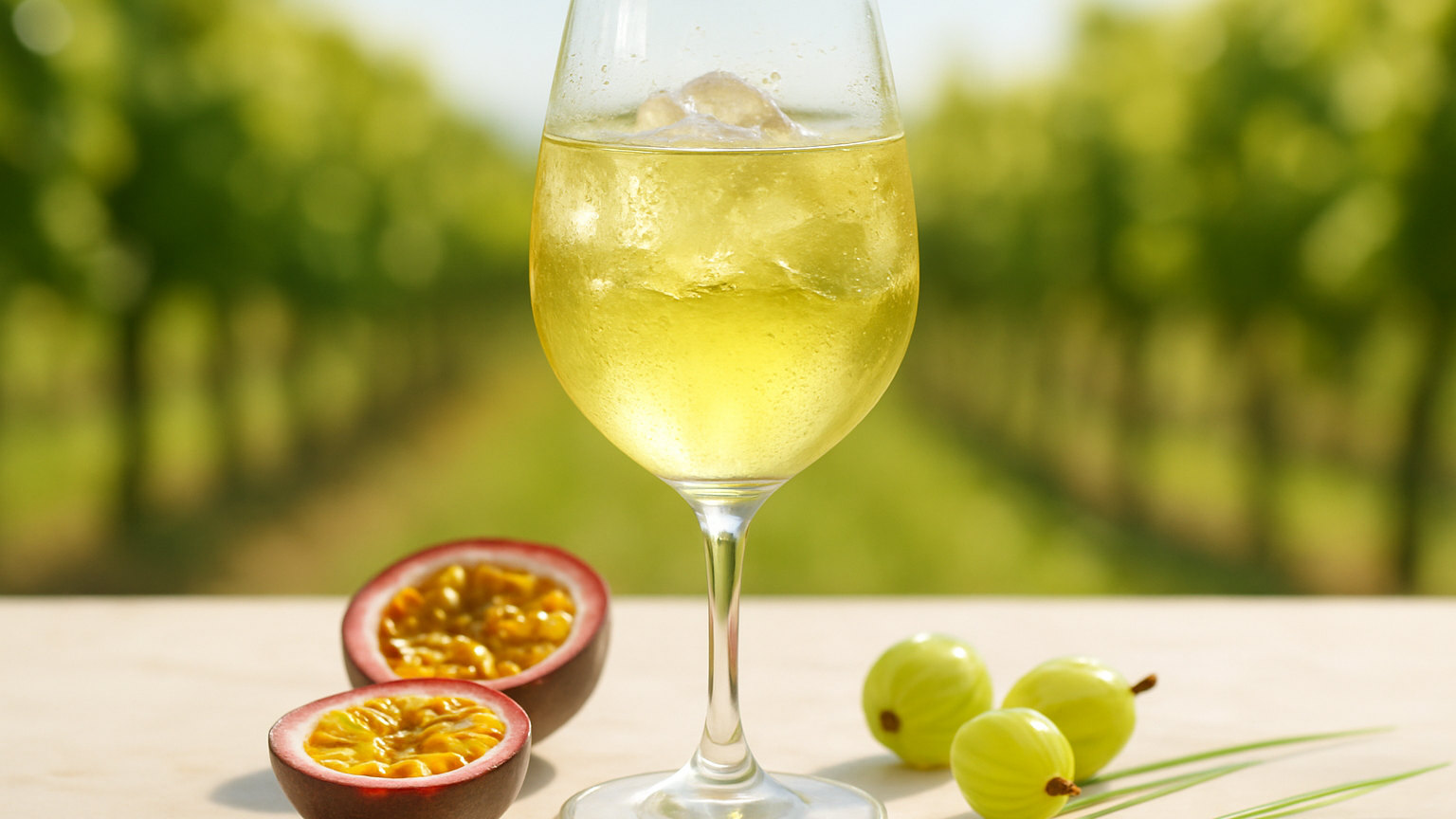
Sauvignon blanc is the most immediately recognisable white wine grape, and the descriptors attached to it are unusually consistent: cut grass, gooseberry, elderflower, green pepper, and in some versions passionfruit and grapefruit so pronounced they seem almost artificial. Unlike a great deal of wine language, these are not impressionistic. Two identifiable groups of compounds are responsible, and understanding them explains why the same grape produces such different wines in France and New Zealand.
The green side and the tropical side
The herbaceous character comes from methoxypyrazines, compounds also found in green peppers, peas and asparagus, which is why the notes register as vegetal rather than fruity. They are present in the grape from early in its development and break down as the fruit ripens in sunlight. Cool conditions and shaded canopies preserve them; heat and sun exposure reduce them.
The tropical character comes from thiols, sulphur-containing compounds that are largely absent in the grape itself and are released during fermentation from precursors in the juice. Yeast strain, fermentation temperature and handling all affect how much is liberated, which means the tropical intensity of a sauvignon blanc is substantially a winemaking decision rather than a given.
The balance between the two families is what separates the styles. Cooler sites with careful ripening give a herbaceous, mineral wine. Warmer sites with fermentation chosen to maximise thiol release give the exuberant passionfruit style.
The Loire original
The grape's classic home is the eastern Loire, around Sancerre and Pouilly-Fumé, where the climate is marginal and the soils include limestone, flint and clay. Wines from there are restrained by comparison: citrus, gooseberry and blackcurrant leaf, with a chalky or smoky edge and firm acidity.
They are also more obviously food wines, built to accompany the local goat's cheese in a pairing so well established it has become a cliché, and one that genuinely works because the wine's acidity cuts the cheese's fat while the herbaceous notes echo its tang.
Bordeaux uses the grape differently again, frequently blending it with sémillon and sometimes ageing in oak, producing a broader, waxier white that ages far better than the reputation of the variety suggests.
What Marlborough changed
New Zealand's Marlborough region began producing sauvignon blanc commercially in the 1970s and within two decades had redefined the grape internationally. The combination of intense sunlight, cool nights and a long growing season produced wines with both high thiol levels and retained acidity, giving the explosive passionfruit and grapefruit style that made the region's name.
It sold in enormous volumes, and success brought the usual consequence: a great deal of imitation, some of it sloppy. The style's weakness is that at high yields and low prices it becomes simple and sometimes aggressively pungent, all noise and no substance.
How to buy it well
Decide which side of the grape you want. For food, particularly anything with herbs, goat's cheese, asparagus or fish, the Loire style or its imitators from South Africa and cooler parts of Chile will serve better. For drinking on its own on a warm evening, the New Zealand style is hard to beat and needs nothing alongside it.
Drink it young in almost every case. The aromatic compounds that define the grape fade within a few years, and while oaked Bordeaux blends and a handful of ambitious Loire wines age well, the standard bottle is at its best in the twelve to eighteen months after release.
Vintage is therefore worth a glance for a grape where it is usually ignored. A sauvignon blanc three or four years past its harvest date sitting on a supermarket shelf has almost certainly lost the vividness that made it worth buying, and the wine will taste flat and vaguely tinned rather than actively faulty. Check the year, take the most recent available, and the improvement costs nothing.
One practical note: serve it cool but not freezing. Thiols and pyrazines are both volatile, and a wine served straight from a cold fridge will show almost none of the character you bought it for.


