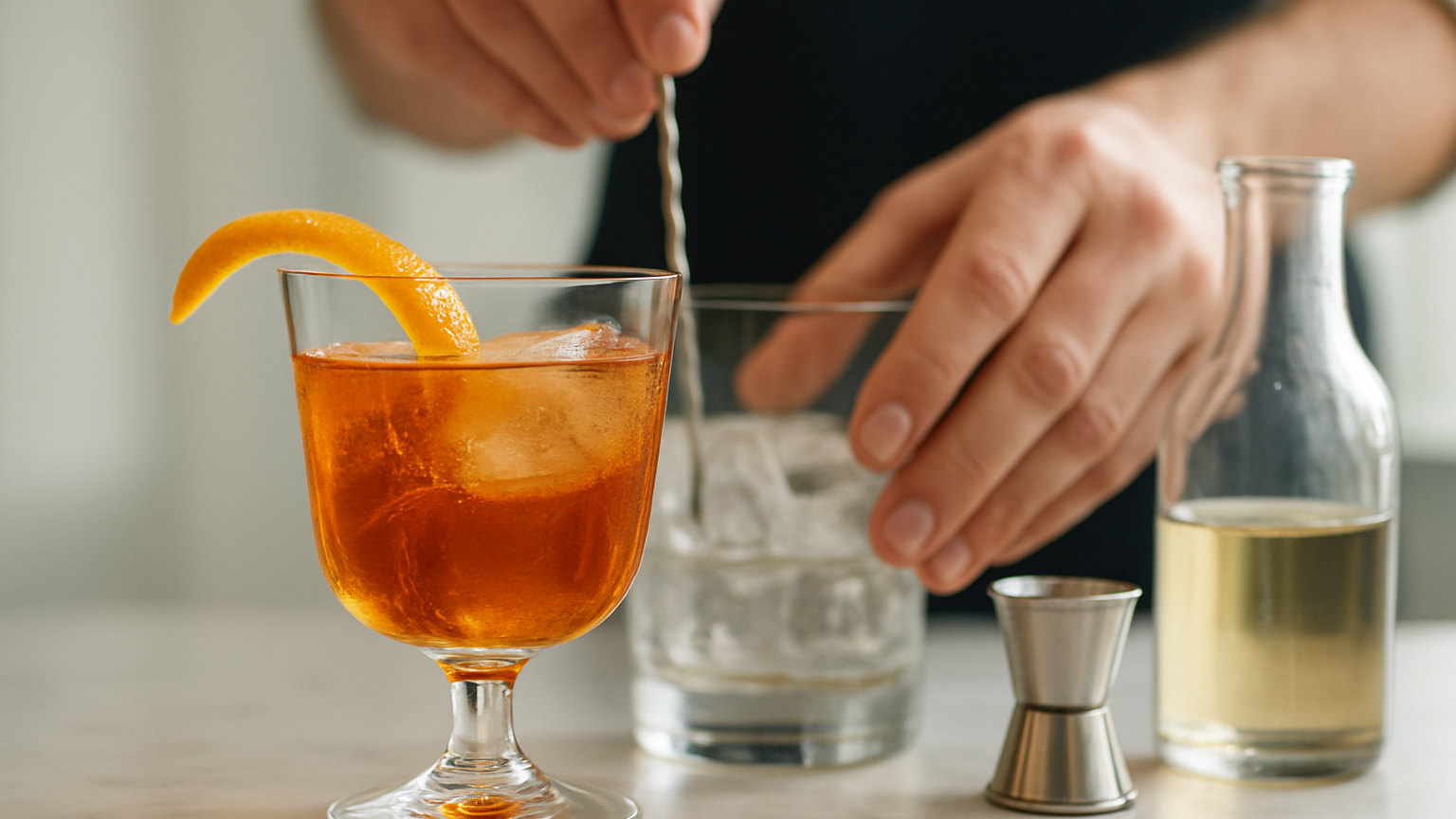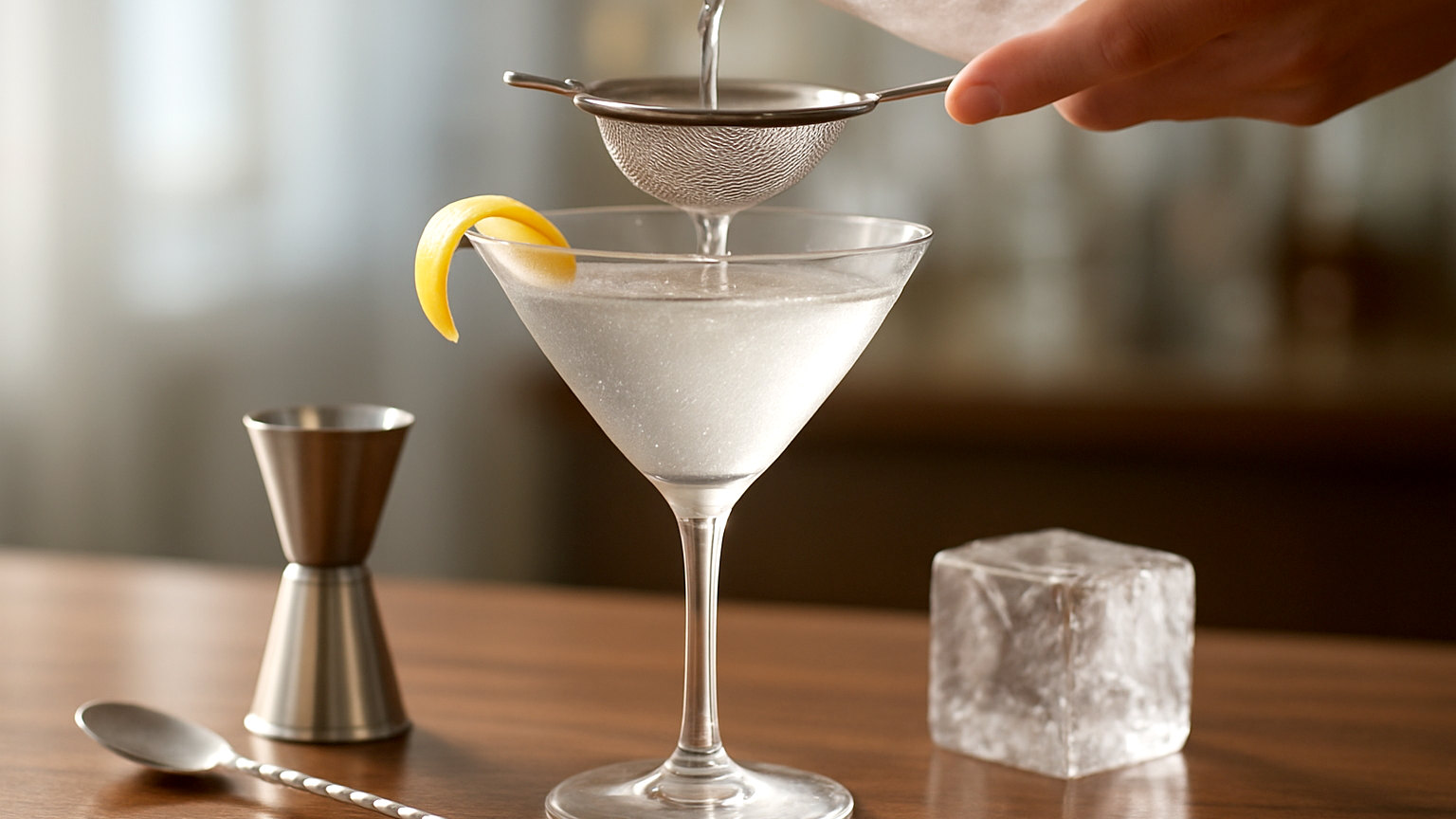
The peel of a citrus fruit contains the aromatic oil that gives it its smell. The juice contains acid and sugar. They are different ingredients, and a twist is a way of adding the first without the second.
The tools
A Y-shaped vegetable peeler is the most useful and produces wide strips with minimal pith.
A sharp paring knife works and requires more care.
A channel knife cuts the long thin spirals used for decorative twists. It produces less oil than a wide strip and looks better, which is the trade.
A zester produces fine shreds, useful for grating over a drink rather than for a twist.
Cutting a twist
Use a firm, unwaxed fruit at room temperature, since cold peel releases less oil.
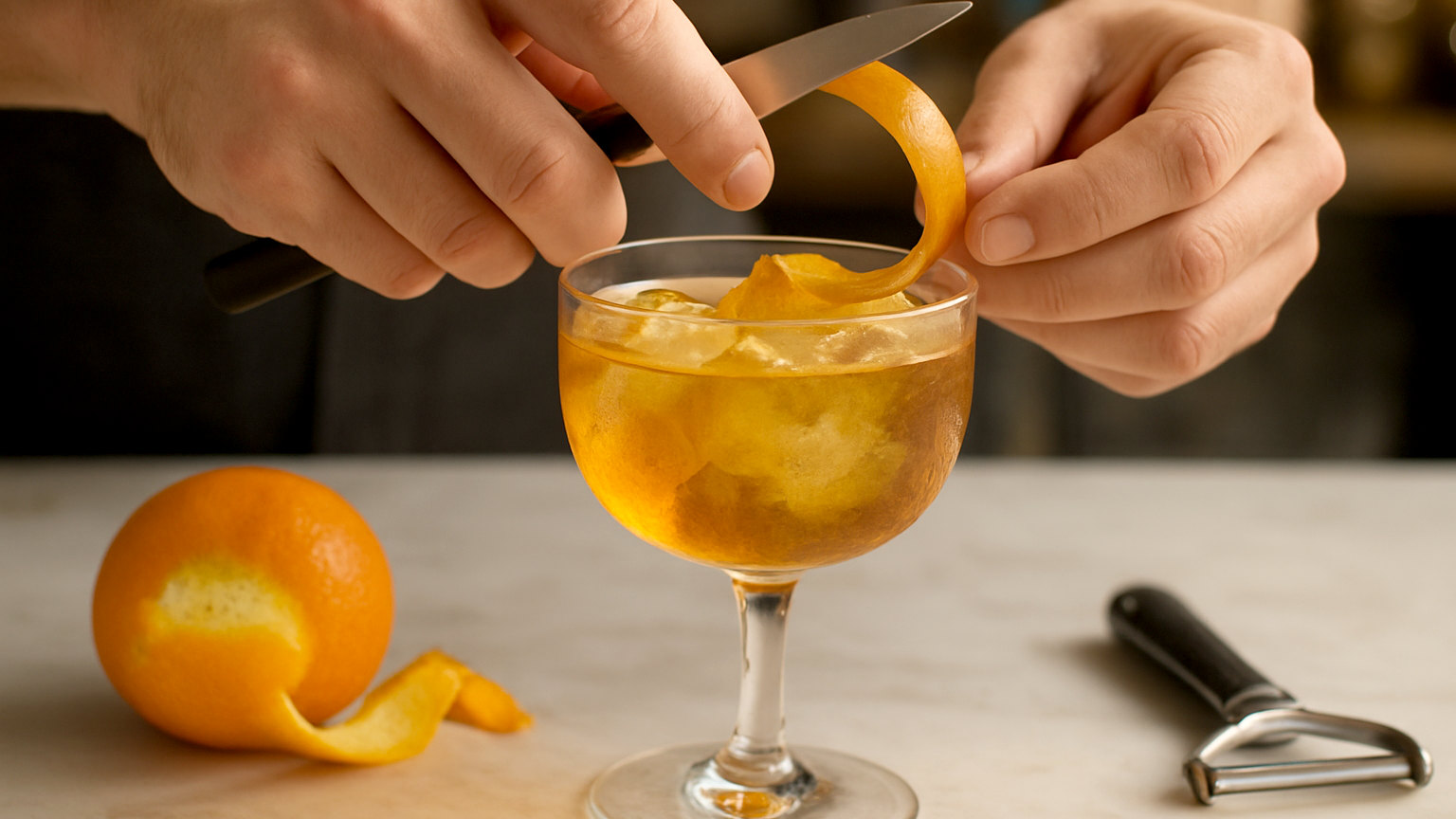
Draw the peeler down the side of the fruit in one movement, taking a strip two to three centimetres wide and five or six long.
Aim for the coloured layer only. White pith carries bitterness and no aroma, and any that comes away can be scraped off with a knife.
Trim the edges straight if you want it to look neat, which is optional.
Expressing the oils
The step that matters and the one most often skipped.
Hold the strip between thumb and forefinger, coloured side facing down towards the drink, about five centimetres above the surface.
Squeeze it firmly, folding it in half. A fine mist of oil sprays onto the drink, which you can sometimes see against a light.
Then rub the peel around the rim of the glass, which deposits oil where your lips will meet it, and drop it in or discard it.
A twist dropped in without expressing contributes almost nothing, which is why so many garnished drinks taste no different from ungarnished ones.
Flaming a peel
Holding a lit match between the peel and the drink and expressing through the flame produces a brief flare as the oils ignite.
It caramelises some of the oil and adds a faintly toasted note, and it is largely theatre.
If you do it, keep it away from anything flammable, do it over the drink rather than over the bottle, and be aware that spirits are flammable. It is a party trick rather than a technique, and nobody needs to attempt it.
Wedges and wheels
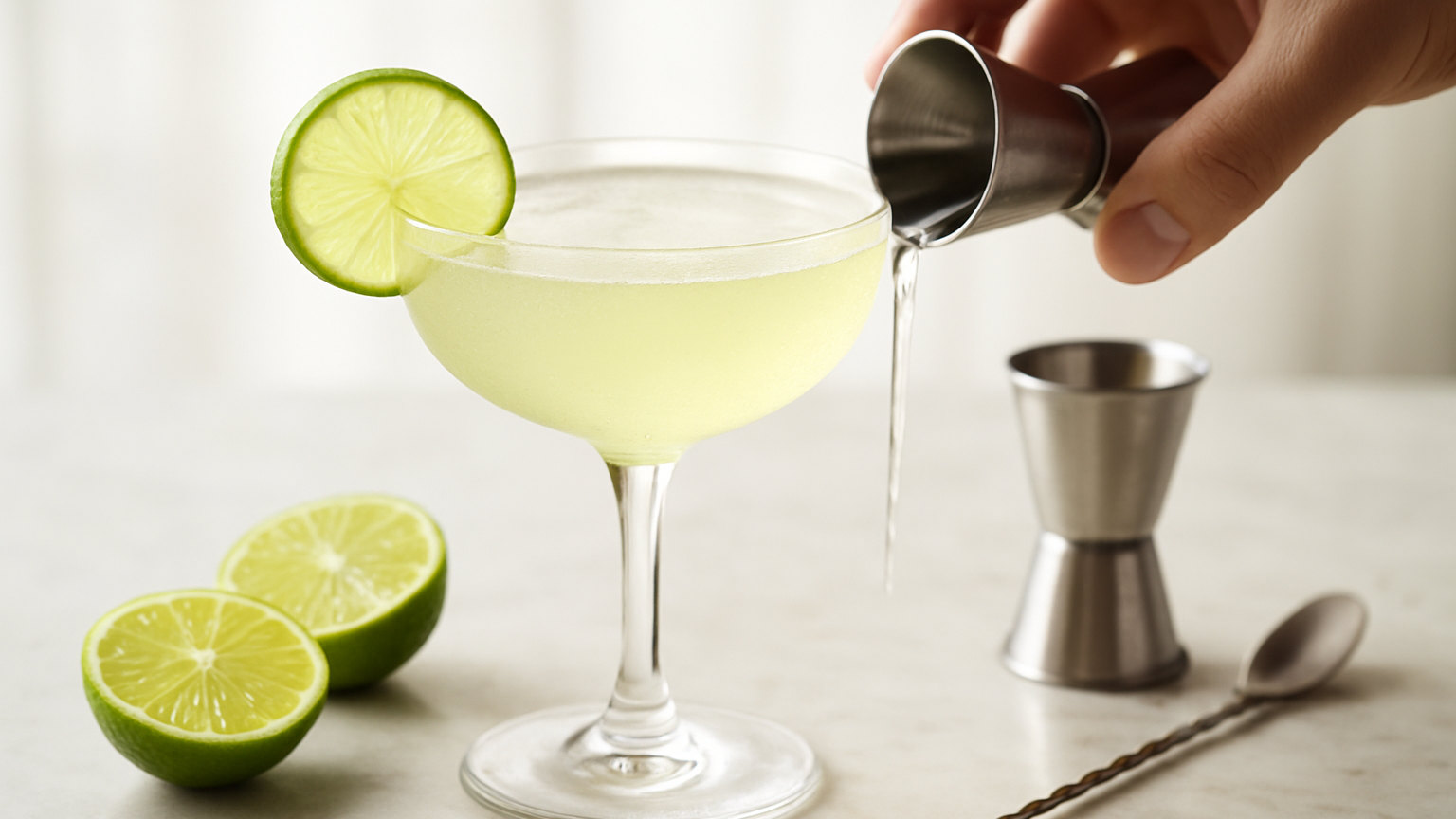
A wedge is for squeezing. Cut the fruit in half lengthways, then each half into three or four wedges. Score a small notch to sit it on a glass rim if you want it perched.
A wheel is a cross-section slice, purely visual, cut three to five millimetres thick. Cut a slit to the centre to sit it on a rim.
A half wheel is a wheel cut in two, which sits more neatly.
Wedges are functional and wheels are decorative, and knowing which a drink calls for saves both effort and fruit.
Preparing ahead
Twists are best cut fresh, since the oil begins evaporating immediately. Cut half an hour ahead at most.
Wedges and wheels can be cut a few hours ahead, covered and refrigerated, though they dry at the edges.
For a party, cut what you need shortly before people arrive and keep it covered.
Using the rest of the fruit
Peel before juicing rather than after, since peeling a squeezed half is awkward and the oil is at its best on an intact fruit.
Spent peels make an oleo saccharum, an infusion, or a dried garnish, and throwing away the most aromatic part of a lemon is a waste worth avoiding.
Which fruit to use
Unwaxed where possible, since wax carries a dull flavour and is unpleasant on the rim of a glass.
Where only waxed fruit is available, scrub it under warm water before peeling.
Thicker-skinned fruit is easier to peel cleanly. Lemons and oranges are straightforward, limes are thinner and harder, and grapefruit is the easiest of all.
Storing peels
Cut peels dry out within an hour or two, so cut them fresh.
Where you must prepare ahead, keep them in a sealed container with a damp piece of kitchen paper and use within a few hours.