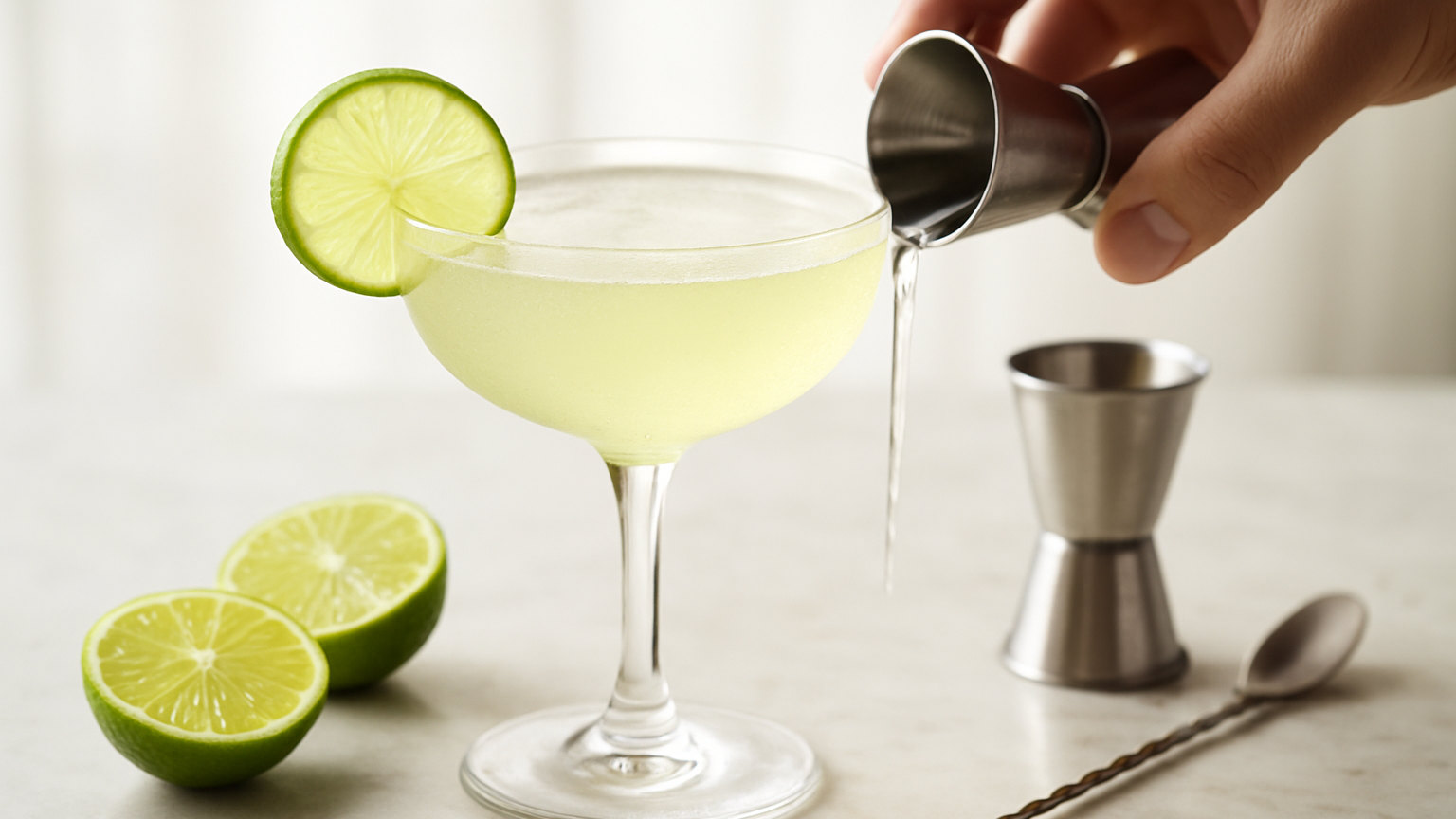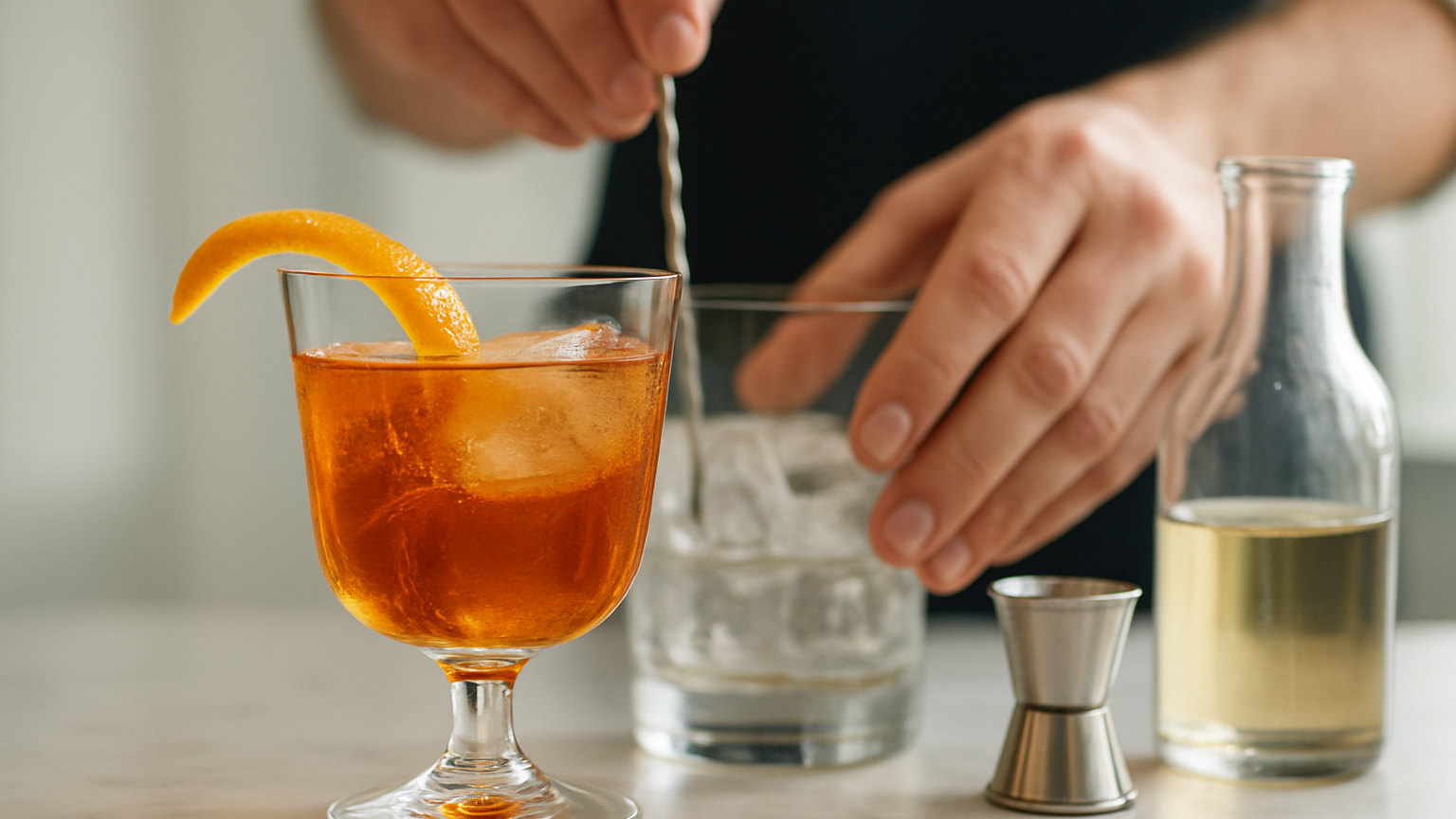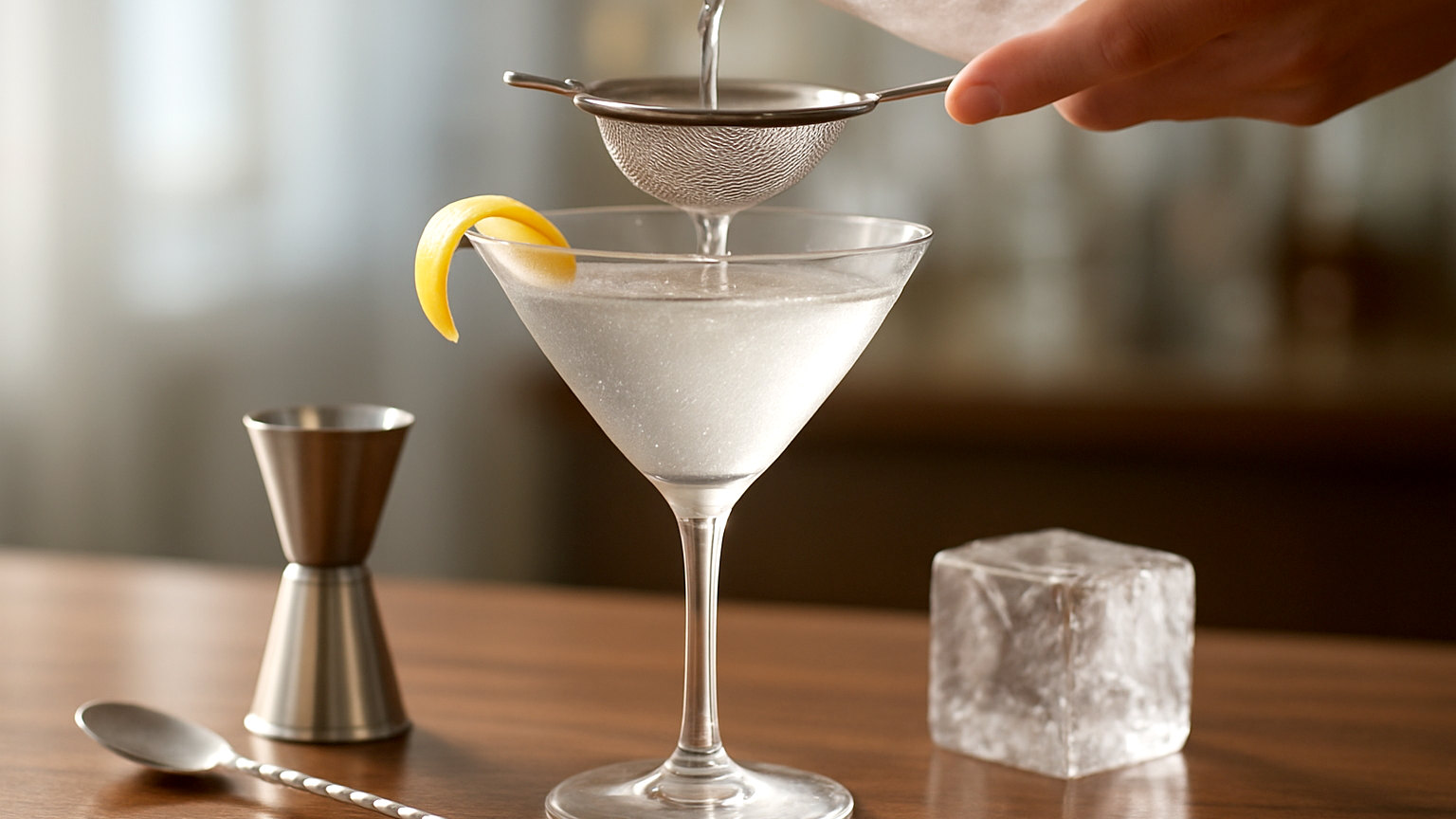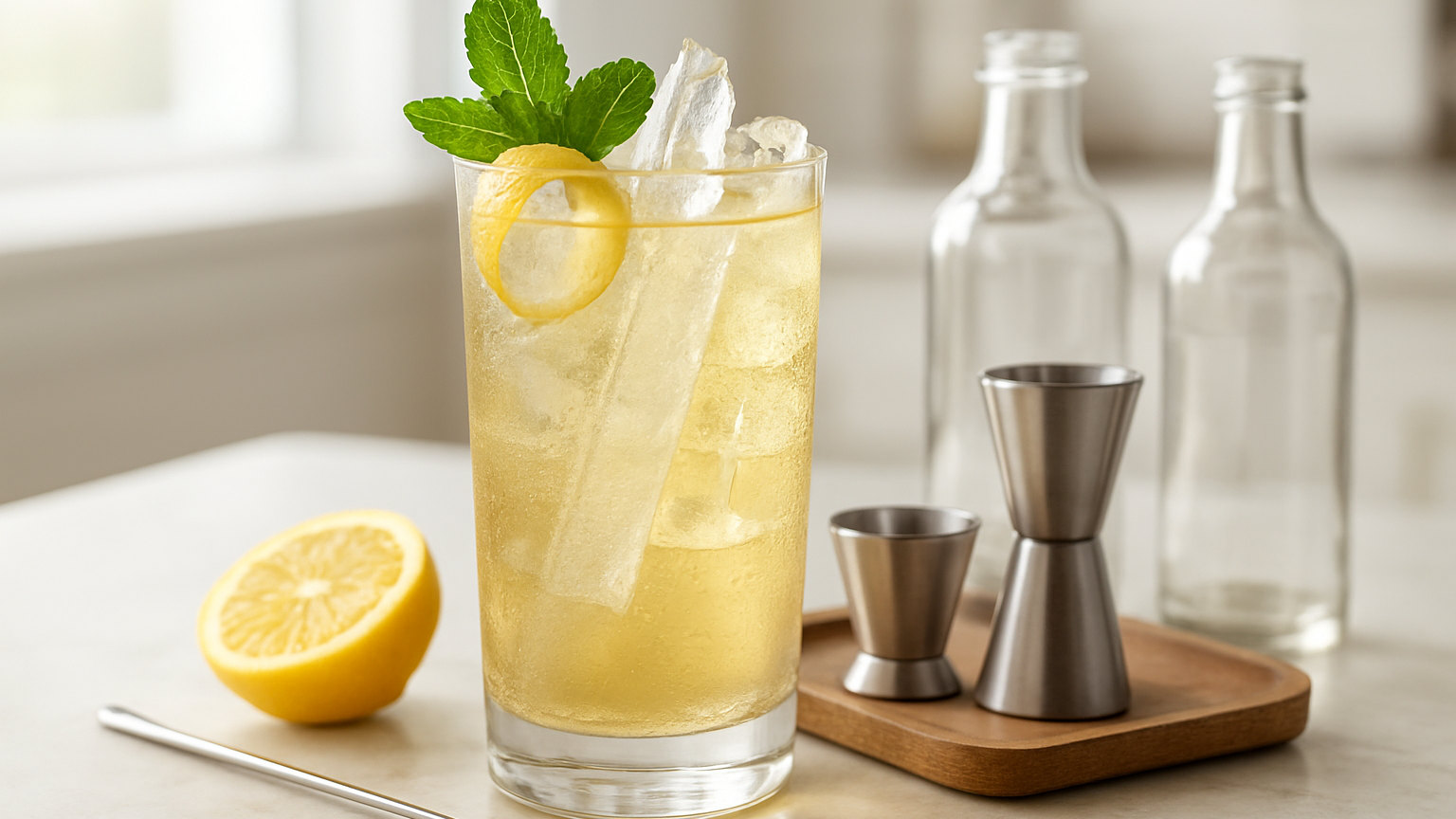
A home bar does not require a room, a trolley or a cabinet. It requires that the things needed to make a drink are in one place and reachable, because equipment kept behind other things does not get used.
The principle
Making a drink should take under two minutes from deciding to wanting it. Anything that adds friction means it will not happen.
That means the jigger, the shaker, the strainer and a couple of glasses in one accessible place, and the bottles somewhere you can reach without moving anything else.
A single kitchen cupboard, a shelf or a tray on a worktop is sufficient.
What lives where
Spirits and liqueurs: a cupboard, upright, away from heat and light. They keep for years and need nothing else.
Vermouth and any wine-based product: the fridge, without exception, from the moment they are opened. This is the rule most often broken and the one that ruins the most drinks.
Syrups: the fridge, labelled and dated.
Mixers: the fridge, in small bottles or cans, since large bottles go flat.
Citrus: a bowl at room temperature, since cold fruit yields less juice.
Ice: the freezer, in a sealed bag rather than an open tray.
The minimum bottle list
Six bottles cover a great deal.
A London dry gin. A bourbon or rye. An aged rum. A red bitter aperitivo. Sweet vermouth. Aromatic bitters.
Between them those make negronis, boulevardiers, manhattans, old fashioneds, daiquiris, gin and tonics and a good deal else.
Add dry vermouth for martinis and a blanco tequila if you drink it. That is eight bottles and effectively a complete bar.
Buying small
Half bottles and 350 millilitre formats are worth seeking out, particularly for anything you will use occasionally.
For vermouth this is essential rather than optional, since a full bottle will go stale before it is finished.
A shelf of eight small bottles you actually use beats twenty large ones bought for single recipes.
The trolley question
Drinks trolleys look excellent and are a poor storage solution, since they leave bottles in the light and frequently in a warm room.
If you use one, keep it away from windows and radiators, and keep anything wine-based in the fridge regardless of how it looks.
Display and storage are different jobs, and there is no reason a trolley cannot hold the pretty bottles while the working ones live in a cupboard.
Vertical space
In a small kitchen, a narrow shelf at eye level holds a surprising number of bottles and keeps the worktop clear.
A magnetic knife strip holds a bar spoon, a strainer and a peeler on a wall.
A single drawer or a box holds all the small equipment together, which is better than having it distributed among kitchen drawers.
The tray
The simplest solution and the one that works best in a small space.
A tray holding the jigger, the shaker, the strainer, the bar spoon and two or three bottles can live on a worktop or in a cupboard and be lifted out as a unit.
Everything needed is in one movement, which is the whole objective.
Keeping it in proportion
A large collection is a hobby rather than a requirement, and it produces no better drinks than a small one.
Bottles bought for a single recipe and never opened again are the main way home bars grow beyond their usefulness, and the discipline of buying only what a drink you actually make requires keeps the whole thing manageable.
Safety in a shared house
Worth a brief note. Spirits are flammable and should be kept away from heat sources, and a shelf above a hob is a poor location for that reason as well as for the temperature.
Where there are children in the house, a cupboard that closes properly is sensible, and high shelves are not a substitute for one.
Anything infused or batched should be labelled clearly, since an unmarked bottle in a fridge gives no indication of what it contains or how strong it is.