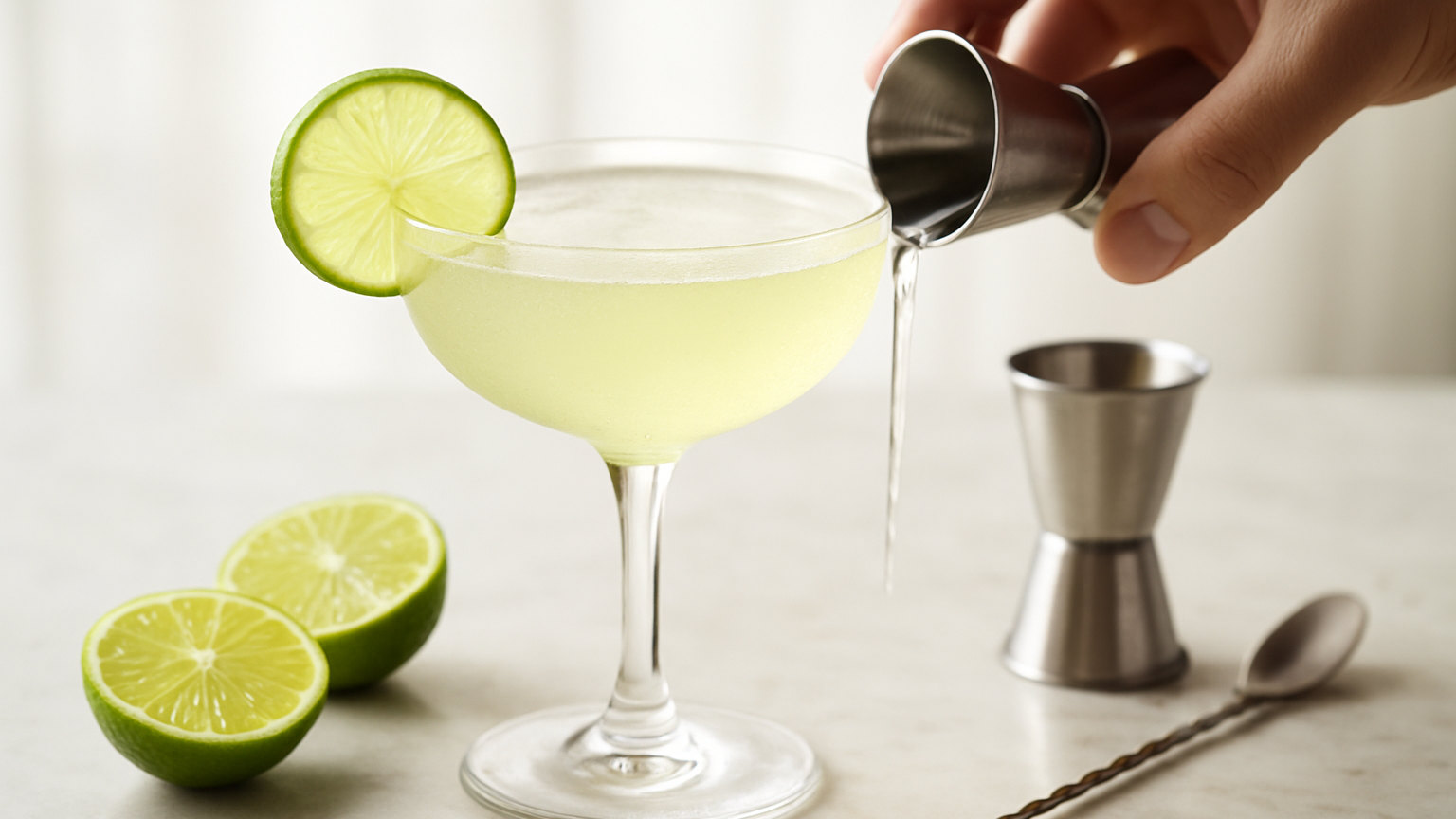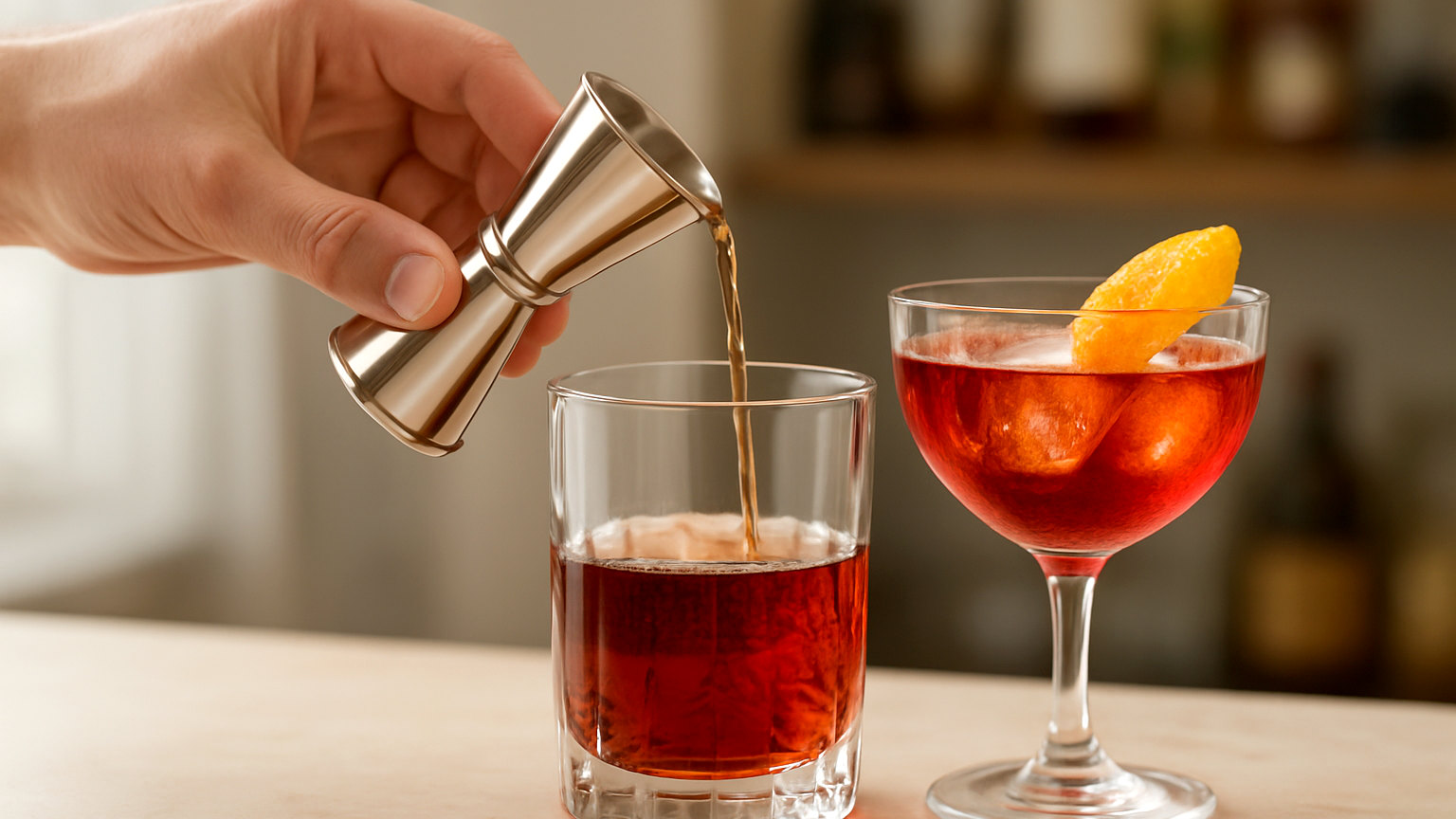
The jigger is the least glamorous item in bartending and the one that most determines whether a drink is any good. Everything else is technique; this is arithmetic.
Why measuring matters
A cocktail is a ratio. Two parts spirit to one part citrus produces a balanced sour; two and a half to one produces something noticeably sharper.
Free pouring introduces error at every measure, and the errors compound. Worse, they compound in one direction: an eyeballed pour is almost always larger than intended, which makes the drink both unbalanced and stronger than planned.
Professional bartenders who free pour have practised with measured bottles for months. It is a genuine skill and it has no application at home, where there is no time pressure.
Which jigger
The British standard is a double-ended cone with 25 millilitres one end and 50 the other, matching the legal spirit measures.
Considerably more useful is a Japanese-style jigger, which is taller and narrower with internal graduation lines marking intermediate measures. A common configuration is 30 and 60 millilitres with lines at 15, 20, 22 and 45.
The internal lines are what make it worth having, since a great many recipes call for measures that are not 25 or 50.
A tall narrow shape is also more accurate than a wide shallow one, since a small error in fill level translates to a smaller error in volume.
Millilitres and ounces
American recipes are written in ounces and British ones in millilitres, and converting is a recurring nuisance.
One fluid ounce is close to 30 millilitres. Three quarters of an ounce is around 22, and half an ounce is 15.
A standard sour written as two ounces, one ounce and three quarters of an ounce becomes 60, 30 and 22 millilitres.
Scaling everything to 25 and 50 rather than 30 and 60 works perfectly well provided you scale consistently, since what matters is the ratio rather than the absolute quantity.
Technique
Fill to the brim, not to somewhere near it. A jigger filled to the top holds its stated measure; one filled to just below holds noticeably less, and the error is invisible.
Hold it over the shaker while filling, so anything that overflows is not wasted.
Pour in one movement rather than dribbling, which leaves liquid clinging to the sides.
Work in order: the cheapest ingredients first. If you misjudge a measure, it is better to have made the mistake with syrup than with the spirit.
Alternatives
Kitchen measuring spoons cover small quantities: a tablespoon is 15 millilitres and a teaspoon is 5.
A small measuring jug works and is slower.
A kitchen scale is the most accurate option of all, since weighing avoids the surface tension and residue issues entirely. Most cocktail ingredients are close enough to water in density that millilitres and grams are effectively interchangeable, and for batching it is considerably faster.
Measuring for batches
For anything above one or two drinks, weighing beats measuring by volume.
Set a container on a scale, tare it, and add each ingredient in turn. It is faster, more accurate and involves washing up one item rather than several.
Record the batch by weight, which makes it reproducible without further arithmetic.
The habit
Measure everything, every time, including the syrup and the bitters if a recipe specifies a quantity rather than dashes.
It takes a few seconds and it is the difference between a drink you can repeat and one you cannot.
Dashes and spoons
Two measures that are not on a jigger and appear constantly in recipes.
A dash from a standard bitters bottle is roughly nought point eight of a millilitre, and it varies with how the bottle is held.
A barspoon is around five millilitres, equivalent to a teaspoon, though this varies by design and is worth checking against a measuring spoon once.
Neither needs to be precise, since both are seasoning rather than structure.