Bar equipment is not delicate, and it fails in predictable ways. Almost all of it comes down to what happens in the minute after you finish using it.
Cold water first
The rule that matters most and the one nobody is told.
Egg white and dairy proteins set when heated. Rinsing a shaker in hot water after making a whiskey sour cooks the residue onto the metal, where it becomes genuinely difficult to remove.
Rinse in cold water first, then wash in hot with detergent. The difference is between five seconds and five minutes of scrubbing.
The same applies to fine mesh strainers, where dried egg white in the mesh is the usual reason one stops working properly.
Shakers
Rinse immediately after use, always. Sugar and citrus residue sets hard and becomes sticky.
Store the two tins separately rather than nested, which prevents them seizing together.
Never tap a shaker on a worktop to break the seal, which dents the rim. A dented tin will not seal properly again and is how most shakers are ruined.
For a cobbler shaker, remove the cap and the strainer top and dry all three pieces separately, since moisture trapped between them causes seizing.
Strainers
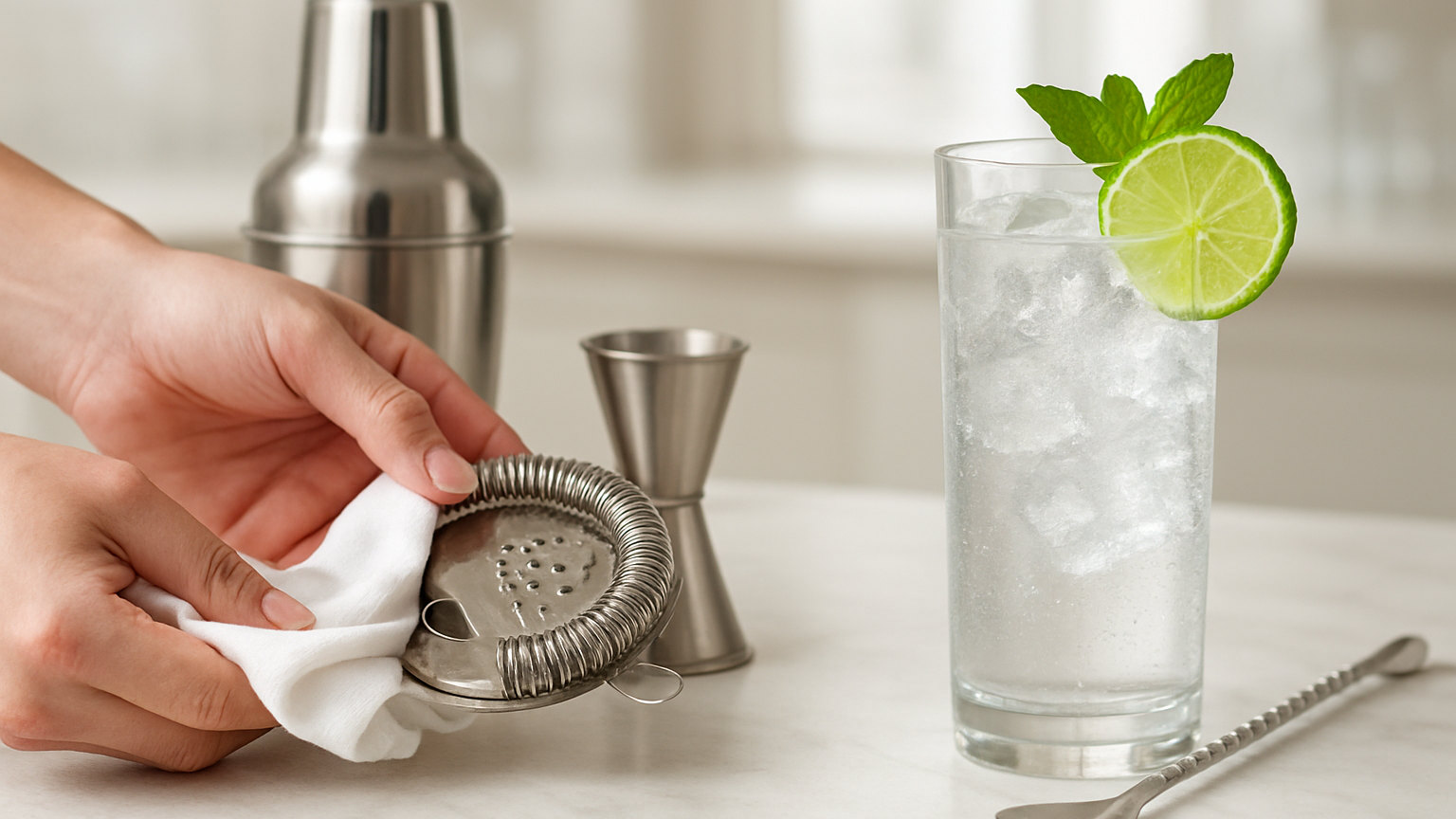
Remove the spring from a Hawthorne occasionally and clean underneath it, since residue collects there and is invisible.
Rinse fine mesh strainers immediately and brush the mesh gently if anything is caught, since dried residue blocks it permanently.
Wooden muddlers
Unfinished wood absorbs flavour and stains, so a muddler used for mint and then for berries will carry both.
Wash by hand with minimal detergent, rinse thoroughly and dry immediately. Never put wood in a dishwasher, which will crack it.
Oiling occasionally with a food-safe oil keeps it from drying out.
If a wooden muddler starts to smell or discolour badly, replace it. They are inexpensive.
Jiggers and spoons
Rinse and dry. Stainless steel needs nothing else.
Water spots on a jigger are cosmetic. Drying immediately prevents them.
Avoid abrasive cleaners on anything with a polished finish, which will dull it.
Dishwashers
Most stainless steel bar equipment is dishwasher safe and comes out fine.
What should not go in: anything wooden, anything plated or coated, and glassware with thin stems.
Rinse aid is worth being aware of. It leaves a film designed to prevent water spots, and that film destroys foam on any drink with egg white or a head. For glassware used with foamed drinks, hand washing is better.
Glassware
Wash with minimal detergent, rinse thoroughly in hot water, and air dry inverted on a rack.
Store upright once dry. A glass stored upside down traps stale air and picks up cupboard smells, which the drink will carry.
Do not dry with a tea towel that has been near fabric conditioner, since the residue kills foam and dulls aroma.
Hold stemmed glasses by the bowl rather than twisting the stem when polishing, which is how most of them break.
When to replace things
A dented shaker tin that no longer seals. A Hawthorne with a stretched or missing spring. A fine strainer with a torn mesh. A wooden muddler that smells.
All of these are inexpensive, and persisting with damaged equipment makes drinks worse for no good reason.
Storage
Somewhere dry, together, and accessible.
Equipment kept in a cupboard behind other things does not get used, and the point of owning it is that making a drink is easy enough to be worth doing.
Rust and staining
Stainless steel can develop surface rust spots if left wet, particularly cheaper grades.
Drying immediately prevents it, and existing spots come off with a little bicarbonate of soda on a cloth.
Citrus and salt together are corrosive over time, so a shaker left with a lime wedge in it overnight will show marks. Rinsing at once is the whole answer.
A routine that works
Rinse everything cold as you finish with it, wash properly at the end, dry immediately, put it away.
Two minutes after making drinks prevents nearly every problem on this page.