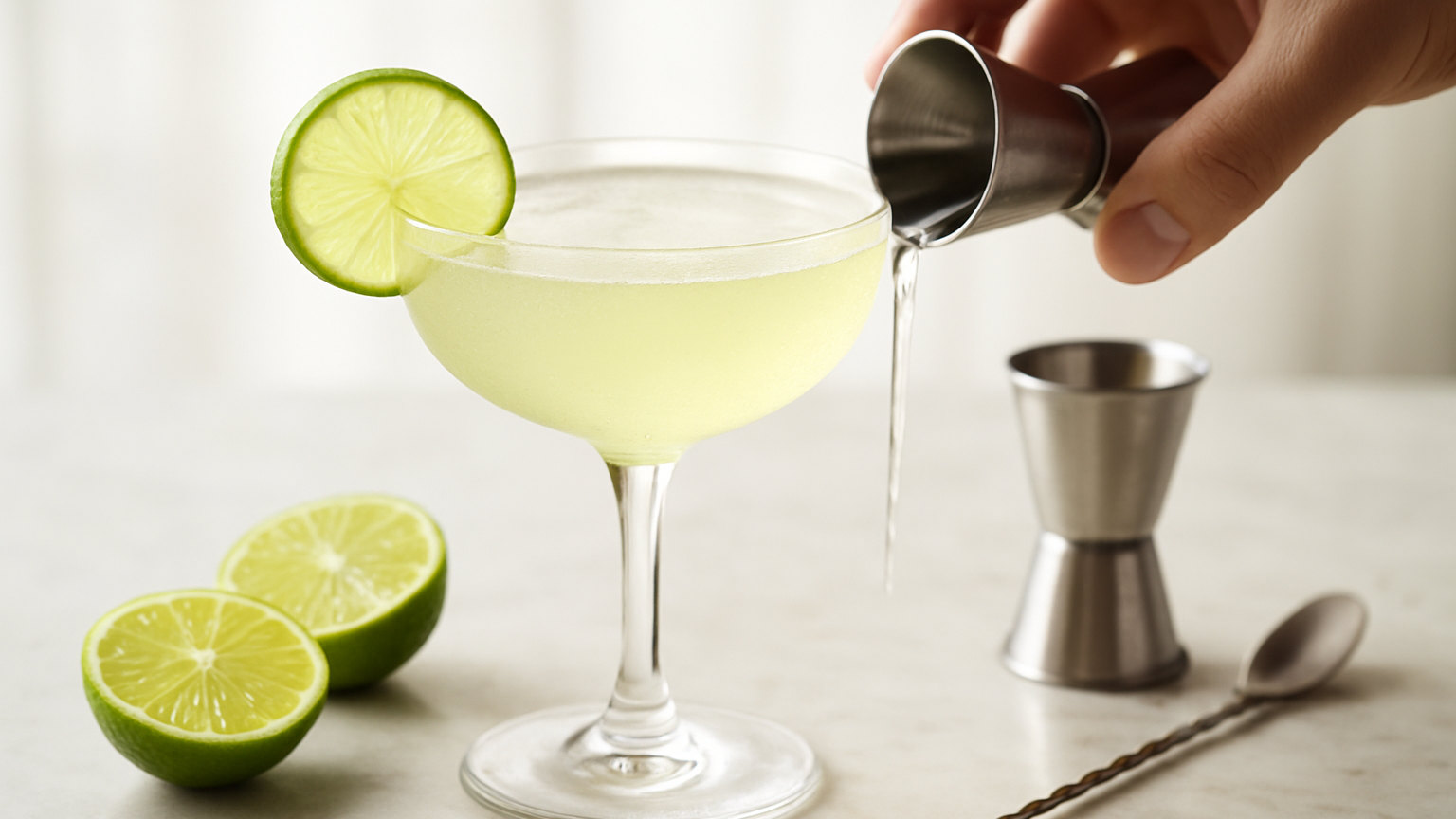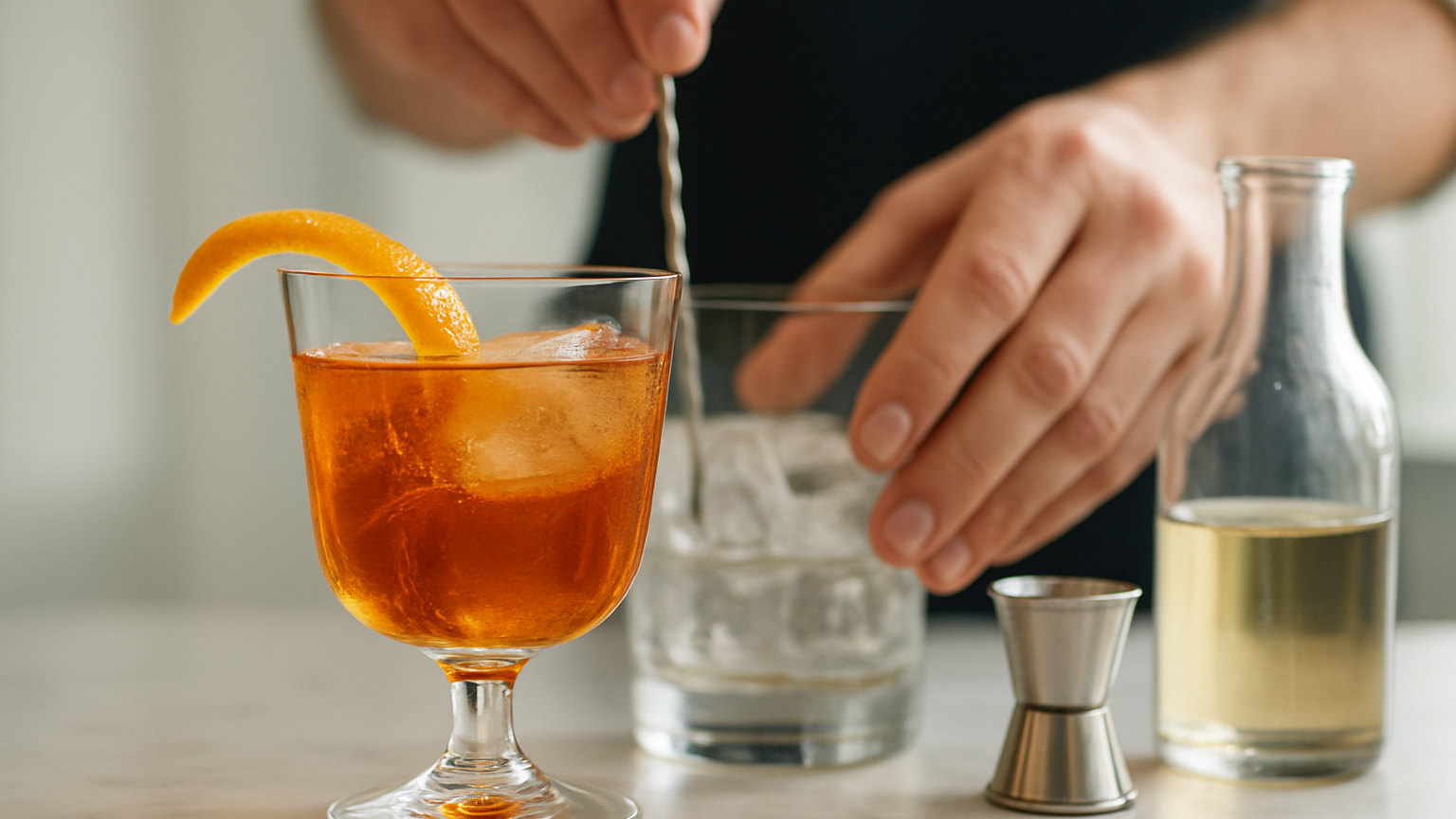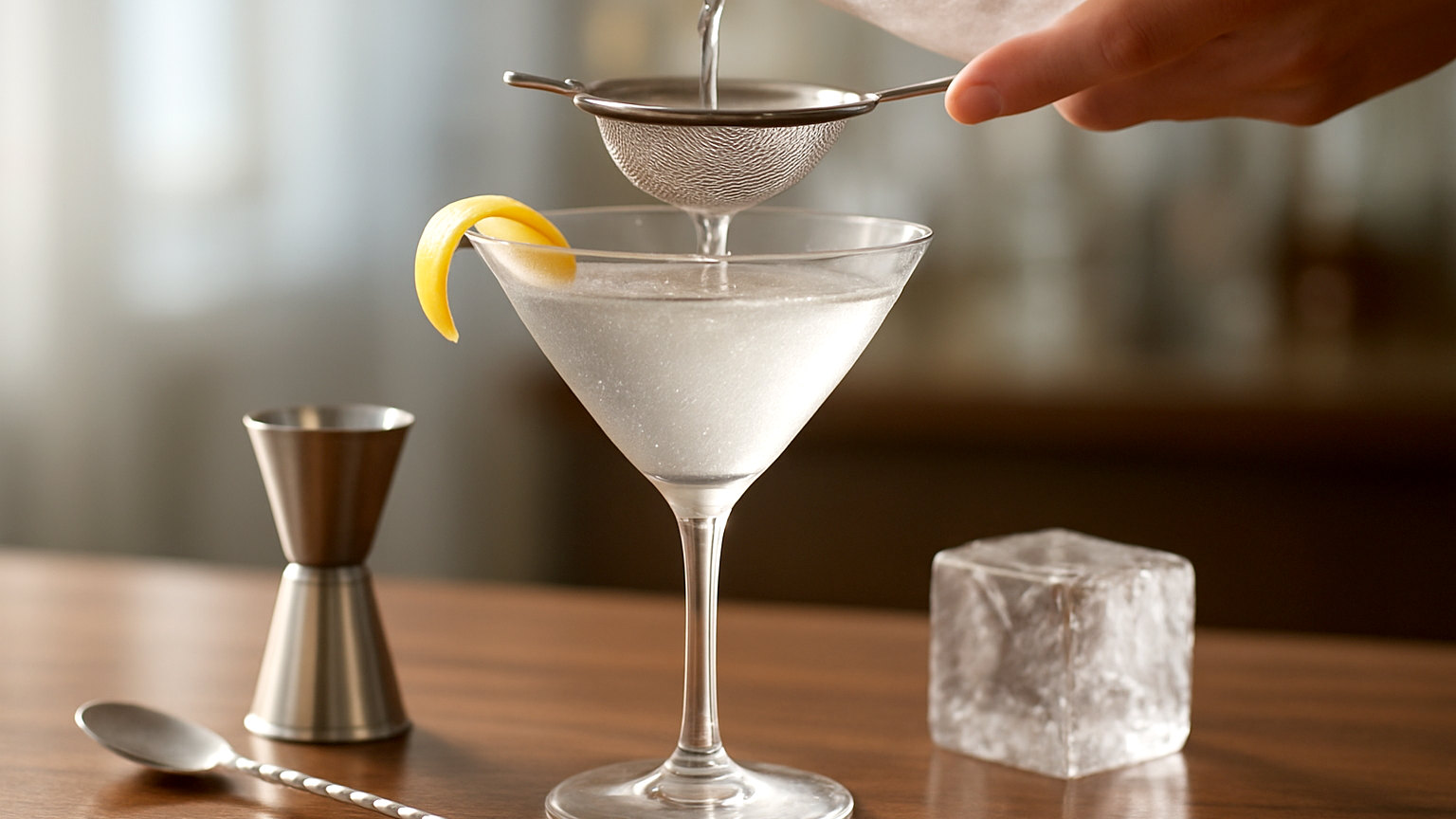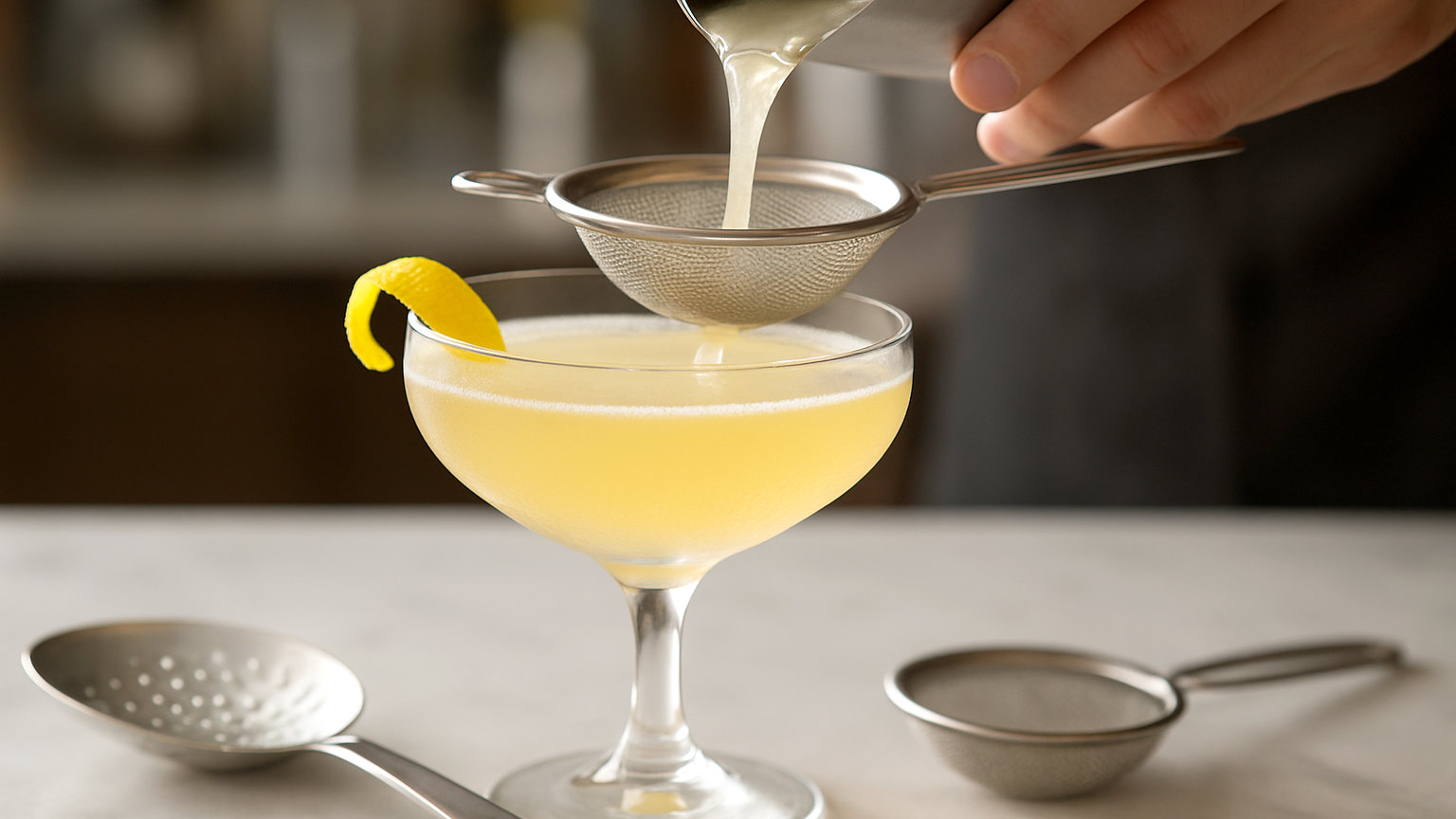
A strainer holds back the ice while the drink goes into the glass. Three designs exist, they are not interchangeable, and the choice of whether to strain once or twice affects what ends up in front of you.
The Hawthorne strainer
The one with the coiled spring around the edge, designed to sit over a shaker tin.
The spring conforms to the rim and catches ice, fruit fragments and herb pieces. A tab on the front lets you push the spring forward or back to adjust how tightly it strains.
This is the workhorse and the one to buy first. It fits a Boston shaker and, with a little care, most mixing glasses.
A tight spring strains more finely. Pushing the gate forward closes the gap and holds back more material, which is worth knowing since most people never adjust it.
The julep strainer
A perforated bowl on a handle, shaped like a large spoon with holes.
It is the traditional tool for stirred drinks, sitting inside the mixing glass with the bowl facing down against the ice.
It is not better than a Hawthorne at anything, and it is more comfortable in a mixing glass and looks appropriate. The name comes from its original use, holding back crushed ice while drinking a julep.
Entirely optional. A Hawthorne does the job.
The fine mesh strainer
A small sieve, held over the glass while you pour through the Hawthorne.
This catches what the Hawthorne does not: tiny ice shards, citrus pulp, herb fragments and fruit particles.
A small kitchen sieve works perfectly well and there is no need to buy a dedicated one.
What double straining achieves
Using both together is called double straining, and it matters for specific drinks.
Any shaken drink served up, without ice in the glass, benefits. The ice shards produced by shaking will otherwise sit in the finished drink and melt, diluting it as you go.
Any drink containing muddled fruit or herbs benefits, since fragments in a clear drink look careless and change the texture.
Any drink with egg white benefits, since a clean surface holds the foam better and lets bitters sit on top.
When not to bother
Anything served over fresh ice. A daiquiri on the rocks does not need double straining, since the ice in the glass makes shards irrelevant.
Anything stirred, which produces very few fragments in the first place.
Anything built directly in the glass, which needs no straining at all.
Technique
Hold the Hawthorne against the tin with your index finger on the tab, and pour in a single steady movement.
For double straining, hold the sieve in your other hand over the glass and pour through both. It takes an extra second.
Do not tap or scrape the strainer to get the last drops, which drags fine particles through.
Care
Rinse immediately, particularly after egg white, which sets hard in a mesh and is the usual reason a fine strainer stops working.
Cold water first, then hot with detergent. Hot water alone cooks protein onto the metal.
The spring on a Hawthorne can be removed for cleaning and should be occasionally, since residue collects underneath it.
What to buy
A Hawthorne strainer and a small kitchen sieve.
That covers every drink in this subcategory, costs a few pounds, and makes a julep strainer a matter of preference rather than necessity.
Straining from a mixing glass
A Hawthorne will sit over a mixing glass, though the spring is designed for a tin and the fit is less snug.
Holding it firmly with the index finger on the tab and pouring steadily works perfectly well.
This is the situation where a julep strainer earns its place, since it sits inside the glass and is more comfortable, which is a matter of preference rather than of results.
Fit
Hawthorne strainers vary in size, and one that does not sit properly over your tin will let ice through.
If you buy the shaker and the strainer separately, check they are compatible, or buy them together.