A twist is a strip of citrus peel used to deliver aromatic oil to a drink. The peel itself is almost incidental; the oil is the point, and getting it out is the whole technique.
Where the oil is
In the coloured outer layer of the skin, held in tiny glands that rupture when the peel is bent or squeezed.
The white pith beneath contributes bitterness and no aroma, which is why a good twist takes as little of it as possible.
The flesh contains acid and sugar, which is a different ingredient entirely. A twist and a squeeze of juice do different jobs.
Cutting it
Use a firm, unwaxed fruit at room temperature, since cold peel releases less oil.
A Y-shaped vegetable peeler is the most useful tool and produces wide strips with minimal pith.
Draw it down the side of the fruit in one movement, taking a strip two to three centimetres wide and five or six long.
Trim the edges straight with a knife if you want it neat, which is optional and looks better.
Scrape off any pith that came away with a small knife.
Expressing it
The step that matters and the one most often skipped.
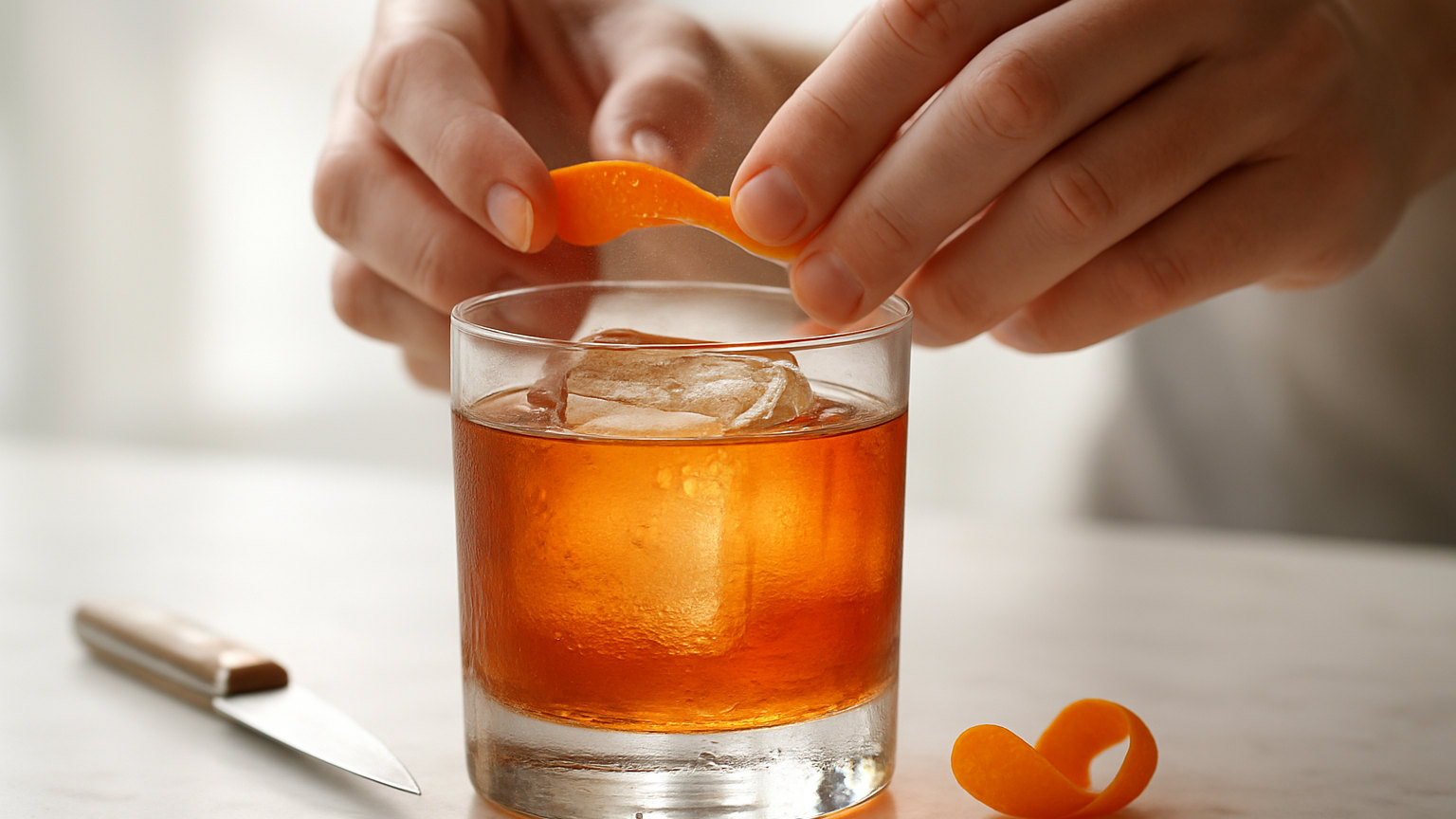
Hold the strip between thumb and forefinger, coloured side facing down towards the drink, about five centimetres above the surface.
Squeeze firmly, folding it in half. A fine mist of oil sprays onto the drink, and you can sometimes see it against a light.
Then rub the coloured side around the rim of the glass, which deposits oil where your lips will meet it.
A twist dropped in without expressing contributes almost nothing, which is why so many garnished drinks smell no different from ungarnished ones.
Whether to drop it in
A matter of preference with a real difference behind it.
Dropped in, the peel continues contributing over the life of the drink, and the pith slowly imparts a faint bitterness.
Discarded after expressing, you get the oil and nothing else.
For a drink you will finish in ten minutes it makes little difference. For something you will sip slowly, discarding it avoids the bitterness developing.
The sazerac is traditionally made with the peel discarded, and the reasoning is exactly this.
Which citrus for which drink
Lemon is the default for gin and whisky drinks, bright and clean.
Orange suits anything with sweet vermouth, bitter aperitivo or aged spirits: negronis, old fashioneds, boulevardiers.
Grapefruit suits tequila and anything with a bitter component, and its oil is particularly fragrant.
Lime is thinner-skinned and harder to peel cleanly, and it works with rum and agave drinks.
The tools
A Y-peeler is the practical choice and produces the widest strips.
A sharp paring knife works with more care.
A channel knife cuts the long thin spirals used for decorative twists, which look better and release less oil than a wide strip, since there is less surface to squeeze.
Where aroma matters more than appearance, use the peeler.
Preparing ahead
Cut twists fresh, since the oil begins evaporating immediately.
Half an hour ahead at most, kept in a sealed container with a damp piece of kitchen paper.
For a party, cut what you need shortly before people arrive rather than the night before.
Using the whole fruit
Peel before juicing rather than after, since peeling a squeezed half is awkward and the oil is at its best on an intact fruit.
Spent peels make an oleo saccharum, an infusion or a dried garnish, and throwing away the most aromatic part of a lemon is a waste worth avoiding.
Flaming a peel
Holding a lit match between the peel and the drink and expressing through the flame produces a brief flare as the oils ignite, caramelising some of them.
The effect on the drink is small and the effect on the room is considerable, which is a fair summary of it.
If you do it, keep it away from anything flammable, do it over the drink rather than over the bottle, and remember that spirits are flammable. It is a party trick rather than a technique and nobody needs to attempt it.