Citrus is the largest single source of waste in drinks. A bar making sours squeezes an enormous quantity of fruit and throws away the peel, which contains most of the aroma, and cuts wheels that are discarded untouched.
The same happens at home on a smaller scale.
Use the whole fruit
The principle that solves most of it.
Peel before juicing rather than after, since peeling a squeezed half is awkward and the oil is at its best on an intact fruit.
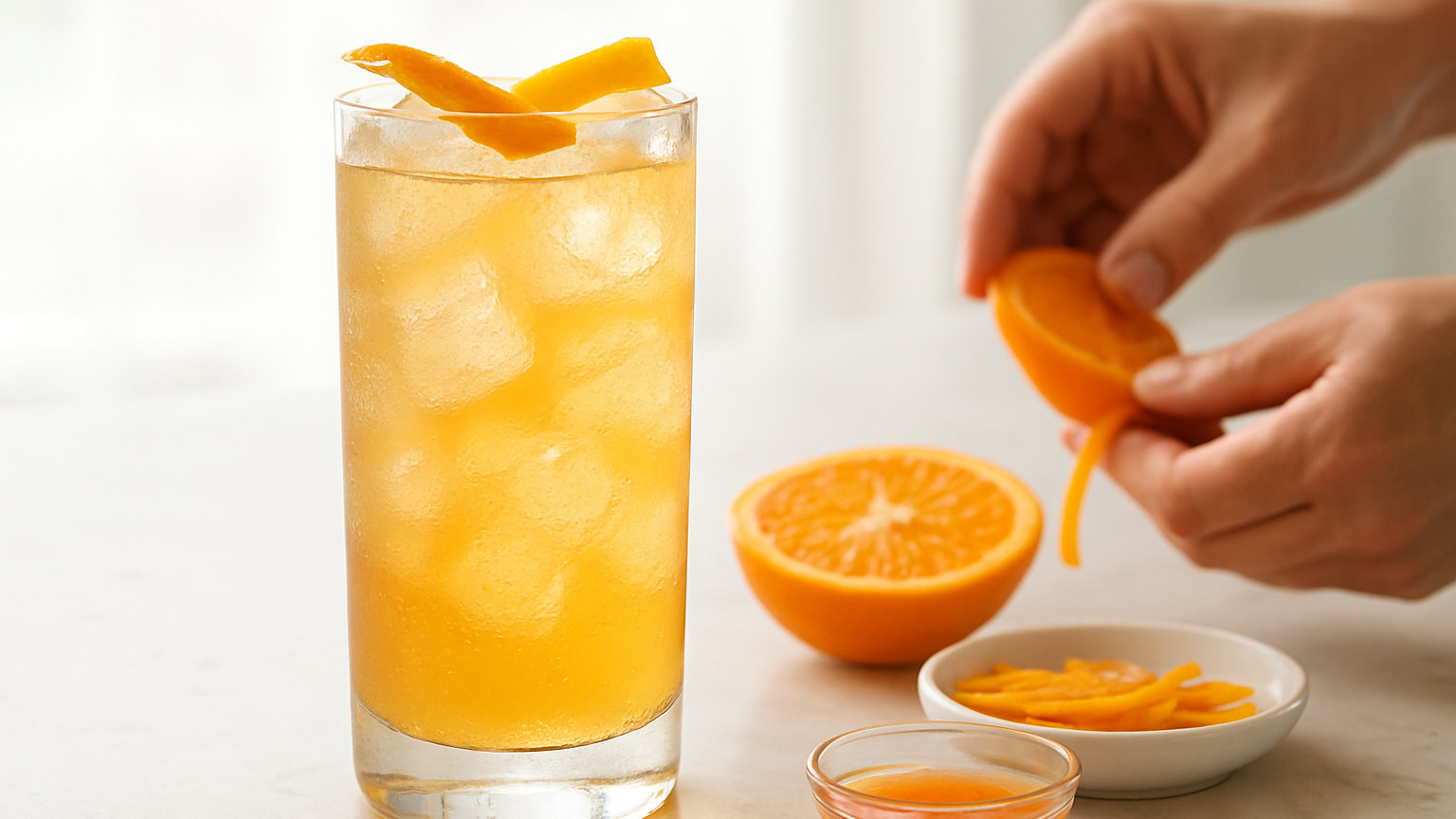
Use the peel for twists, and what remains for an oleo saccharum, an infusion or dried wheels.
Juice the flesh.
Drop the spent shell into a long drink for aroma, or freeze it for later use.
One lemon can therefore produce a twist, syrup, juice and a garnish, with nothing discarded.
Oleo saccharum
The single most useful technique here.
Combine citrus peels with an equal weight of sugar, muddle, and leave for four to twelve hours. The sugar draws out the aromatic oil, producing an intensely fragrant syrup.
It uses the part of the fruit that would otherwise go in the bin and produces an ingredient nothing else replicates.
Strain out the peels and refrigerate, and use it in punches, sours or with soda.
Drying
Slices dried in a low oven keep for months and give you a garnish that requires no fruit on the day.
Fruit approaching the end of its life dries perfectly well, which turns a bag of oranges that would have been thrown away into a season's garnishes.
Peels can be dried too, and ground into a rim coating or used in infusions.
Freezing
Underused and straightforward.
Citrus juice freezes in an ice cube tray and keeps for months, which is better than bottled juice for anything where the citrus is not the main event.
Spent shells freeze and can be used later for aroma.
Herbs freeze in oil or water in an ice cube tray, which suits cooking better than drinks and prevents them being thrown away.
Garnishing less
The most direct approach and worth saying plainly.
A garnish that goes straight in the bin was doing nothing, and skipping it is not a failure.
An expressed peel improves a drink. A wheel of orange balanced on a rim, removed and discarded, does not.
Choosing functional garnishes over decorative ones reduces waste and improves the drink at the same time, which is a rare alignment.
Choosing edible garnishes
A cocktail cherry gets eaten. An olive gets eaten. A citrus wedge that is squeezed has been used.
A dried wheel can be eaten.
Selecting garnishes on that basis eliminates the problem rather than managing it.
What bars do
Serious bars have taken this considerably more seriously over the past decade.
Menus designed so a fruit juiced for one drink has its peel used in another and its pulp in a syrup.
Acid-adjusted juice, which uses citrus peel and food-grade acids to produce a far larger volume of usable liquid from a small quantity of fruit.
Dehydrating trimmings, and reducing garnish to things that are edible or aromatic rather than decorative.
Most of this scales down to a domestic kitchen without difficulty.
Being realistic about it
A household throwing away a few lemon halves is not the problem, and there is no reason to feel guilty about a garnish.
The techniques here are worth adopting because they produce better ingredients and save money, and the waste reduction is a genuine side effect rather than a moral obligation.
Peeling before juicing takes no longer. Making an oleo saccharum takes five minutes and produces something you would otherwise have to buy.
Which is a reasonable basis for doing it.
Buying accordingly
Buy citrus in the quantity you will use within a week or two, and unwaxed where you intend to use the peel.
Waxed fruit should be scrubbed under warm water before peeling, since the wax carries a dull flavour.