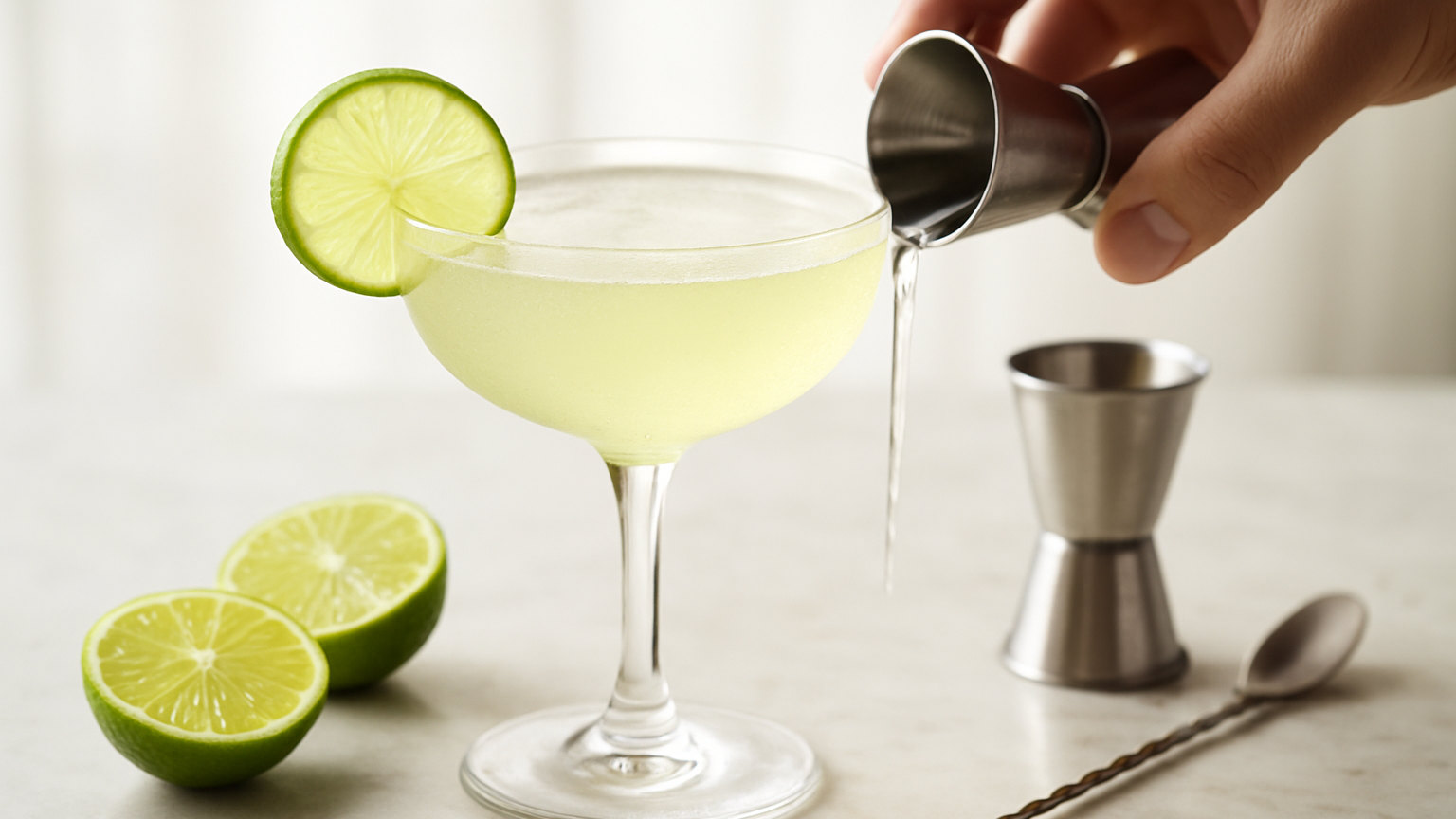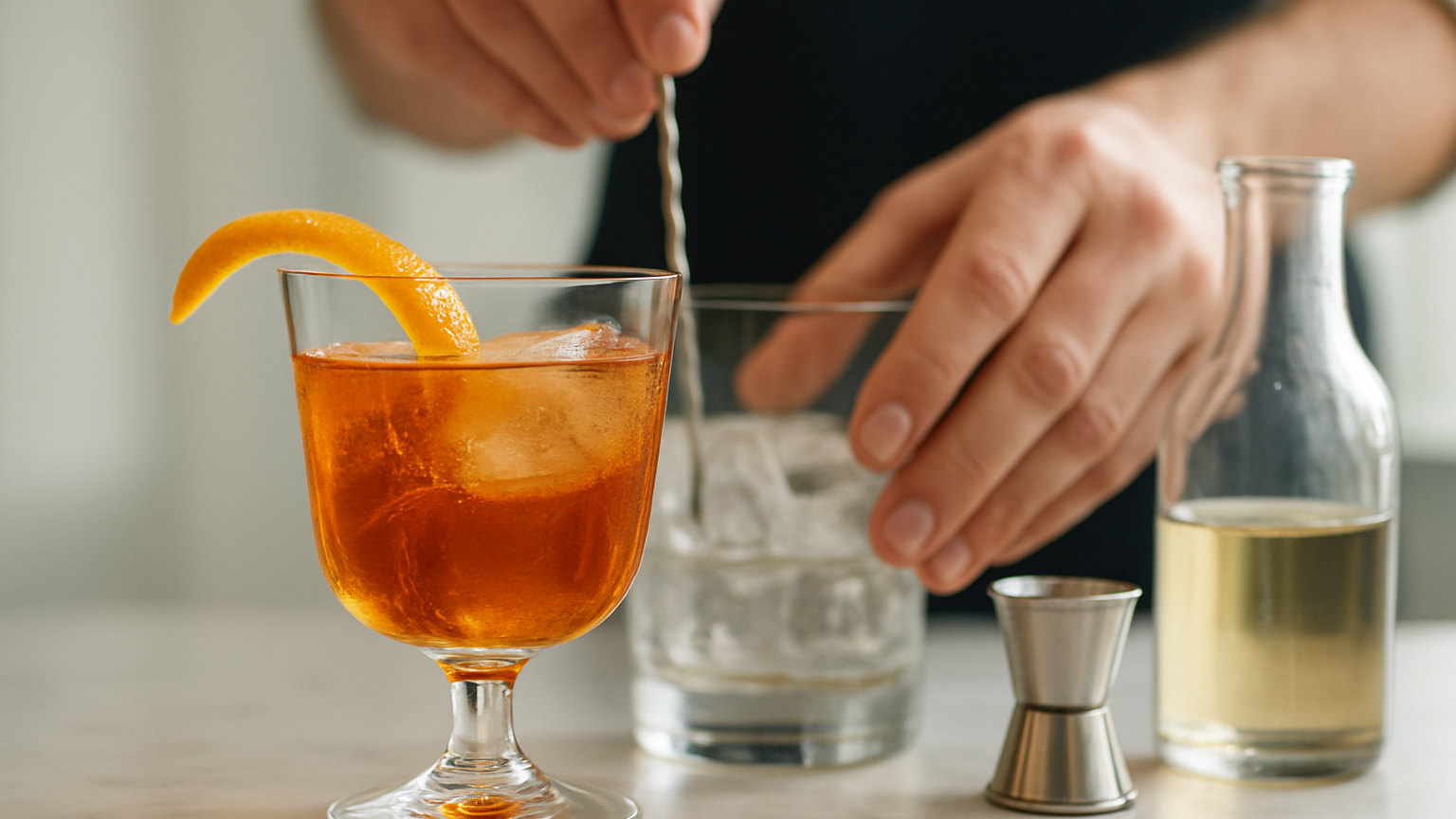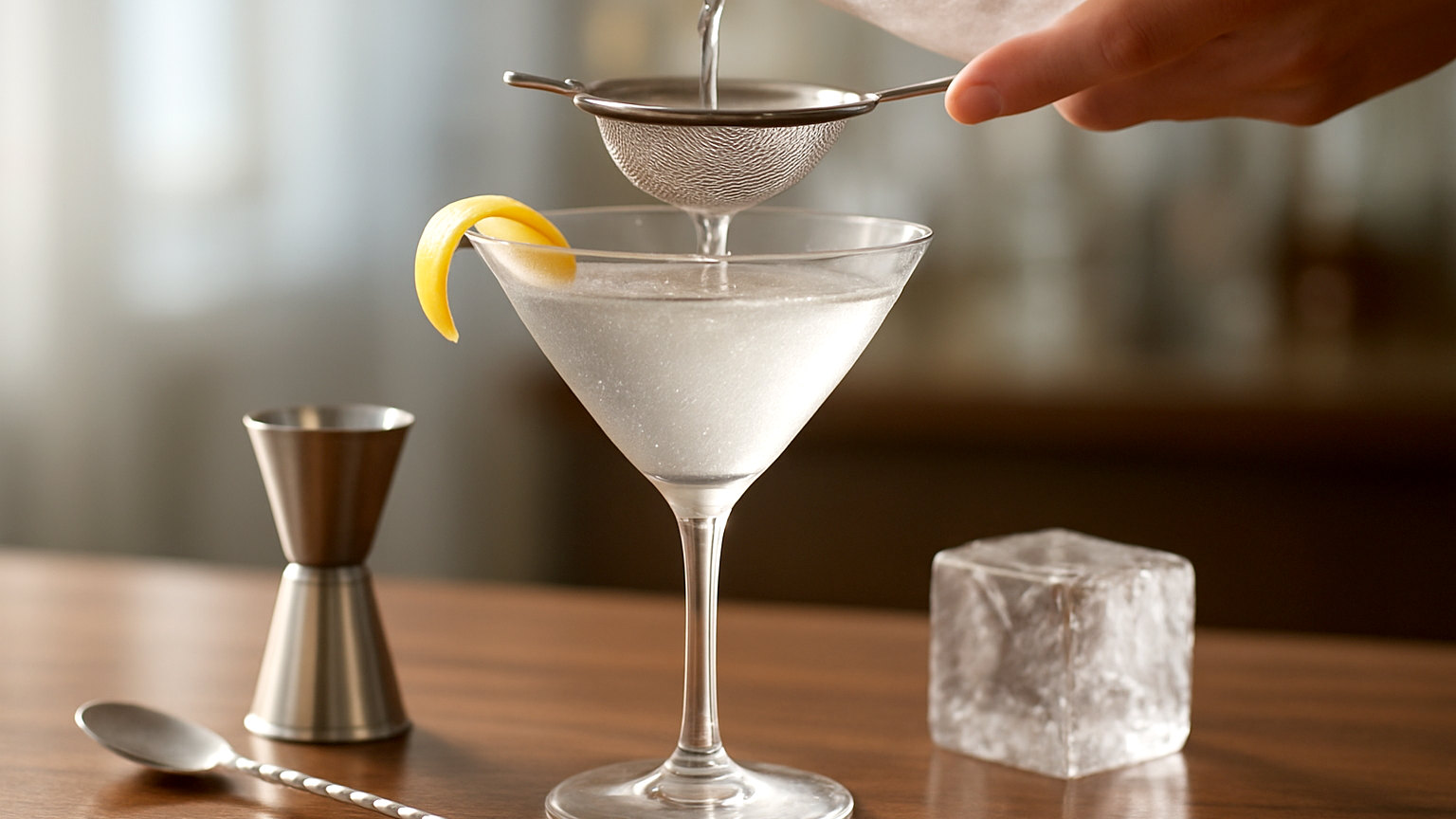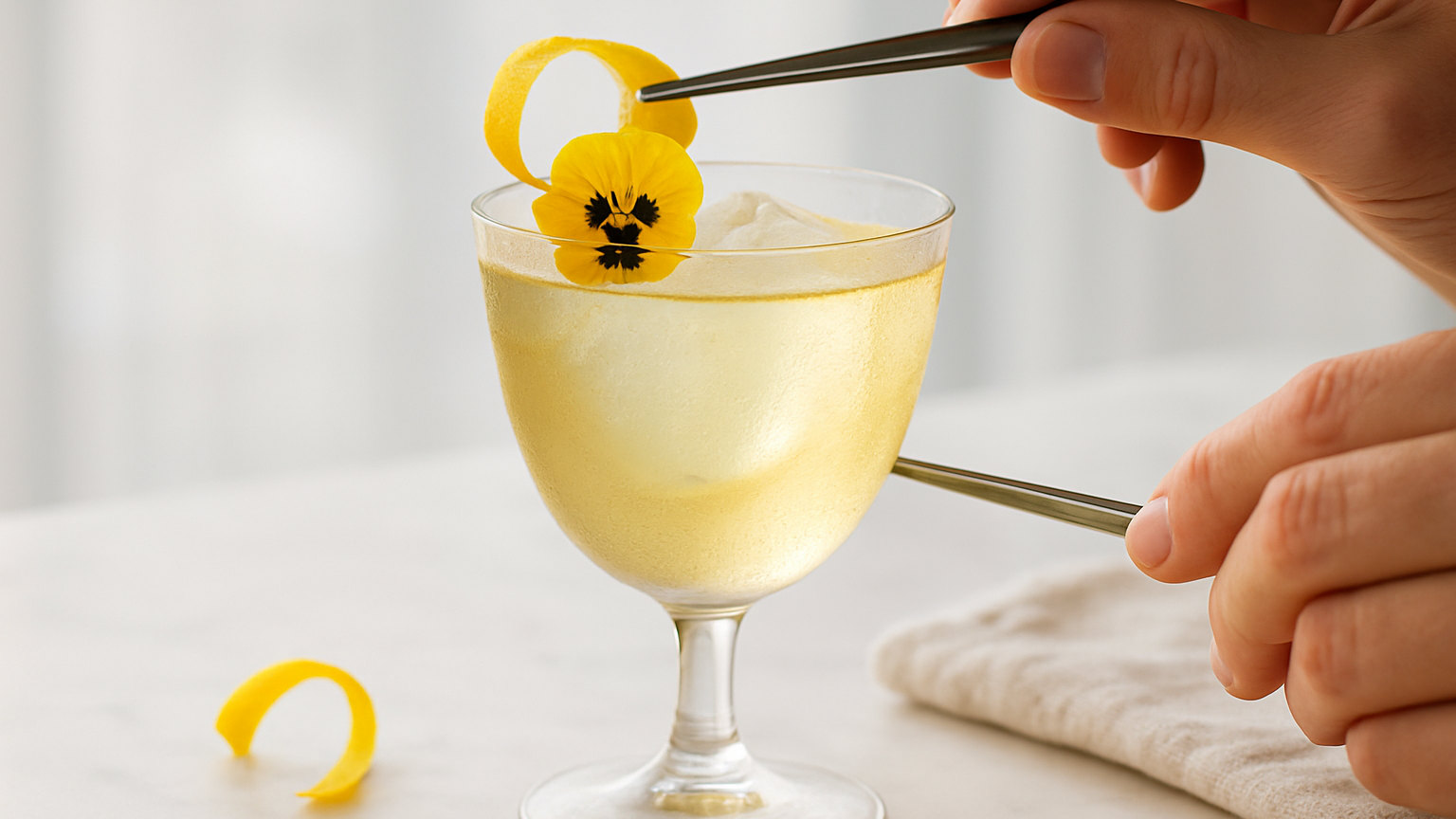
Presentation genuinely affects how a drink is received. Research across food and drink consistently finds that appearance influences how people rate what they are consuming, which means the effort is doing something rather than being merely decorative.
The details that matter are few and quick.
The glass
Clean, meaning free of any residue. Detergent film and fat destroy foam and dull aroma, and they concentrate at the rim where you will taste them.
Rinse thoroughly, air dry inverted, store upright.
Chilled where the drink is served without ice, which takes ten minutes in a freezer or two minutes filled with ice and water.
The right size, so a sensible measure looks properly filled rather than lost. This matters more than the shape.
The ice
Fresh, from the freezer, and enough of it.
A glass packed with ice looks deliberate and keeps the drink cold. Three cubes rattling in a large glass looks careless and produces a watery drink.
Clear ice looks considerably better than cloudy in a drink where it is visible, which is the main practical argument for making it.
Never reuse ice, and never scoop with a glass, which chips it.
The pour
Fill to a sensible level rather than to the brim.
A stemmed glass filled two thirds leaves the headspace the shape exists to create and looks better than one filled to the rim.
Wipe any spills from the outside of the glass and the base before handing it over.
The garnish
One, chosen deliberately, prepared fresh and placed rather than dropped.
An expressed citrus peel takes ten seconds and improves the drink as well as the appearance.
Position it where the drinker will smell it, which for a herb sprig means tucked beside a straw rather than lying flat.
Fresh matters. A dried-out peel or a wilted sprig looks worse than nothing.
Mise en place
The habit that makes all of it possible without fuss.
Before you start: glasses out and chilled, ice out, garnish cut, bottles to hand, board and knife ready.
It is the single largest difference between a smooth drink and a chaotic one, and it is what professional bars do as a matter of routine.
For a group, set everything on a tray so nothing requires crossing the kitchen.
Timing
Serve promptly. A stirred drink is at its best within ten to fifteen minutes and declines afterwards.
Make drinks in small batches rather than making six and letting the first warm.
Chill glasses in batches beforehand rather than as you go.
What not to do
Elaborate constructions that get in the way of drinking, which look considered in a photograph and are a nuisance in the hand.
Serving a non-alcoholic drink in different glassware from everyone else, which is noticed and reads as an afterthought.
Handing over a glass with wet fingerprints or a sticky base.
Apologising for the drink, which draws attention to something nobody had noticed.
Saying what it is
A small thing with a disproportionate effect.
Naming the drink and mentioning one thing about it, briefly, changes how it is received and gives the person something to attend to.
It is also the moment to mention anything worth knowing: that it contains egg white, or nuts, or that the bitters are alcohol-based.
That is disclosure rather than performance, and it takes a sentence.
The proportion of it
None of this needs to become elaborate.
A clean chilled glass, enough ice, a fresh garnish and a prompt serve is the whole requirement, and together they take perhaps thirty seconds more than doing none of them.
Beyond that, the returns diminish quickly and the drink itself is what matters.
Serving several at once
Line the glasses up, chill them all, garnish them all, and pour last.
Working in stages rather than completing one drink at a time is faster and means the first is not warm by the time the last is made.