Garnish conventions look arbitrary until you notice that most of them place a complementary aroma directly under the nose. A few are pure tradition, and the majority have a reason.
Gin drinks
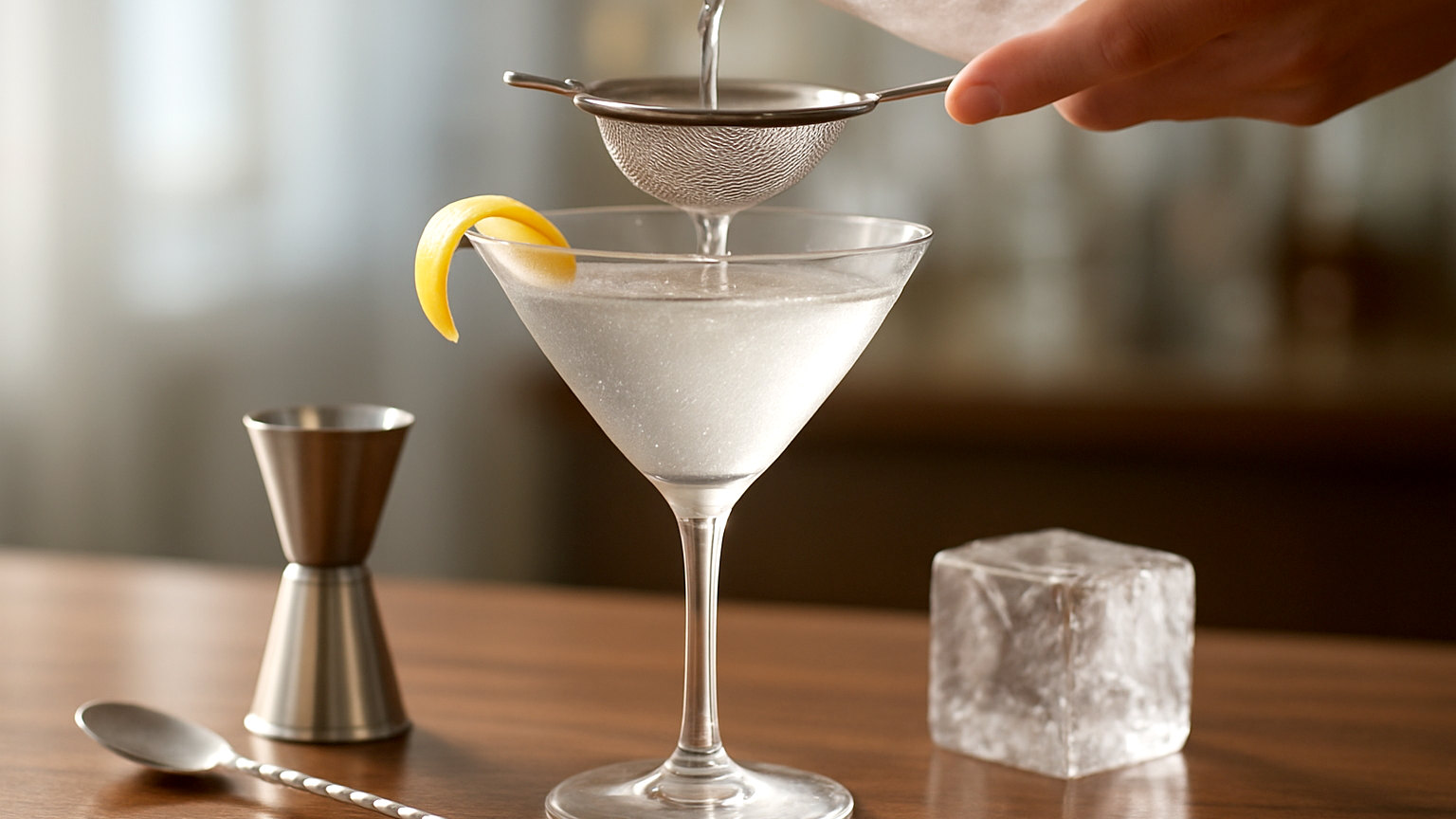
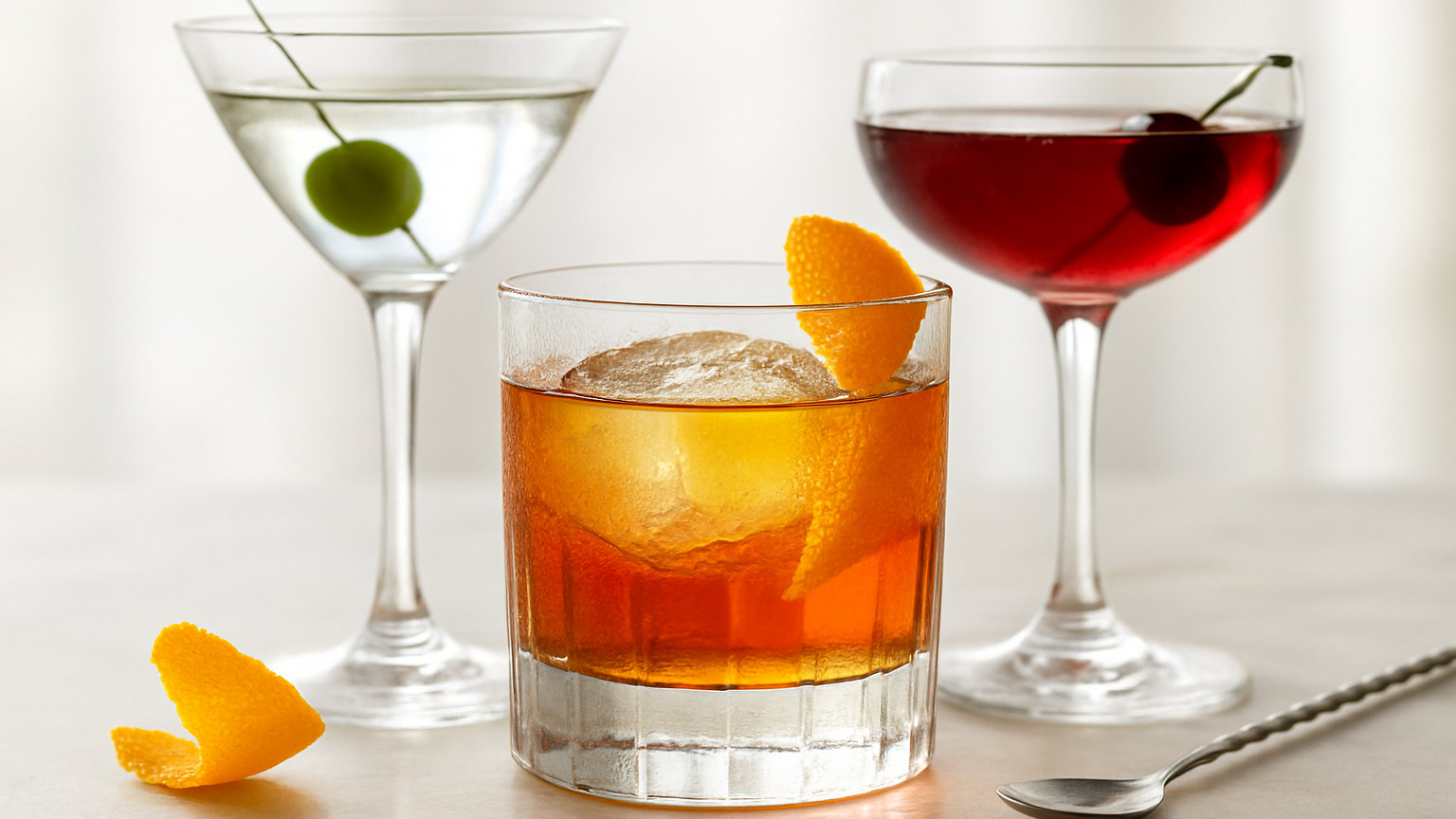
Martini: lemon twist or olive, which produce genuinely different drinks. The twist lifts the botanicals; the olive makes it savoury.
Negroni: orange twist, expressed. The citrus oil meets the bitter aperitivo's own orange character.
Gin and tonic: matched to the gin rather than automatically lime. Lemon or lime peel for a classic London dry, grapefruit for a citrus-forward gin, cucumber or a light herb for a floral one.
Tom Collins: lemon slice and a cherry.
Bramble: a blackberry and a lemon slice, both of which echo what is in the drink.
Clover club: raspberries.
Whisky drinks
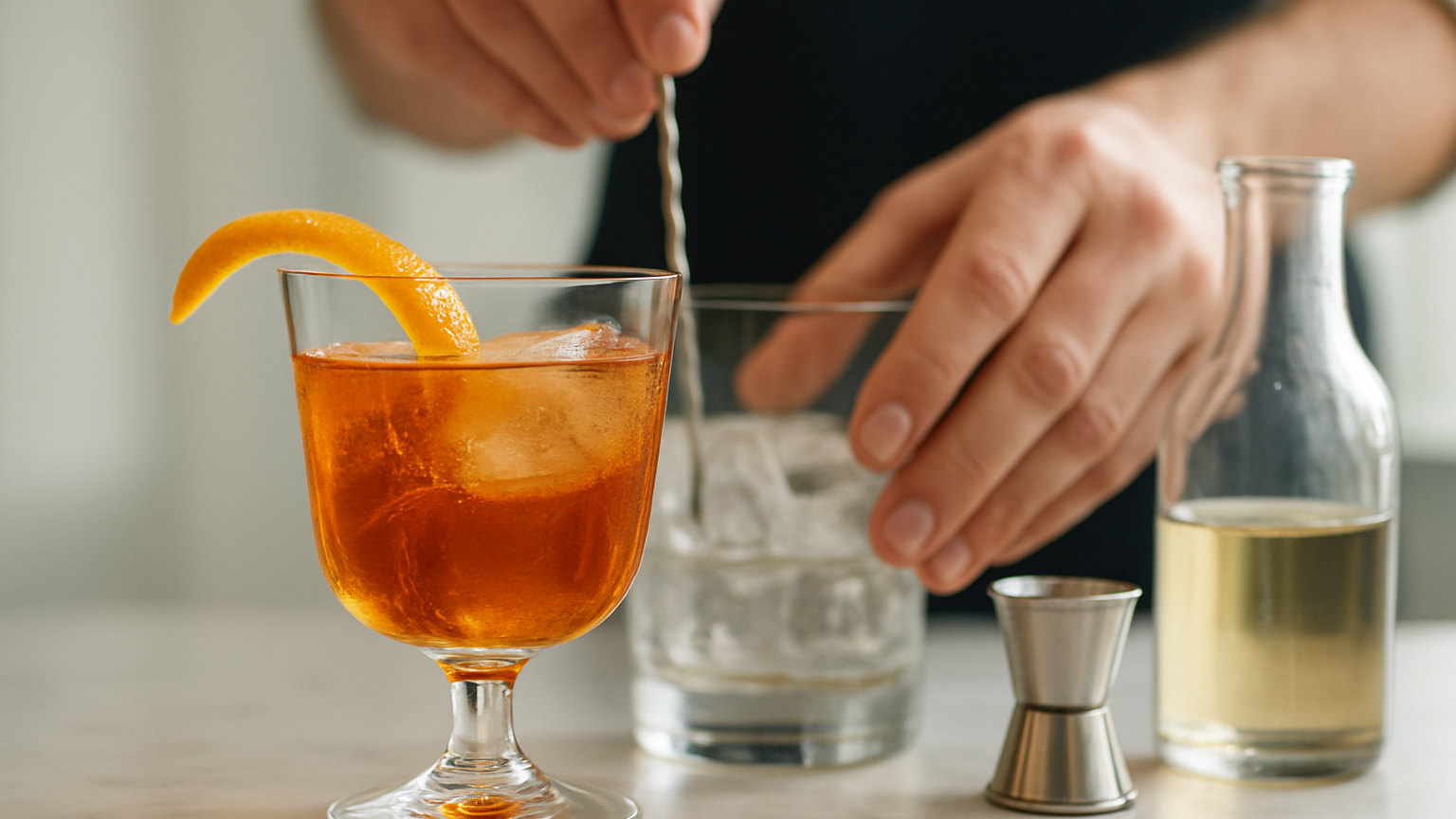
Old fashioned: orange twist, expressed. The modern preference is the peel alone rather than muddled fruit.
Manhattan: a good cocktail cherry, or a lemon twist for a brighter version.
Whiskey sour: a lemon twist, a cherry, or aromatic bitters dropped on the foam.
Mint julep: a generous bunch of mint, slapped and positioned under the nose with a short straw.
Penicillin: candied ginger, and the peated whisky float is doing the aromatic work.
Sazerac: lemon peel expressed and traditionally discarded, since the drink contains no ice and the pith would develop bitterness.
Rum drinks
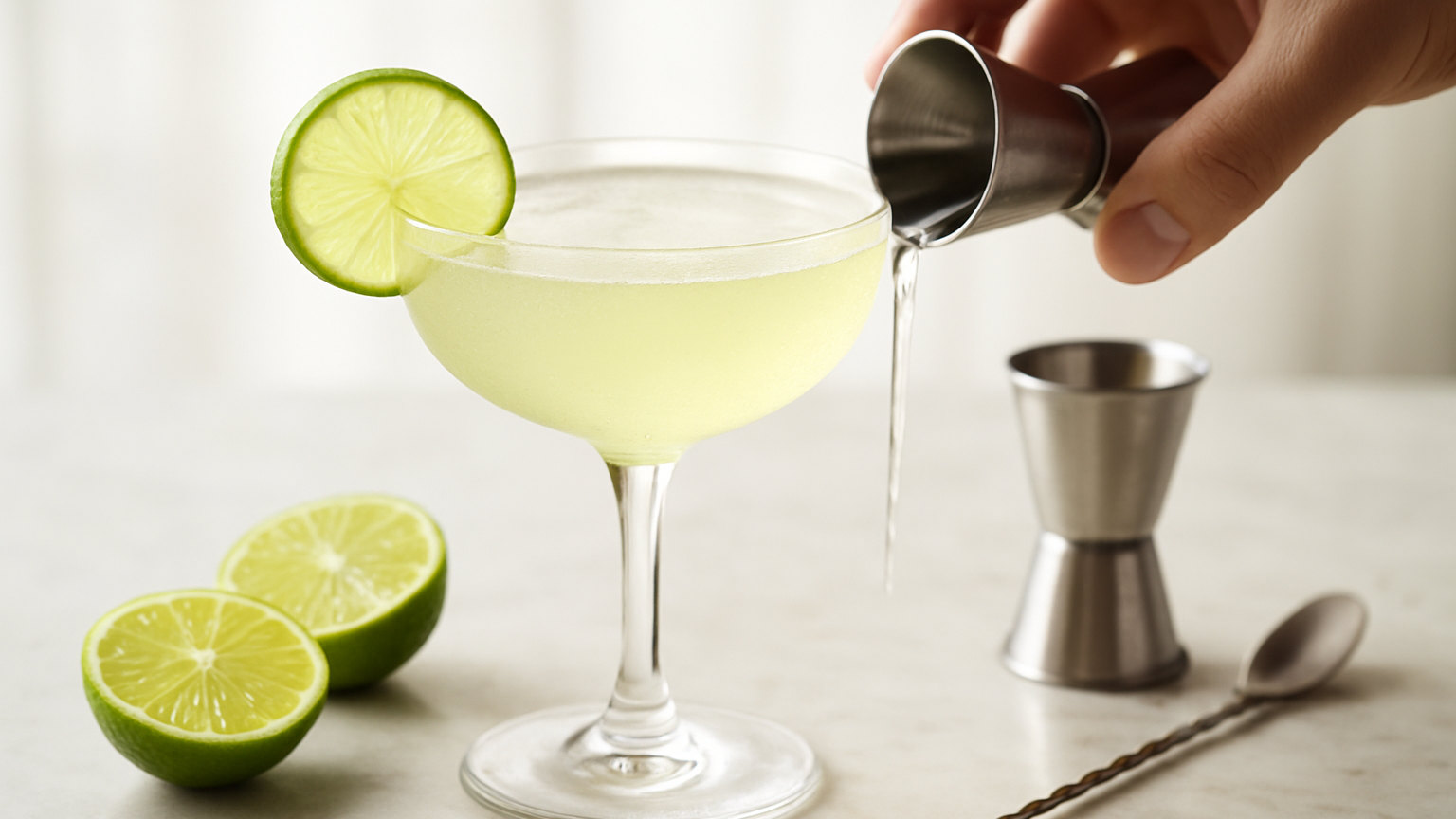
Daiquiri: nothing traditionally, and a lime wheel does no harm.
Mai tai: the spent lime shell and a mint sprig, placed so the mint sits near the nose.
Mojito: a mint bunch, slapped.
Dark and stormy: a lime wedge, squeezed.
Jungle bird: a pineapple wedge.
Agave drinks
Margarita: salt on half the rim and a lime wheel.
Paloma: salt and a grapefruit or lime wedge.
Oaxaca old fashioned: an orange peel, sometimes flamed.
Brandy and others
Sidecar: a sugared rim, traditionally, and a lemon twist.
Espresso martini: three coffee beans.
Bloody mary: a celery stick, a lemon wedge and perhaps an olive. Anything beyond that starts obstructing the drink.
Spritz: an orange slice, or an olive with a more bitter aperitivo, which is the Venetian convention.
The patterns
Worth noticing rather than memorising the list.
Citrus peel goes with anything aromatic and spirit-forward, matched to the drink: orange with sweet vermouth and bitters, lemon with gin and whisky, grapefruit with agave.
Herbs go where they are already an ingredient.
Something edible goes where the drink is sweet and slow: a cherry, an olive, a piece of fruit.
And where the drink already has an aromatic float or a foam, the garnish is often minimal, since something else is doing that job.
When to depart from them
Freely, provided the substitution makes sense.
A grapefruit twist on a negroni is excellent and unconventional. A lemon twist on a manhattan is a recognised variation.
What rarely works is a garnish chosen because it looks good rather than because it belongs, which is how a rosemary sprig ends up in a drink it has nothing to do with.
The test is whether the aroma complements what is in the glass, which you can check by smelling both before committing.
The default
If you are unsure, an expressed citrus peel matched roughly to the drink is almost never wrong.
Orange for anything sweet, dark or bitter. Lemon for anything crisp or spirit-forward.
It takes ten seconds and improves the drink, which is more than can be said for most alternatives.
When a drink needs nothing
Some do. A daiquiri is traditionally served without a garnish, and a well made one needs nothing.
Adding something for the sake of it is a worse decision than leaving it plain.
Learning the conventions
They are worth knowing so you can depart from them deliberately rather than by accident.
A bartender who garnishes a manhattan with a lemon twist has made a choice. One who does it because no cherries were to hand has not.
Most of the conventions place a complementary aroma under the nose, so once you notice the pattern the individual pairings become easier to remember than a list would suggest.