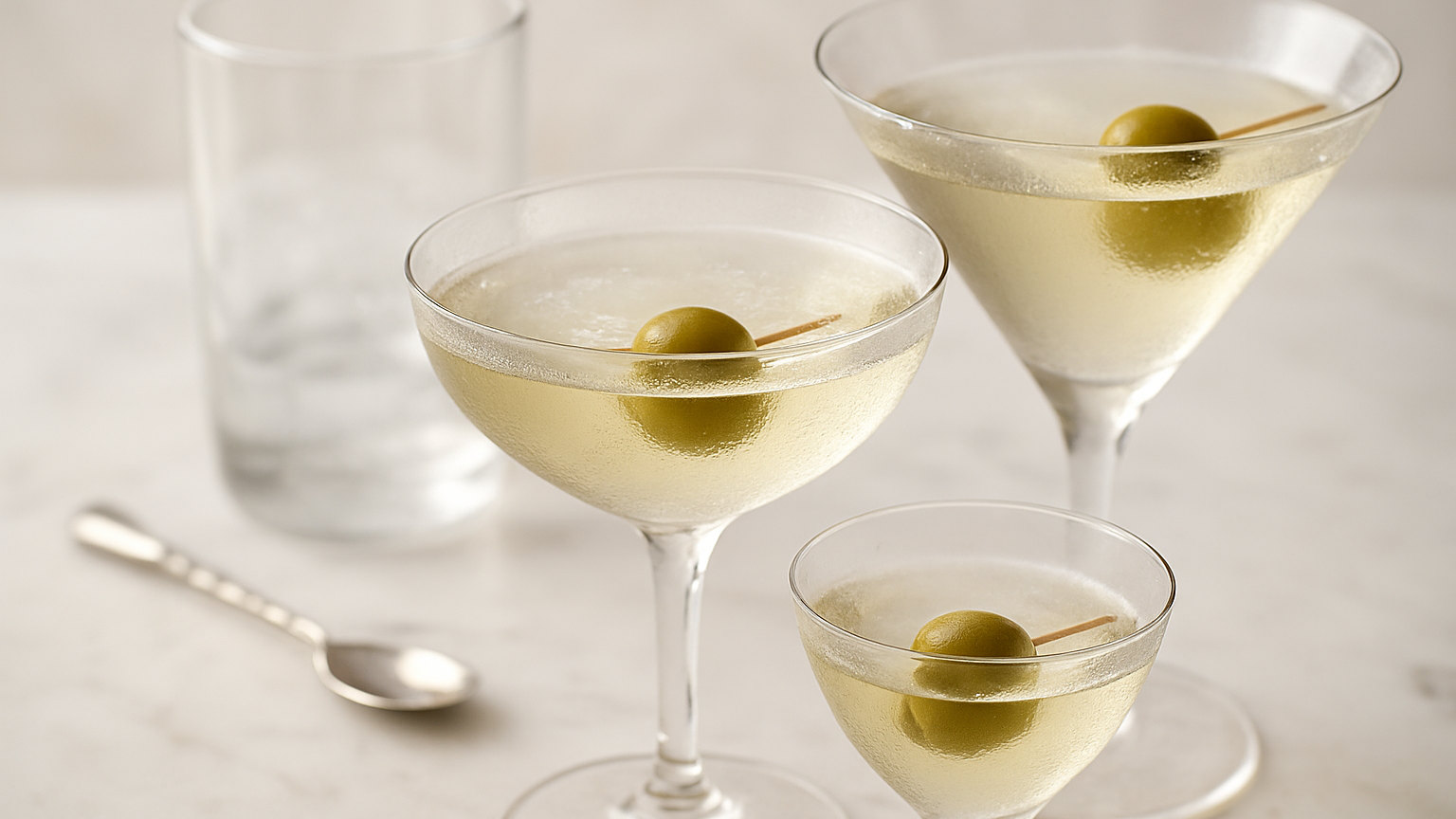
Three shapes exist for drinks served up, meaning without ice in a stemmed glass. They do the same job with different trade-offs, and the most famous of the three is the least practical.
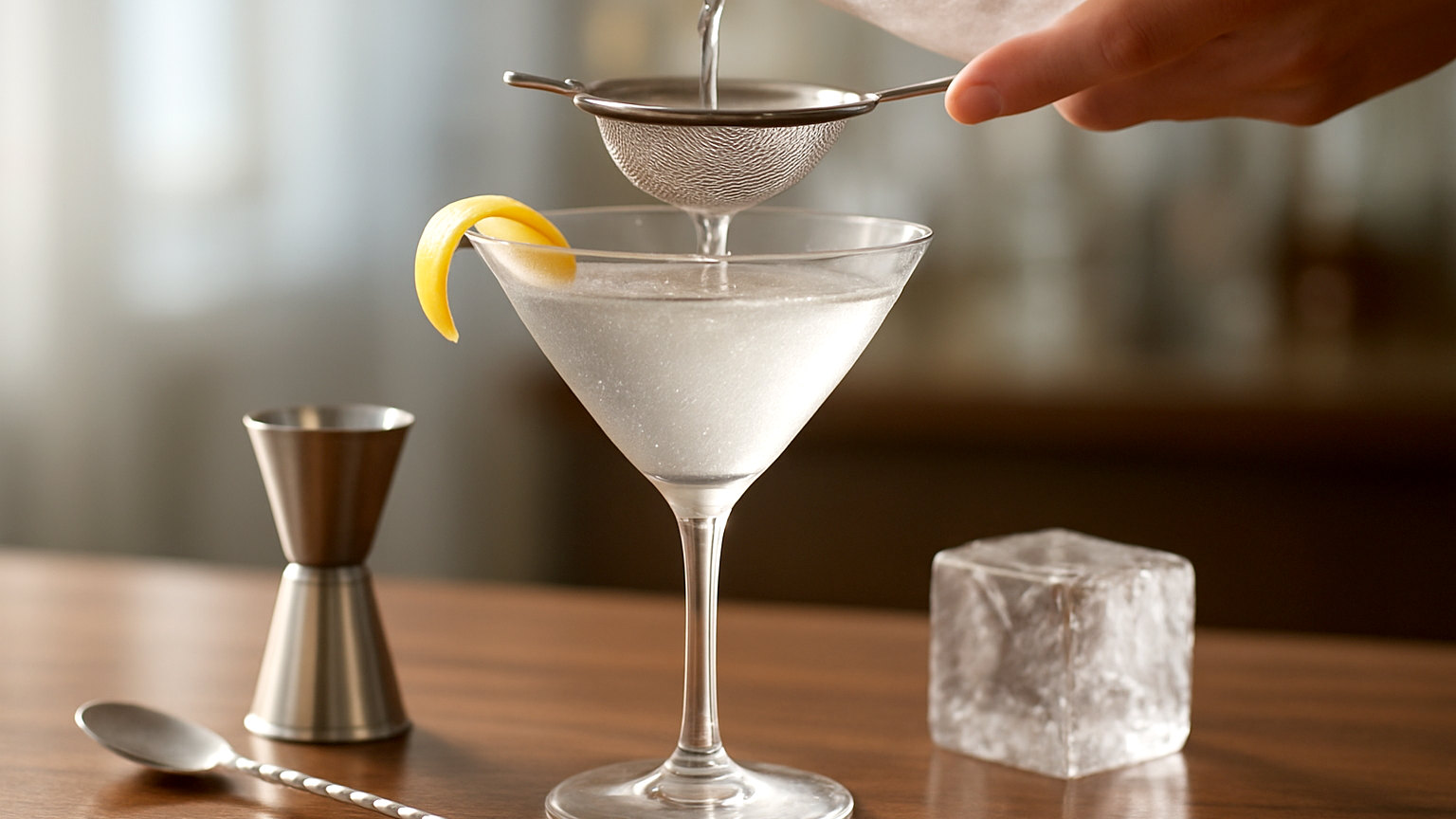
The martini glass
The V-shaped cone on a long stem, and the most recognisable glass in drinking.
Its advantages are that it looks superb and that the wide surface presents the aroma broadly.
Its disadvantages are substantial. The wide surface area means the drink warms rapidly. The steep sides and shallow bowl make it easy to spill, particularly when carrying it. And modern examples are frequently far too large, holding 250 millilitres or more.
A martini made to a sensible recipe is around 115 millilitres after dilution. In a large V-shaped glass that looks lost, which invites a bigger pour, and the last third will be warm.
It is a glass chosen for appearance rather than performance, which is a legitimate reason and worth being clear about.
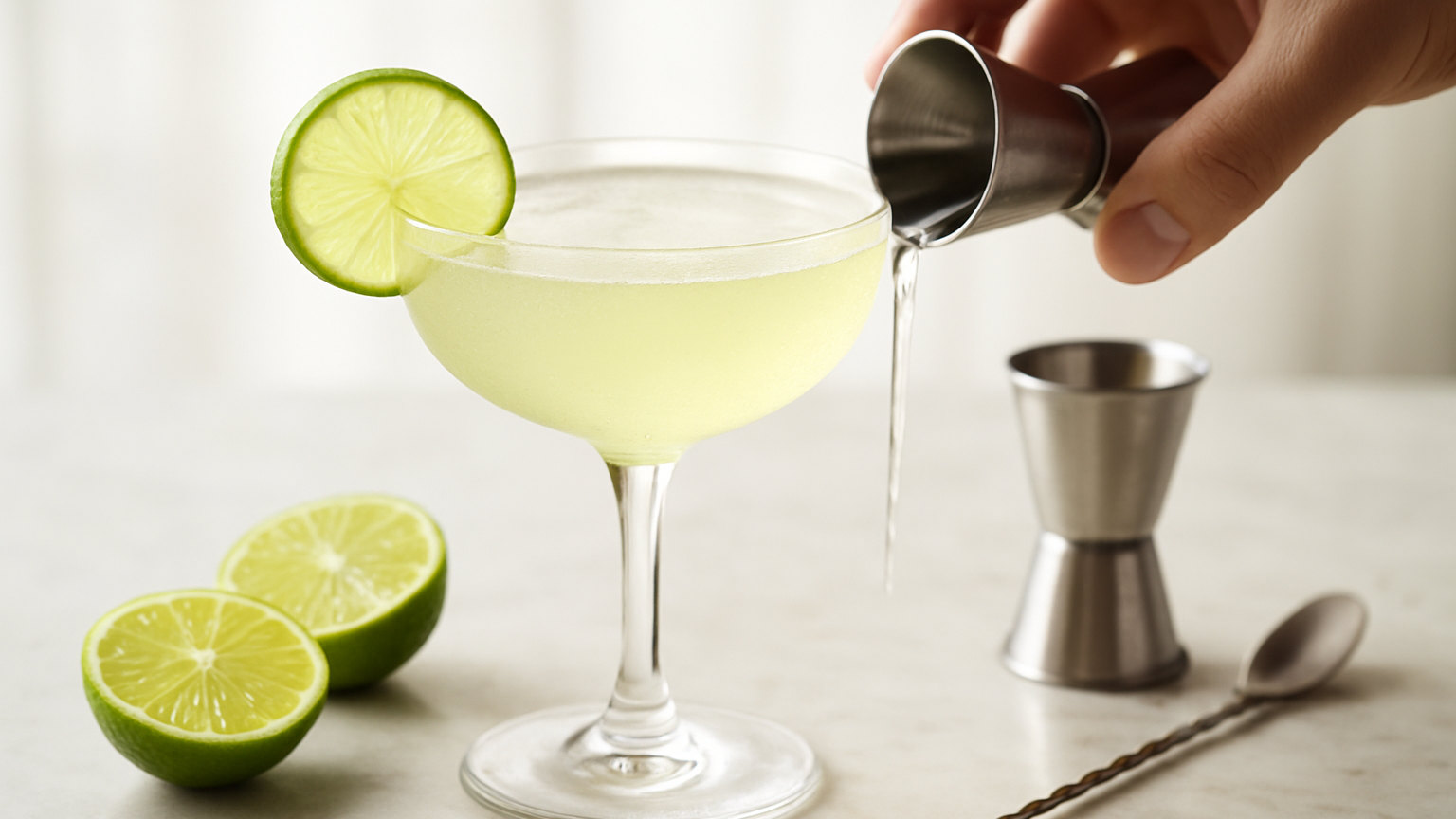
The coupe
The shallow rounded bowl on a stem, and the sensible default for most drinks served up.
The curved bowl gathers aroma better than a cone, it is considerably harder to spill, and it looks appropriately elegant.
Sizes vary enormously, and one of around 150 to 180 millilitres is right. Larger ones exist and encourage the same oversized pour as a martini glass.
The persistent story that the shape was modelled on the anatomy of a particular historical figure is a myth. The glass predates all the people it is variously attributed to by a considerable margin, and it was designed in England in the seventeenth century for sparkling wine.
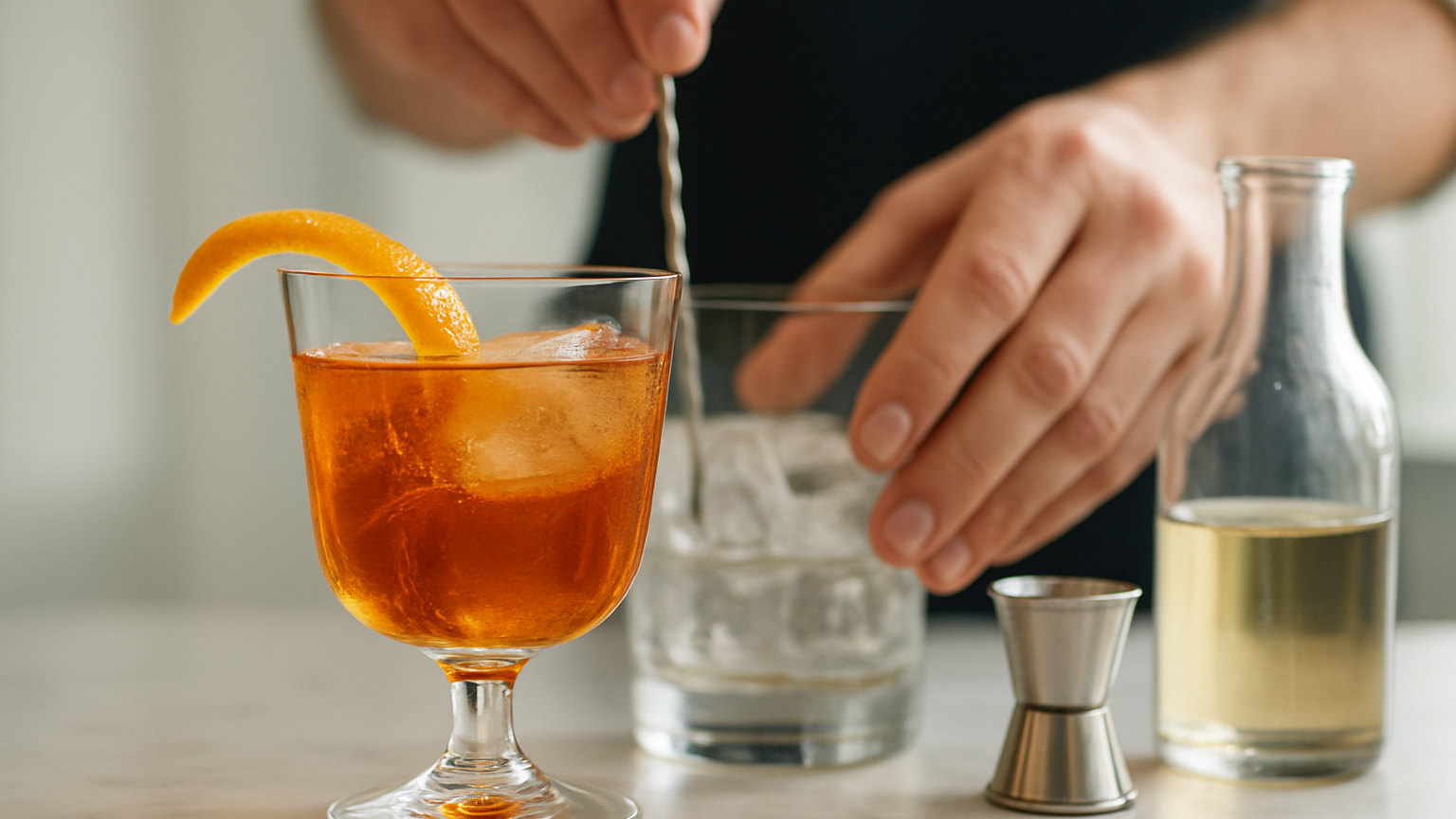
The Nick and Nora
A small stemmed glass with a gently tapered bowl, named after the characters in a series of films from the 1930s.
It is the current favourite among bartenders, and for good reasons. The taper concentrates aroma better than either alternative. The smaller capacity, usually around 150 millilitres, means a sensible measure looks properly filled. And the incurved rim makes it the hardest of the three to spill.
If you buy one shape for drinks served up, this is the one.
Which suits which drink
In practice all three serve the same purpose and the differences are modest.
Aromatic drinks, meaning most gin and whisky cocktails, show best in a Nick and Nora or a coupe.
Drinks with a foam, such as a sour with egg white, suit a coupe, since the wide surface displays the foam and lets bitters be dropped on top.
Sparkling cocktails suit a coupe or a flute depending on whether you value aroma or carbonation.
A martini glass suits anything you want to look theatrical, which is a real consideration when serving guests.
Capacity is the thing to check
More important than the shape.
Look for 150 to 180 millilitres. Anything much above that will either look empty or encourage an oversized drink, and an oversized stirred cocktail will be warm before it is finished.
The capacity is rarely printed, so filling one with water and pouring it into a measuring jug is worth doing once.
What to own
Four small stemmed glasses of around 150 millilitres, in whichever of the three shapes appeals.
That covers every drink served up in the entire cocktail canon.
Buy four rather than two, since one will break and an odd number is awkward when serving.
Checking the capacity
Rarely printed and worth knowing, since modern glasses run considerably larger than they look.
Fill one with water, pour it into a measuring jug, and note the figure. It takes thirty seconds.
If it comes to more than 200 millilitres, any drink served up in it will look sparse at a sensible measure, which is worth knowing before you blame the recipe.
Sets and singles
Buying a matching set looks better and buying singles as needed is more practical.
A mismatched collection of good glasses in the right sizes serves drinks better than a matching set in the wrong ones.