Wine glassware is sold in a bewildering range, with different shapes for individual grape varieties. The genuine differences are fewer than that suggests, and one well chosen glass covers the great majority of drinking.
The traditional distinctions
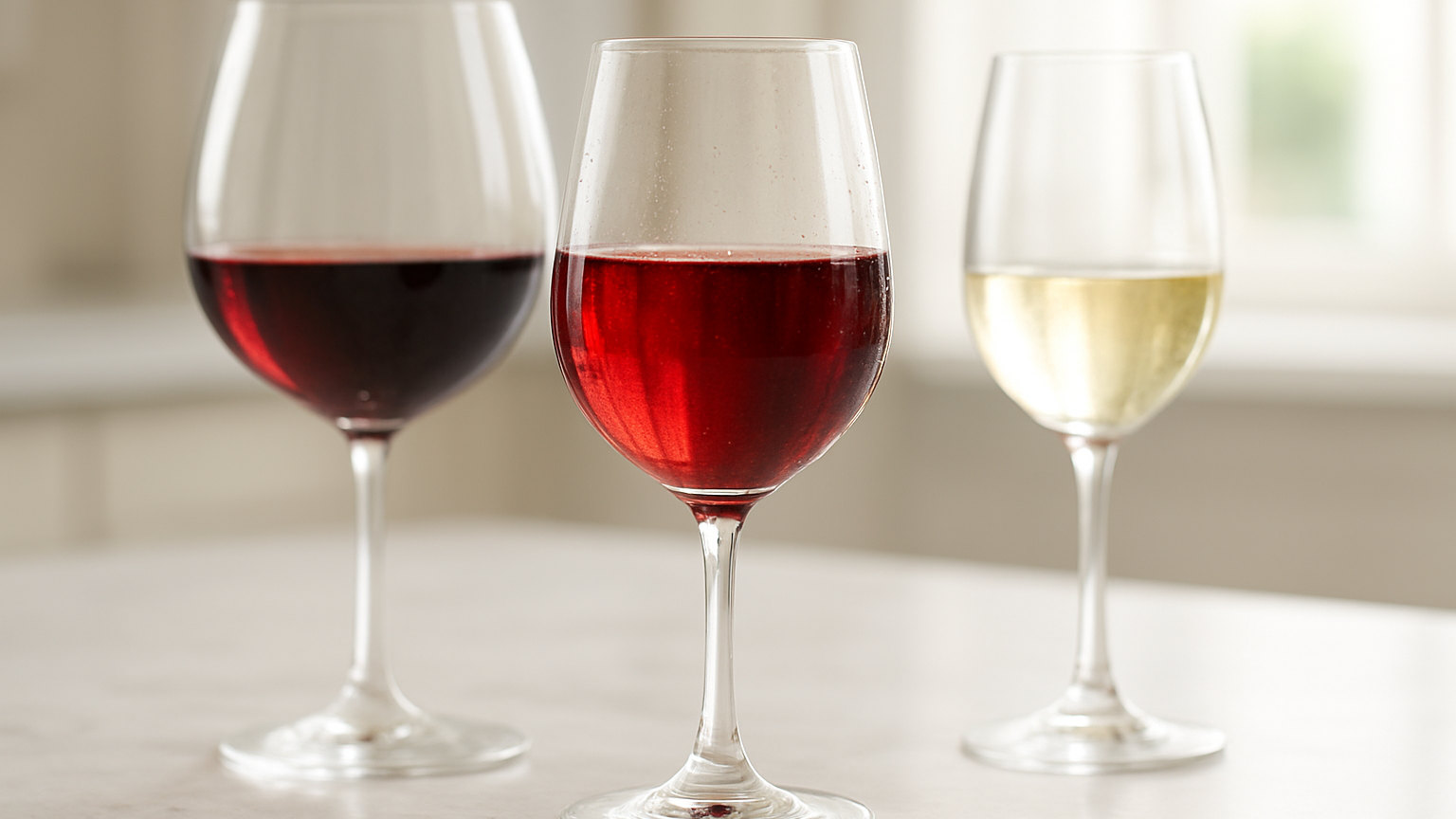
Red wine glasses are larger with a wider bowl. The reasoning is that reds are generally more aromatic and benefit from more surface area for the aromas to develop, and from more headspace to swirl.
White wine glasses are smaller and narrower. Whites are served colder, so a smaller glass means the wine warms less before it is drunk, and a narrower bowl concentrates more delicate aromas.
Within reds, the wide-bowled burgundy glass is intended for aromatic, delicate wines such as pinot noir, and the taller bordeaux glass for structured, tannic wines.
These distinctions are real and the differences they produce are modest.
The universal glass
The sensible answer for most households.
A glass of around 400 to 500 millilitres capacity, with a bowl that tapers noticeably towards the rim, handles red, white, rosé, orange wine and sparkling wine perfectly well.
Several producers now make exactly this, marketed as a universal or all-purpose glass, and professional tasters use similar shapes precisely because they work across everything.
Buying six of one good universal glass produces better results than buying two each of three specialist shapes, since you will always have enough.
Size and the pour
A large glass is not an invitation to a large pour, and this is where a good deal of domestic drinking goes wrong.
A standard pour is 125 or 175 millilitres. In a 500 millilitre glass, 175 millilitres looks modest, which is exactly why the glass is that size: the empty space above the wine is where the aroma collects.
Filling a large glass to the halfway mark is a 250 millilitre serving, which is around a third of a bottle.
Pour to the widest point of the bowl at most, which is usually around a third full and leaves the headspace the shape exists to create.
Sparkling wine
The flute preserves bubbles by minimising surface area, and it concentrates almost no aroma.
For good champagne or a serious sparkling wine, a white wine glass or a universal glass shows considerably more, and most producers now recommend this.
The coupe loses carbonation fastest of all and is chosen for appearance.
Flutes remain sensible for prosecco and for anything where refreshment matters more than aroma.
Stemless glasses
Practical, durable and warm the wine faster, since the hand is against the bowl.
They are fine for casual drinking and for anywhere breakage is a concern, and they are a poor choice for anything served cold that you intend to drink slowly.
They also mark with fingerprints, which is cosmetic.
What matters more than shape
Thin rims. A fine rim delivers the wine more pleasantly than a thick rolled one, and this is the difference most people notice between an inexpensive glass and a good one.
Cleanliness. Detergent residue dulls aroma and any trace of fat kills the bubbles in sparkling wine.
Temperature. A warm glass raises the temperature of a chilled wine within a minute.
What to buy
Six universal glasses of around 450 millilitres with thin rims.
Add six smaller ones if you drink a great deal of white or sparkling wine and want a second shape.
Beyond that, specialist shapes are for people who enjoy the subject, which is a reasonable thing to be.
Serving temperature and the glass
The glass affects how quickly wine reaches the wrong temperature, which for whites and sparkling is the more common problem.
A smaller pour refreshed more often keeps white wine cold, and a large glass filled generously will be warm halfway down.
For reds, the opposite frequently applies: a wine served too cold from a fridge warms in the hand and in the glass, and holding the bowl deliberately is a legitimate way to speed that up.